Best Outdoor Air Quality Monitors: 6 Picks for Measuring the Air at Your Own Address
Almost every decision about indoor air quality is really a ventilation decision, and ventilating only helps if the air outside is cleaner than the air inside. A regional index from a station kilometres away cannot answer that for your street.
As an Amazon Associate, Akermin earns from qualifying purchases. Product links on this page are affiliate links.
Our Top Picks
Instruments were sorted by whether the listing describes a weatherproof outdoor unit or a handheld taken outside, the sensors each manufacturer names, the parameters measured, and how the data leaves the device. We did not run laboratory tests and publish no measurements of our own. Where a listing gives no figure, the entry reads Not stated.
Best Overall
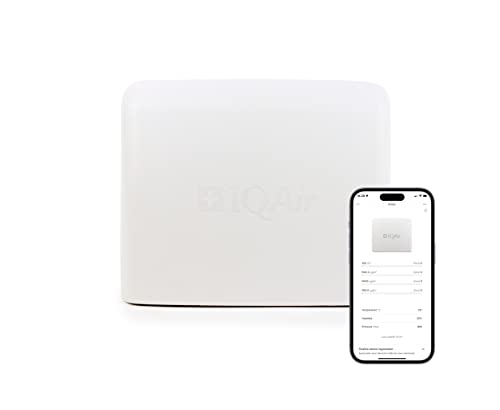
IQAir AirVisual Outdoor
A weatherproof station with two professional laser sensors and up to eight parameters.
Up to 8 parameters: PM1, PM2.5, PM10, optional CO2, AQI, temperature, humidity, pressure
Two professional grade laser sensors per unit, stated
Only the IQAir and Ambient Weather units are described by their listings as outdoor devices. The rest are handhelds or indoor monitors that can be taken outside for a reading.
How to Choose an Outdoor Air Quality Monitor
The first question is not which sensor, it is whether you need a permanent outdoor station at all.
Does Your Street Differ From the Region?
Public networks are free and often good enough. A local sensor earns its place near a main road, in a valley that traps winter smoke, or where neighbours burn wood.
Weatherproof Means Stated
Only two listings here describe an outdoor housing. A handheld left on a windowsill will not last a season. If the device does not state outdoor use, it is not an outdoor device.
Two Size Fractions Tell You the Source
PM2.5 is combustion: traffic, wood smoke, wildfire. PM10 adds pollen, dust and construction. A monitor that reports both tells you which problem you have.
Sensors Wear Out
Laser particle sensors dim and collect dust, and the failure is a slow upward drift rather than an obvious fault. Prefer a stated lifespan, a replaceable module, or two sensors that can disagree.
Compare Like With Like
AQI is an index, not a measurement, and different countries map concentrations differently. When comparing two devices, use the raw micrograms per cubic metre.
Mains or Nothing Outdoors
Continuous outdoor monitoring needs power. The IQAir unit ships with a 12 metre cable for a reason. Plan the route before choosing the mounting point.
Do I need an outdoor monitor if public air quality data is free?
For most households, no. Public networks are good and free. A local sensor earns its place when your immediate surroundings are unrepresentative: a house on a main road, a street with wood burning stoves in winter, a valley that traps smoke in still weather, or a site near construction or agriculture.
Can I just put an indoor monitor outside?
Not permanently. None of the handheld or indoor devices here state an ingress protection rating, and condensation inside an optical particle sensor ends it. Taking a handheld outside for a reading is fine and is exactly how most people should do the indoor and outdoor comparison.
What is the difference between PM1, PM2.5 and PM10?
They are particle size thresholds in micrometres. PM10 includes everything up to 10 micrometres, which covers pollen, dust and spores. PM2.5 covers the fine fraction from combustion that penetrates deep into the lungs. PM1 is finer still and is mostly combustion related. The IQAir unit here states all three.
Why do two monitors in the same place disagree?
Consumer optical sensors have significant uncertainty, they respond differently to particle composition and humidity, and they drift as they age. Use them to track change over time in one location rather than to compare absolute values between devices. If you must compare, run both side by side first and note the offset.
Does humidity affect the reading?
Yes. Optical sensors measure light scattered by particles, and particles absorb water as humidity rises, which makes them scatter more. Readings taken in fog or in very humid conditions are commonly elevated for that reason rather than because the air is genuinely dirtier.
Which one should I buy for wildfire smoke?
A mounted outdoor station if you are in a region with a regular smoke season and want continuous data, or the cheapest handheld plus an indoor monitor if you want to make ventilation decisions during an episode. Our wildfire smoke guide covers the indoor side in detail.
Reviews
IQAir AirVisual Outdoor Best Overall
This is the only product here that is unambiguously built to live outdoors. The listing states a weatherproof housing, mains power with a 12 metre cable, wall, roof or pole mounting, and connectivity over WiFi, Ethernet or optional 4G. Those are the details that decide whether a monitor survives a winter, and most consumer air quality products publish none of them.
Two professional grade laser sensors in one unit is the specification worth paying for. Outdoor sensors live a hard life: humidity, insects, dust and temperature swings all degrade optical particle counting, and the failure mode is silent drift rather than an obvious fault. Two sensors allow disagreement to be noticed, which is the only practical way to catch a degrading channel on a device you never look inside.
The modular design is the other argument. The listing states carbon dioxide as an optional sensor module, which means the station can be extended rather than replaced. For a device you are about to bolt to a wall, being able to change one sensor rather than the whole instrument is worth real money over five years.
Strengths
Genuinely weatherproof with stated mounting and cabling
Ambient Weather PM2.5 Outdoor Monitor Best for Weather Station Owners
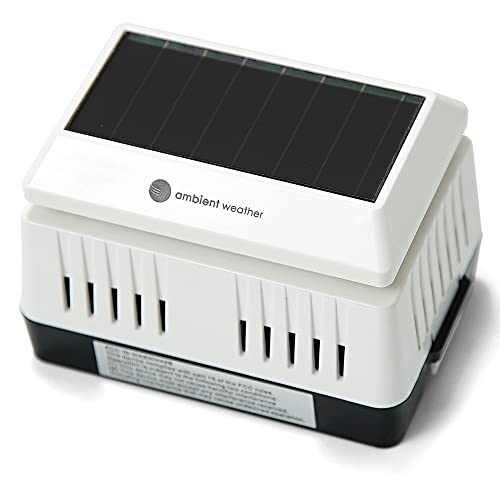
If you already run a home weather station, this is the cheapest sensible route to a local particulate reading, because it reports into a network you are already using rather than a separate app. The listing names a Sensirion particle sensor, which is a recognised manufacturer and more information than most consumer devices offer.
The practical advantage of joining a network is history and context. A single reading tells you the air is dirty; the same reading alongside your own wind, temperature and rainfall data tells you the smoke arrives on a particular wind direction, or that levels climb every still evening in winter when neighbours light stoves. That is the sort of pattern that actually changes what you do.
What the listing does not publish is an accuracy figure, a range, or an ingress rating, so confirm the mounting requirements before committing to a location. Alexa and Google Home integration is stated, which makes it straightforward to trigger a purifier or a ventilation decision automatically.
The most complete handheld here, and the one that makes an indoor and outdoor comparison practical without buying two devices. Walk outside, take a reading, walk back in, take another: that single pair of numbers answers the only question most people have, which is whether opening a window will help.
Two sensor details in the listing deserve credit. It names a Dart electrochemical formaldehyde sensor and explicitly contrasts it with cheap semiconductor sensors, and it states a three year designed lifespan for the laser particle sensor. Formaldehyde in particular is frequently estimated rather than measured on consumer devices, so naming an electrochemical cell is meaningful.
The export path is the other strength. The listing states three months of continuous logging exported to a spreadsheet over USB with no app and no subscription, which suits anyone documenting a renovation, a complaint or a seasonal pattern. The trade against the IQAir station is obvious: this measures where you are standing, not continuously at a fixed point.
Temtop Professional Air Quality Analyzer Best for Documentation
Adding carbon dioxide to a particulate instrument turns it from an air quality meter into a ventilation meter, and that combination is what an indoor and outdoor comparison really needs. Outside, carbon dioxide is near the global background and particulates vary; inside, carbon dioxide rises with occupancy and particulates depend on what you are doing. Measuring both in both places tells you which problem you actually have.
The listing names three separate sensors by manufacturer, which is unusually transparent, and states a built-in calibration program for carbon dioxide and formaldehyde. Calibration is the specification that decides whether an instrument is still trustworthy in year three, and very few consumer devices offer it at all.
The memory claim of more than three months of continuous logging with full USB export puts this in professional survey territory. For a homeowner it is more instrument than the question deserves; for a consultant, a landlord or anyone building a case, the record is the product.
Two size fractions rather than one is the reason to pick this over a cheaper PM2.5-only meter, and outdoors that distinction is particularly useful. Fine particles below 2.5 micrometres come mainly from combustion, which outdoors means traffic, wood smoke and wildfire. The coarser fraction up to 10 micrometres is mechanical: pollen, road dust, construction and soil.
Knowing which one is elevated tells you what to do. A pollen-driven PM10 spike calls for keeping windows shut and running a filter on the recirculation setting. A smoke-driven PM2.5 event calls for the same closure but for a different reason and a different duration. One number cannot separate those; two can.
The stated 20,000 hour sensor life is honest about the fact that laser particle sensors are wear items, and it also tells you how to treat the device: switch it off between uses rather than leaving it running, and that figure spreads over many years.
Temtop S1 Air Quality Monitor Best Indoor Reference
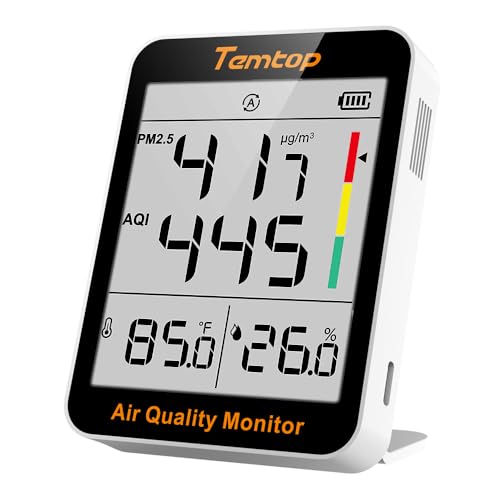
An outdoor measurement is only meaningful against an indoor one, and there is no reason the indoor half has to be expensive. This is a straightforward PM2.5 monitor that sits on a shelf and reports continuously, which is exactly what you want as the fixed reference in a comparison.
The AQI readout is a translation rather than a measurement, and different countries map the same concentration onto different index values, so use the underlying particulate figure when comparing against an outdoor device. The combination of comfort parameters and air quality on one screen is genuinely practical in a living space, where the two questions arrive together.
Pairing this with a handheld taken outside, or with a mounted outdoor station, gives you the full picture for far less than two premium instruments. That is the sensible budget strategy for most households.
Short answer: the IQAir AirVisual Outdoor is the only genuinely weatherproof station here and the one to buy for continuous local data; the Ambient Weather PM2.5 sensor is the cheaper route if you already run a home weather station; and the Temtop 7-in-1 is the best handheld if you want an indoor and outdoor comparison without mounting anything.
Why an outdoor reading changes indoor decisions
Almost everything a household can do about air quality falls into three actions: remove the source, filter the air, or ventilate. Removing the source is always best and is not always possible. Filtering costs money to run. Ventilating is free and effective, on one condition: the air outside has to be better than the air inside. Without an outdoor measurement you are guessing at that condition, and on a smoky day the guess makes things worse.
The regional index is often enough, and sometimes is not
Public air quality networks are excellent and free, and for a house in an ordinary suburb the nearest station is a reasonable proxy. The cases where it is not are specific and easy to recognise: a property on a busy road, a street where wood stoves run all winter, a valley or basin that traps smoke in still weather, or a site next to construction, quarrying or agriculture. In those places the regional figure can be perfectly acceptable while the air on your doorstep is not, and a local sensor is the only way to know.
Weatherproof is a stated specification, not an assumption
Only two products on this page are described by their own listings as outdoor devices. The IQAir unit states a weatherproof housing, wall, roof or pole mounting and a 12 metre power cable. The Ambient Weather sensor is described as a wireless outdoor particulate monitor. Everything else is a handheld or an indoor monitor, and leaving one of those on a windowsill through a winter will end it, usually through condensation inside the optical chamber rather than anything dramatic.
Sensor wear is the failure nobody notices
Optical particle sensors work by drawing air past a laser and counting the light scattered by particles. Over time the laser dims, dust settles on the optics, and the fan wears, and the result is a slowly rising baseline. Because it happens over months, nobody notices, and the device keeps producing numbers that look plausible. Three mitigations appear in this group: the IQAir station carries two sensors so a disagreement can be detected, the Temtop P600 publishes a 20,000 hour lifespan so you can plan, and the Temtop 7-in-1 states a three year designed lifespan. Any of those is better than silence.
Use the raw number, not the index
AQI is a public communication tool: it maps a concentration onto a coloured scale designed to convey risk. It is genuinely useful and it is not a measurement, and different countries map the same concentration onto different index values. When you compare an indoor device with an outdoor one, or your own sensor with a public station, compare micrograms per cubic metre. When you explain the result to somebody else, use the colour. For the indoor side of this comparison, see the air quality monitor roundup and CO2 versus PM2.5 for ventilation.
How We Research
Products were compared on whether the listing describes a weatherproof outdoor unit or a handheld, the parameters measured, whether the sensor manufacturer is named, sensor lifespan and replaceability, the route the data takes out of the device, and power and mounting requirements. We did not run laboratory tests and publish no measurements of our own. No figure appears on this page unless the manufacturer published it. Amazon data supplies images, availability and links only.