Best Multimeters: 12 Reliable Picks for Accurate Electrical Testing
Multimeter is one word covering bench instruments with 55,000 count displays, pocket meters that live in a toolbag and analogue movements that never need a battery for voltage. This hub compares twelve of them on the figures their listings publish, and is direct about the safety rating none of them state.
Independent Research
Verified Specifications
Honest Recommendations
Counts Not Accuracy
True RMS Matters
Check The CAT
As an Amazon Associate, Akermin earns from qualifying purchases. Product links on this page are affiliate links.
Our Top Picks
Twelve meters grouped by what they are for: bench and desktop instruments with high count displays, handheld general purpose meters, pocket meters and one analogue movement. Counts, True RMS and accuracy are taken from the listings. None of these listings states a CAT safety rating for the meter itself, which is discussed plainly below. We ran no tests.
Best Overall
OWON XDM1241 Digital Multimeter, 55,000 Counts
A 55,000 count True RMS bench display in a portable body.
Stated 55,000 counts on a 3.5 inch LCD
True RMS stated
AC and DC current, AC and DC voltage, resistance and capacitance
Diode, continuity and temperature functions stated
Not one of these twelve listings states a CAT safety rating for the meter itself. That is a genuine finding about this group of products rather than an omission on our part, and it decides what they should and should not be used on.
How to Choose a Multimeter
Five things, and the last one is the one people skip:
Counts, Not Accuracy
Counts describe display resolution: how finely the meter divides a range. Accuracy describes how close the reading is to true. A 55,000 count meter with no accuracy figure resolves finely and may still be wrong.
True RMS
Average-responding meters read low on the chopped waveforms from dimmers, drives and switched-mode supplies. True RMS reads them correctly, and three meters here state it.
Auto-Ranging
Auto-ranging removes the range switch, which is one less thing to get wrong one-handed. Manual ranging is faster once you know the value and steadier on a fluctuating reading.
The Functions You Will Use
Capacitance for motor start capacitors, frequency for drive output, temperature for a thermocouple, diode and continuity for everything else. Buy the ones you will actually reach for.
CAT Rating and Fusing
The rating that limits where a meter may safely be used. No listing here states one, so treat these as bench and low-energy instruments and buy a rated meter for supply work.
It is the number of distinct values the display can show on a range. A 6,000 count meter reads up to 5,999 before changing range; a 55,000 count meter divides the same range about nine times more finely. Counts describe resolution only, not accuracy, and the two are often confused.
Do I need True RMS?
If you measure AC on anything with electronics in it, yes. Dimmers, variable speed drives, LED supplies and switched-mode power supplies all distort the waveform, and an average-responding meter can read significantly low on them. On a clean sine wave from a socket, both types agree.
What is a CAT rating and why does it matter?
It classifies the energy available at the point you are measuring, from electronics and battery circuits up to the supply at the service entrance. A meter rated for a lower category on a higher energy circuit can fail catastrophically during a transient. None of the listings on this page states a rating, which is why they should not be used on supply-connected work.
Is an analogue multimeter still useful?
For some things, yes. A moving needle shows a trend, a fluctuation or a slowly charging capacitor far more readably than digits flickering. It is also insensitive to the ghost voltages that confuse high impedance digital meters. It is less precise and generally has no True RMS.
Bench meter or handheld?
A bench instrument gives you resolution, a large display and often a mains supply, which suits repair and calibration work. A handheld or pocket meter goes where the fault is. Most people who work on both electronics and installations end up owning one of each rather than compromising.
Reviews
OWON XDM1241 Digital Multimeter, 55,000 Counts Best Overall
Counts are the specification that decides how finely a meter can divide a range, and 55,000 is a bench-instrument figure. A common handheld gives 2,000 or 6,000 counts, meaning a 6 volt reading arrives as 5.99 or 6.00. At 55,000 counts the same reading resolves far more finely, which is what lets you see a supply drooping under load or a reference drifting rather than watching a static number.
The function list is complete for general work: AC and DC current and voltage, resistance, capacitance, diode, continuity and temperature, with True RMS stated so distorted waveforms read correctly. It is a desktop-format instrument in a portable body, which is the right shape for a workshop bench that occasionally travels.
OWON does not state a CAT safety rating anywhere on this listing, and neither does any other meter here. That matters and it is covered in full below. Treat this as a bench and low-energy instrument, and use a properly rated meter for anything connected to a supply.
ZIBOO 101 Mini Digital Multimeter, TRMS Best Pocket Meter
The best meter is the one that is with you, and this is the only genuinely pocket-sized unit here that states True RMS. That combination matters more than it sounds: pocket meters almost always use average-responding AC measurement, which reads low on the distorted waveforms produced by dimmers, variable speed drives and switched-mode supplies. A TRMS pocket meter gives a number you can act on.
Auto-ranging removes the other pocket-meter annoyance, which is fumbling a range switch one-handed while holding two probes. At a stated 130 by 66 by 33 mm it fits a shirt pocket alongside a pen, so it comes out for the quick checks that otherwise do not happen.
Four thousand counts is modest, and it should be. A pocket meter is for is it live, is there continuity, what is the battery at. If you need resolution, that is what the bench instruments above are for, and carrying both is the normal arrangement.
allsun Auto Ranging Pocket Digital Multimeter Best Value
For a second meter that lives in a drawer, a car or a toolbox that already has a good one, this covers the ground at the lowest tier here. allsun states DC and AC voltage, DC and AC current, resistance, continuity, diode, capacitance and frequency, which is a fuller function list than this tier usually offers, plus auto-ranging and data hold.
Capacitance and frequency are the two functions people assume they will not need and then do: a suspect start capacitor on a motor, or checking that a variable speed drive is actually outputting the frequency it claims. Having them on a spare meter saves a trip to the van.
The usual caveats apply harder at this tier. No counts figure, no accuracy figure, no CAT rating and no stated input protection appear on the listing. Use it for low-energy circuits, batteries, continuity and confirming something is dead after you have isolated it with a properly rated tool.
Short answer: the OWON XDM1241 is the best all-round buy here on the strength of a stated 55,000 counts with True RMS in a portable desktop body. The ZIBOO 101 is the pocket meter worth carrying because it is the only small one stating True RMS, and the allsun auto-ranging pocket meter covers the basics at the lowest tier. One caution applies to all twelve: none of these listings states a CAT safety rating.
The safety rating none of these listings publish
This needs saying before anything else. A CAT rating classifies how much energy is available at the point you are measuring, and it exists because the danger in electrical measurement is not the steady voltage on the display, it is a transient. A meter rated for low-energy electronics work, connected to a distribution board, can fail violently when a spike arrives. Across all twelve listings on this page, not one states a CAT rating for the meter itself. That is a finding about this group of products, not a gap in our research, and it has a clear consequence: treat these as bench, electronics, automotive and battery instruments. For anything connected to a building supply, buy a meter whose manufacturer publishes a CAT III or CAT IV rating at the voltage you work at, and check that its leads are rated too. Our guide to choosing a digital multimeter covers what the categories mean.
Counts describe resolution, and nothing else
The headline number on most of these listings is counts, and it is routinely mistaken for accuracy. Counts is the number of values the display can show before it has to change range. A 6,000 count meter shows 5.999 volts and then jumps ranges; the 55,000 count instruments here divide the same span roughly nine times more finely. That extra resolution is genuinely useful when you are watching a value move rather than reading it once: a supply sagging under load, a reference drifting with temperature, a battery falling under a test load. What counts does not tell you is whether the number is right. Accuracy is a separate specification, quoted as a percentage of reading plus a number of digits, and only one listing here publishes one: the Digcreat XDM1041-DG at 0.05 percent on DC voltage.
True RMS and why average-responding meters read low
An average-responding AC meter measures the average of the rectified waveform and multiplies by a constant that is correct only for a clean sine wave. Modern buildings are full of waveforms that are not clean: a phase-controlled dimmer chops the sine, a variable speed drive synthesizes it, a switched-mode supply draws current in short spikes. On those, an average-responding meter can read substantially low, and the error is invisible because the display looks perfectly normal. True RMS circuitry computes the actual heating value regardless of shape. Three listings here state it: the OWON XDM1241, the OWON desktop unit and the ZIBOO 101. On a clean socket waveform the two types agree, which is why the difference goes unnoticed until it matters.
Bench, handheld, pocket and one analogue movement
The twelve meters here fall into four groups that suit different work. The three desktop instruments give resolution, a large readable display and, in the OWON case, a stated eight hours from an internal lithium battery, which is unusual for a bench meter and makes it portable. The handheld units are general purpose meters with basic function sets and modest published specifications. The four pocket meters exist to be carried, and their value is availability rather than precision. The Hioki card meter is a fifth category of its own, a flat instrument with gold-plated 15 mm tips that goes in a shirt pocket for electronics work. And the Walfront MF47 is an analogue movement, which still earns a place because a needle shows a trend, a flicker or a charging capacitor in a way that digits do not, and because it ignores the ghost voltages that confuse high impedance digital meters.
The one that is not really a multimeter
The FNIRSI 2C53T is in the table because it does everything a handheld meter does and it is bought by the same people, but it is honestly a different instrument: a 50 MHz two-channel oscilloscope with a multimeter and a DDS signal generator in one handheld body. For fault-finding on anything with a signal in it, a scope answers questions a meter cannot even pose, because a meter reduces a waveform to one number while a scope shows its shape. If your work involves communications lines, sensor outputs, PWM or drive waveforms, the three-in-one format is worth considering instead of a second meter.
Meters were compared on manufacturer listing text: instrument type, stated display counts or digits, True RMS, stated accuracy, function list and stated power. Two panel-mounted battery monitors with external shunts and a test lead set present in the source data were excluded so all twelve rows are meters. Where a listing states no CAT rating, the table says so rather than assuming one. We ran no tests. Amazon data supplies images, availability and links only.
A pocket sized non contact voltage tester whose tip glows red and beeper sounds when voltage is detected, with a continuous self test and a choice of audible or silent operation.
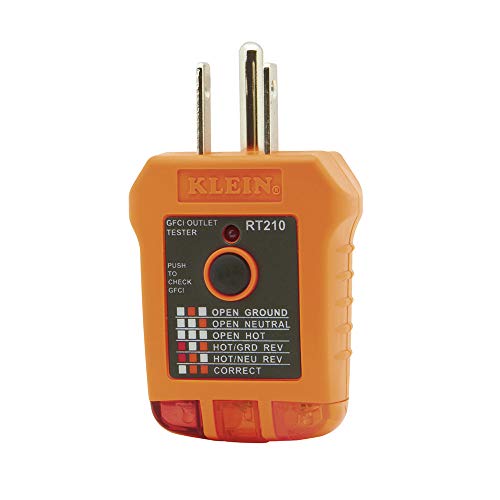
A three wire receptacle tester for standard and GFCI North American outlets, specified for 110 to 125 volts AC at 50 or 60 Hz, a 6.6 foot drop and an operating range of 32 to 140 degrees Fahrenheit.
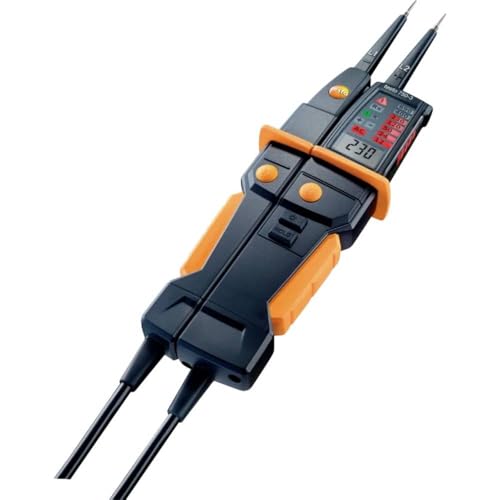
A two pole voltage tester with a three digit LCD showing measured voltage, a patented LED voltage bar viewable from any angle, polarity detection on DC and a GFCI test function for AC outlets.