As an Amazon Associate, Akermin earns from qualifying purchases. Product links on this page are affiliate links.

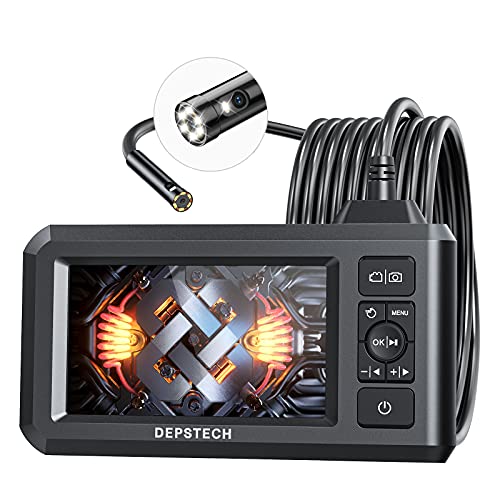
DEPSTECH · DEPSTECH Triple Lens Inspection Endoscope Camera with Light, 5" IPS Screen | 1920×1080P Industrial Video Borescope, 16.5FT Snake Cable, 10 LEDs, IP67 Waterproof, for Automotive, Plumbing, HVAC, Mechanic
View on AmazonPrice and availability are shown on Amazon and can change at any time.
A triple lens borescope with three 2 MP cameras at 76 degrees capturing 1080P, a five inch IPS screen, built in storage, a 16.5 ft semi rigid cable, IP67 protection, ten adjustable LEDs in an eight plus one plus one layout, 2 to 3 hours of runtime and magnet and hook accessories. The three lenses are a real answer to a real problem. The LED split is the detail to understand before buying, because it tells you that only one of those three views is properly lit.
What three fixed lenses solve
The opening bullet names the problem honestly: with a single lens you are constantly adjusting the cable. That is true and it is the central frustration of cheap inspection cameras. The thing you want to see is rarely directly ahead, so you spend the inspection twisting and pushing rather than looking.
Two lenses, front and side, cut most of that out. A third adds another fixed angle, and each press of a button changes your view without moving anything physical. Inside a pipe that means examining the wall, the joint ahead and a third aspect without withdrawing and re entering.
What it is not is steering. Every lens points in a direction fixed at the factory. If the feature you care about sits between two of those directions, you are back to rotating the cable, and on a semi rigid probe a twist at the handle does not reliably reach the tip. Three fixed views is a cheaper and more robust answer than an articulating head, with a mechanism that cannot jam in a wet pipe, and it remains an approximation. The articulating comparison covers the alternative.
The LED layout is the specification that matters
The fourth bullet states ten adjustable LED lights in an eight plus one plus one layout. Read that next to three lenses and the arithmetic does the talking: eight lights serve one lens, and the remaining two lenses have one each.
The listing never draws that conclusion, and it is the most practically useful thing in the specification.
Illumination on a borescope is not a detail, it is the whole image. The camera is in a dark enclosed space a few centimetres from its subject, and everything it records is light the probe brought with it. Eight LEDs around a lens give an even, usable wash. One LED beside a lens gives a lit patch with shadow around it.
So the honest expectation is that the primary lens produces the good pictures and the two secondary lenses produce usable but noticeably dimmer views. For orientation and for spotting that something is there, dim is fine. For judging whether a mark is a crack, you will want the well lit lens on it.
None of this makes the design bad. It makes it a main camera with two supporting views, rather than three equal cameras, and knowing that changes how you use it.
The five inch screen, and what it costs
At five inches this is the largest display in this group, and the listing claims vivid real time viewing with zero lag and accurate colour reproduction.
The benefit is concrete on a long cable. At sixteen feet, repositioning the probe to look again is slow, so seeing a faint feature on the first pass matters. A bigger panel makes that more likely.
The cost appears two bullets later: 2 to 3 hours of continuous operation, the shortest runtime in this group. A larger screen is a larger load, and nothing in the listing mentions running while charging.
There is a second cost that specifications do not capture. A five inch handset is a larger object to hold in a confined space, and borescope work frequently happens in positions where you are already short of room.
The published specification, and the notable absence
| Specification | Published in the listing |
|---|---|
| Lenses | Three, button switched |
| Capture | 2 MP stills, 1080P video, per lens |
| Field of view | 76 degrees |
| Screen | Five inch IPS |
| Storage | Built in |
| Cable | 16.5 ft, about 4.9 m, semi rigid |
| Protection | IP67 |
| Lighting | Ten adjustable LEDs, eight plus one plus one |
| Runtime | 2 to 3 hours continuous |
| Accessories | Magnet, hook |
| Focus range | Not stated in the listing bullets |
| Probe diameter | Not stated in the listing bullets |
The missing focus range is a pointed omission because the same manufacturer publishes two focus windows on its dual lens DS300, down to the centimetre. The information exists inside the company. On a tool whose selling point is three viewing angles, knowing the distance at which each of them is sharp is not a nicety.
The probe diameter is absent too, which is the usual gap in this category and the usual advice applies: if your access is tight, find the figure before buying.
Built in storage is a genuine convenience worth noting, since a sibling product in this range states explicitly that no memory card is included.
Who should buy it
Buy this if you inspect in places where the interesting thing is rarely straight ahead and you would rather press a button than wrestle a cable: drains with junctions, ducts, machinery with internal faces, cavities. Three fixed views plus the largest screen here plus built in storage is a coherent package for that, and IP67 with sixteen feet of semi rigid cable covers wet long reach work.
Think twice if you expect all three lenses to produce equally good images, because the LED split says otherwise. Think twice if your working day needs more than three hours without a charge. And if your target access is tight, or you need to know where the cameras are sharp, the dual lens sibling publishes the focus windows this listing leaves out.
Recommended Tools

Products shown because their documented specifications fit this guide. Price and availability are on Amazon and can change.
Frequently Asked Questions
What does the 8 plus 1 plus 1 LED layout imply?
That the three lenses are not equally lit. The listing states ten adjustable LEDs in an eight plus one plus one arrangement alongside three lenses, so the sensible reading is eight lights on the main lens and a single light on each of the other two. In a dark pipe the primary view will be well lit and the secondary views considerably dimmer. The listing never says this, and it is the most useful thing the specification reveals.
Is a third lens better than two?
It depends whether you need the third direction. Two lenses give you ahead and beside. A third adds another fixed angle, and the listing frames the benefit as not having to constantly adjust the cable with a single lens. More fixed views means less cable wrestling. It still is not steering, because every view points where it points.
How does it compare with the dual lens DS300 from the same brand?
They make different trades. The DS300 publishes a focus range for each of its two cameras and offers a split screen mode on a 4.3 inch panel. The DS620 adds a third lens and a five inch screen with built in storage, but publishes no focus range at all. If knowing your focus window matters, the cheaper sibling tells you and this one does not.
Is 2 to 3 hours of runtime a problem?
It is the shortest in this group and the five inch screen is why. A larger panel draws more, and the listing states 2 to 3 hours of continuous operation. For a few inspections in a working day that is adequate. For a long survey session, plan to charge, because there is no stated option to run while charging.
What does a 76 degree field of view mean in practice?
It is on the narrow side for this category, where 170 degree figures get quoted, though some of those describe the screen viewing angle rather than the lens. Narrower means less of the surroundings in frame and more pixels on the centre of interest, which suits close examination over broad searching.
Affiliate disclosure: Akermin earns a commission from qualifying Amazon purchases made through links on this page. Our editorial picks are based on documented specifications and owner feedback, not commissions.