As an Amazon Associate, Akermin earns from qualifying purchases. Product links on this page are affiliate links.
Short answer: if the readings are for a report, a complaint, a workplace assessment or anything that might be challenged, buy the kit with the calibrator. If you simply want to know how loud a room, a machine or a neighbour is, the SL510 and its stated Class 2 accuracy is the more straightforward purchase.
What Each Listing States
| Item | Extech SL510 | Extech 407732 kit |
|---|---|---|
| Range | 35 to 130 dB | 35 to 130 dB |
| Classification | Class 2, plus or minus 1 dB | Not stated clearly in the bullets |
| Response settings | Fast and slow | Not stated clearly in the bullets |
| Functions | Data hold, min and max, backlit LCD | Not stated clearly in the bullets |
| Calibrator | Not included | Included, per the product title |
A note on sourcing: the bullet points currently shown on the 407732 kit listing describe datalogging and a display with humidity and date, which does not match a sound level meter and appears to belong to another product. We have therefore quoted only the title specification for that model and recommend checking the current datasheet before purchase.
What a Calibrator Actually Does
An acoustic calibrator fits over the microphone and produces a known sound pressure level, typically a steady tone at a defined level. You check the meter reads that level, adjust if the instrument allows it, take your measurements, then check again afterwards. That before and after pair is what turns a number into evidence, because it demonstrates the instrument was working at the time.
Without one you are relying on factory calibration that may be years old. Microphone capsules are delicate, they age, and they can be damaged by a drop or by wind and moisture in ways that leave no visible sign.
Class 2 Is the Right Grade for Most Work
The SL510 stating Class 2 and 1 dB accuracy is a meaningful claim. Class 1 instruments exist for laboratory and precision environmental work and cost several times as much. Class 2 is the grade generally accepted for occupational noise assessment, general environmental measurement and community noise complaints. A meter that quotes no class at all is not comparable to either.
Get the Settings Right or the Number Means Nothing
- Frequency weighting: A weighting approximates human hearing and is what most regulations specify. C weighting is used for peak and low frequency assessment.
- Time weighting: fast for fluctuating noise, slow for steady sources. The SL510 states both.
- Position: hold the meter away from your body and out of reflections. A reading taken against a wall is not a reading of the room.
- Wind: use a windscreen outdoors. Wind noise on a bare microphone produces impressive and meaningless numbers.
Who Buys Which
- Workplace noise assessment or anything documented: the kit with a calibrator.
- Noise complaints where the reading may be disputed: the kit.
- General curiosity, machinery checks, room acoustics: SL510.
- Occasional use only: SL510, and consider hiring a calibrated instrument for anything formal.
How We Research
Specifications come from the manufacturer listings, and where a listing’s bullet text appears to belong to a different product we say so rather than quoting it. We did not run laboratory tests. Ranking in the sound level meter roundup.
Recommended Tools

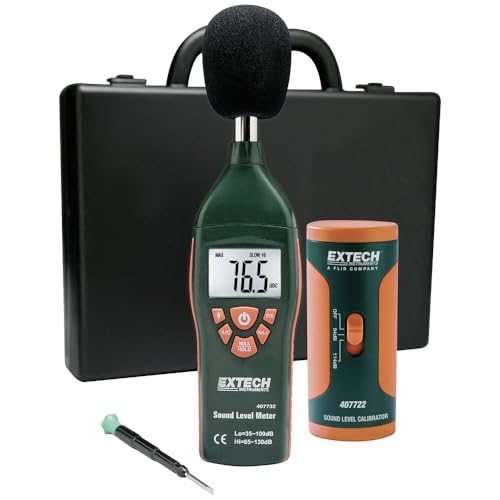

Products shown because their documented specifications fit this guide. Price and availability are on Amazon and can change.
Frequently Asked Questions
What does Class 2 mean?
It is a tolerance classification in the international standard for sound level meters. Class 1 is the tighter laboratory grade and Class 2 is the general purpose grade accepted for most occupational and environmental measurements. The SL510 listing states Class 2 with 1 dB accuracy.
Why does a calibrator matter?
It applies a known sound pressure level to the microphone so you can confirm the meter reads correctly before and after a measurement session. Without it you are trusting that nothing has drifted, and microphones do drift and can be damaged.
What is the difference between fast and slow response?
They are time weightings. Fast follows rapid changes and is used for fluctuating noise; slow averages over a longer window and gives a steadier figure for continuous sources. Most standards specify which to use.
Note on the listing text
The bullet points on the 407732 kit listing describe datalogging and a triple LCD with humidity and date, which do not match a sound level meter. Treat the title specification of 35 to 130 dB with a calibrator as the reliable part and check the datasheet.
Affiliate disclosure: Akermin earns a commission from qualifying Amazon purchases made through links on this page. Our editorial picks are based on documented specifications and owner feedback, not commissions.