As an Amazon Associate, Akermin earns from qualifying purchases. Product links on this page are affiliate links.
Opening a window lowers CO₂ almost always, but not always quickly. Air only moves through a window if something pushes it: wind, a temperature difference between inside and out, or a second opening that lets air flow across the room. On a still, mild day with one window open and the door shut, a monitor can sit at 1,200 ppm for half an hour. Open the door as well and it drops in minutes.
Three ways air moves through a window
Wind
Wind pressing on one side of a building pushes air in through openings on that side and pulls it out on the other. A single open window on the windward side gets air in, but with nowhere for it to go the exchange is limited to turbulence at the opening. Two openings on different walls, or a window and an open door to a room with its own window, create cross-ventilation and the CO₂ curve falls steeply.
Temperature difference (stack effect)
Warm indoor air is lighter than cold outdoor air. In winter, opening a window lets warm air spill out the top and cold air pour in the bottom, even with no wind. That is why a winter window drops CO₂ in minutes while a summer window, with inside and outside at the same temperature, barely moves it.
Mechanical push
An extract fan in a bathroom or kitchen depressurizes the house and pulls outdoor air in through any open window. Turning on the cooker hood with a window open elsewhere is a reliable way to move air on a still day.
What a monitor shows
A CO₂ monitor makes all of this visible. Try it: note the reading, open one window, watch for ten minutes. Then open the door too. The second curve is usually several times steeper. Monitors with a history chart let you compare strategies over a week. See how fast a CO₂ monitor should respond for how much of the delay is the sensor rather than the room.
Trade-offs
- Heat loss. Short, wide openings (five to ten minutes, window fully open) exchange the air while the walls and furniture stay warm. A window left on a crack for hours loses more heat for the same air exchange.
- Outdoor pollution. Ventilation trades indoor CO₂ for outdoor air. Beside a busy road or during wildfire smoke, opening the window lowers CO₂ and raises PM2.5. A monitor that reads both, or a check of the local outdoor air index, tells you which matters more right now. See PM2.5 vs PM10.
- Noise and security. Trickle vents and window restrictors give a permanent small opening without either problem.
When a window is not enough
A meeting room full of people produces CO₂ faster than a single window can remove it. Above about 1,500 ppm with the window already open, the fix is fewer people or mechanical ventilation, not a wider opening. Offices with sealed windows depend entirely on the HVAC fresh-air setting; see air quality monitors for offices.
Rule of thumb
One opening ventilates slowly; two openings ventilate fast. If the monitor is not dropping, open a second door or window on a different wall before opening the first one wider.
Recommended Tools
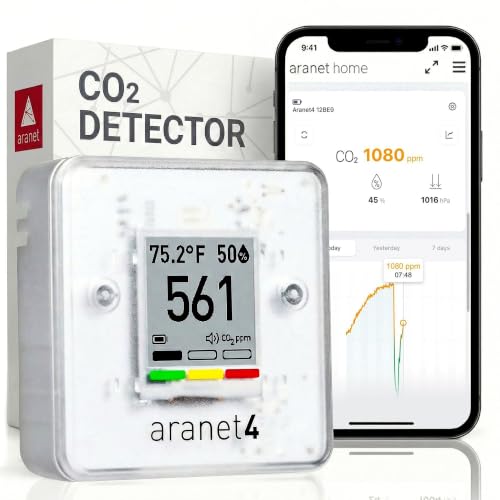
Products shown because their documented specifications fit this guide. Price and availability are on Amazon and can change.
Frequently Asked Questions
How long does it take for CO₂ to drop after opening a window?
With a window and a door open on opposite sides of a room, a few minutes. With a single window and no other opening on a still, mild day, 30 to 60 minutes or more.
Should I leave the window open all the time?
Only if the outdoor air is clean and the heat loss is acceptable. Short, wide openings several times a day move as much air as a small permanent gap with less heat loss.
Can opening a window make air quality worse?
It lowers CO₂ but can raise PM2.5 and pollen if the outdoor air is smoky or the window faces a busy road. Check an outdoor air quality reading before ventilating during a smoke event.
Affiliate disclosure: Akermin earns a commission from qualifying Amazon purchases made through links on this page. Our editorial picks are based on documented specifications and owner feedback, not commissions.