As an Amazon Associate, Akermin earns from qualifying purchases. Product links on this page are affiliate links.

H HOLDPEAK · HoldPeak Handheld Anemometer Barometer, Weather Meter for Wind Speed, Temperature, Humidity, Dew Point, Altitude, Barometric Pressure, Wind Chill Measuring, Digital Wind Guage 866B-WM
View on AmazonPrice and availability are shown on Amazon and can change at any time.
A pocket weather meter that displays wind speed in five units, air temperature, relative humidity, dew point, altitude, barometric pressure and wind chill, stores 16 sets of barometric pressure data, allows the pressure reference to be corrected manually before reading altitude, and carries a tripod socket and a wrist strap. The listing calls it six in one and then lists seven readings, and separating the sensed quantities from the calculated ones tells you most of what you need to know before buying.
Six in one, and then seven readings
The first bullet opens with the words 6-in-1 Weather Meter and then lists wind speed, temperature, humidity, dew point, altitude, barometric pressure and wind chill. That is seven items.
This is not a scandal. It is the sort of mismatch that happens when a headline and a feature list are written at different moments. It is worth noticing anyway, because the moment you start counting you arrive at a better question: how many of those seven readings actually come from a sensing element?
Four sensors is the number that matters
Three of the seven are arithmetic.
- Dew point comes from temperature and relative humidity. It is the temperature at which the air just sampled would reach saturation, and the relationship between the three quantities is fixed, so any instrument holding the first two can display the third.
- Wind chill comes from wind speed and temperature. It is an index of how quickly exposed skin loses heat, not a temperature that exists at any point in the air.
- Altitude comes from barometric pressure. The third bullet says this outright, which is more than most listings in the category manage.
What remains is four measurements: wind speed from the impeller, temperature and relative humidity from a combined sensor, and absolute pressure from a barometric sensor.
Understanding the split changes what you should expect. A derived reading can never be better than the inputs behind it, and it is normally worse, because the uncertainty of both inputs propagates into the result. If the humidity figure is a few points optimistic, the dew point is out by more than that. So the specification to interrogate before trusting a dew point is the humidity tolerance, which brings us to the part of this listing that is missing. Our explainer on calculating dew point from temperature and humidity sets out the relationship.
The altitude correction is an admission, and a welcome one
Having listed altitude as a headline function, the third bullet then explains that altitude is calculated from barometric pressure and that the pressure can be corrected manually beforehand to get more accurate data.
Read that as a disclosure rather than a feature. A pressure altimeter cannot know its height above sea level. It knows the pressure in its immediate surroundings, and turning that into a height requires a reference value for pressure at sea level. That reference drifts with the weather, by enough to move an indicated height noticeably as a front passes over the same hillside.
An altimeter without a settable reference therefore reports a different altitude on a stormy day than on a settled one, in the same place, and never tells you. By providing the correction and stating why it is needed, this listing tells you plainly that the altitude figure is only as good as the reference you feed it. Most listings sell the altitude function and stay quiet.
Sixteen records, and what logging would have meant
The same bullet promises barometric data logging and then publishes the capacity: 16 sets of barometric pressure data.
Sixteen is a small number, and there is no stated interval between records, so the period those 16 entries cover is unknown. That matters, because pressure is interesting over time rather than at an instant. A falling trend is the signal people watch for, and separating a trend from ordinary wobble needs enough points spread over enough hours.
Sixteen readings is a notebook with the writing done for you. On a boat or a ridge, where the question is whether pressure has moved since you set out, that is genuinely convenient. It is not a record you would hand to a client, and it is not what the word logging implies on an instrument that stores timestamped samples by the thousand.
Credit where it is due, though. The listing publishes the number. Plenty of listings use the word logging and never say how much.
Units everywhere, and not one tolerance
The second bullet is essentially a list of unit conversions: wind speed in metres per second, kilometres per hour, feet per minute, knots and miles per hour, temperature in C and F, altitude in metres and feet, pressure in inches of mercury and hectopascals. Alongside those it lists maximum, minimum and average wind speed, a battery level indicator, automatic power off and a backlight.
All of that is real and all of it is useful in the field. What the five bullets never do is say how close any reading sits to the truth, or what span the instrument can read at all.
| Figure a buyer would want | What the bullets say |
|---|---|
| Readings displayed | Wind speed, temperature, humidity, dew point, altitude, pressure, wind chill |
| Wind speed units | m/s, km/h, ft/min, knots, mph |
| Pressure units | inHg, hPa |
| Stored pressure records | 16 sets |
| Altitude reference | Correctable manually before measurement |
| Wind speed statistics | Maximum, minimum, average |
| Mounting and retention | Tripod hole, hand strap |
| Span of the wind speed scale | Not stated in the listing bullets |
| Lowest air speed the impeller will register | Not stated in the listing bullets |
| Tolerance on wind speed | Not stated in the listing bullets |
| Temperature span and tolerance | Not stated in the listing bullets |
| Humidity span and tolerance | Not stated in the listing bullets |
| Pressure span and tolerance | Not stated in the listing bullets |
| Interval between stored records | Not stated in the listing bullets |
| Cell type and expected runtime | Not stated in the listing bullets |
The blank row to care about most is the starting threshold of the impeller. A vane anemometer needs a certain airflow before friction allows it to turn at all, and below that point it reads zero rather than reading low, which is a far more misleading failure. The fifth bullet claims sensitivity to very low airflow in ventilation installation and duct vent work, and that is a claim about precisely this figure, made without the figure.
The same caveat follows the airflow arithmetic in that bullet. Multiplying velocity by duct area is the correct way to reach a volume flow, and it is decent of a listing to teach it, but the method assumes the velocity you captured represents the whole cross section. It does not, because flow is faster at the centre of a duct than at its walls. Our guide to handheld anemometers covers how a traverse is done properly.
Fit for the field, not for a report
Buy this if what you want is a rough but immediate sense of conditions in the palm of your hand: how hard the wind is blowing, how muggy it is, whether pressure is sliding and roughly how high you are. That is a real need, and the tripod socket, the strap, the five wind units and the settable pressure reference all serve it well. For drone flying, sailing, kite work, golf or a day on a hill, the seven readings answer the questions you are going to ask.
Do not buy it if a number has to survive someone else looking at it. Commissioning a ventilation system, recording a duct velocity for a client or documenting conditions for a process all depend on a stated tolerance, and there is not one anywhere on this page. The low end is the same problem in a different form: if the job is checking trickle flow at a vent, you need the threshold figure before a zero means anything. Anyone in that position should compare published tolerances across portable weather meters and refuse to proceed without them.
Recommended Tools

Products shown because their documented specifications fit this guide. Price and availability are on Amazon and can change.
Frequently Asked Questions
Is it six functions or seven?
The bullet opens with 6-in-1 and then names seven readings: wind speed, temperature, humidity, dew point, altitude, barometric pressure and wind chill. It is a counting slip in the copy rather than anything sinister, but it is a useful prompt, because only four of those seven come from a sensing element. Dew point, wind chill and altitude are all calculated from the other readings.
Why does the altitude reading need correcting?
Because a pressure altimeter does not know how high it is. It knows the air pressure where it is sitting, and converting that to a height needs a reference, usually the sea level pressure for your area at that moment. Weather moves that reference around, which is why the same spot can indicate two different altitudes on two different days. The third bullet states that you can correct the barometric pressure manually before measuring altitude, which is both a feature and a quiet admission about how the figure is produced.
Can I use it to set up ductwork and calculate airflow?
The last bullet suggests so, and gives the arithmetic: airflow in cubic feet per minute equals wind speed multiplied by the duct cross sectional area. The formula is right. Two things make the result approximate. Velocity is higher in the middle of a duct than near the walls, so a single centre reading overstates the average unless you traverse several points and average them. And the bullet claims sensitivity to very low airflow without publishing the lowest speed the vane will register, which is the figure that decides whether a low reading is real.
What do 16 sets of barometric data actually give you?
Sixteen stored pressure readings, with no stated interval between them and no stated way of exporting them. That is enough to see whether pressure has moved since you started, which is the question most people take a barometer outdoors to answer. It is not a log in the sense of an instrument that records thousands of timed samples, and it will not produce a chart anyone else can use.
Is wind chill a temperature?
No. It is an index that expresses how fast bare skin loses heat in moving air, expressed on a temperature scale so that it feels intuitive. A thermometer placed in the same wind will not read the wind chill figure. It is useful for deciding what to wear and useless for deciding whether a pipe will freeze, because a pipe is not skin and does not care about convective heat loss from a human forearm.
Affiliate disclosure: Akermin earns a commission from qualifying Amazon purchases made through links on this page. Our editorial picks are based on documented specifications and owner feedback, not commissions.
Related Guides

CPS LS790B Leak-Seeker Review: Non Combustible Is the Deciding Word
An ion pump refrigerant leak detector individually calibrated to find a leak rate better than a quarter of an ounce per year, with ten selectable sensitivity ranges, a water vapour filter and a bar graph plus tone display.
Read More→
BW Clip BWC2-H Review: Alarm Points Set Before the Clock Starts
A single gas hydrogen sulfide detector with one button operation, hibernation mode, automatic logging of the 35 most recent gas events and bump test results, and compatibility with IntelliDoX and MicroDock II docking.
Read More→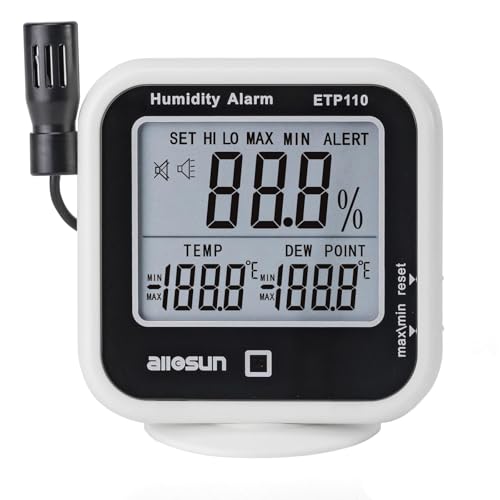
ALLOSUN Thermometer Hygrometer Review: Half a Metre of Lead and No Tolerance
A battery powered thermometer and hygrometer showing temperature, relative humidity and dew point, with a settable humidity alarm, a sensor on a lead of about 50 cm, maximum and minimum memory and a large LCD.
Read More→