As an Amazon Associate, Akermin earns from qualifying purchases. Product links on this page are affiliate links.
Compare instruments by converting each of the three specifications to the same absolute units at the value you actually measure. Accuracy: the tolerance around the true value (convert percentages of reading at your typical level). Resolution: the smallest display step (must be finer than the accuracy; otherwise irrelevant). Repeatability: the spread of repeated readings (sets the smallest change you can detect). Note the conditions each applies under, add drift per year, and weight accuracy for threshold and cross-device comparisons and repeatability for trend watching.
The three definitions
- Accuracy: how far a reading may be from the truth. Stated as ±(fixed + percentage). See accuracy vs precision.
- Resolution: the smallest change the display can show. See range vs resolution.
- Repeatability: agreement between repeated readings of the same thing under the same conditions. See what repeatability is.
The worksheet
- Write the value you typically measure (e.g. 45% RH, 1,000 ppm, 230 V).
- For each instrument, convert accuracy to ± absolute units at that value.
- Note the conditions: temperature, sub-range, after calibration.
- Add annual drift if the instrument will not be recalibrated.
- Write resolution; confirm it is finer than accuracy.
- Write repeatability; if absent, estimate or test.
- Decide the use: trend, threshold or comparison; weight accordingly.
Worked example: two hygrometers at 45% RH
| Meter A | Meter B | |
|---|---|---|
| Stated accuracy | ±2% RH (20 to 80%) | ±3.5% RH (typical); ±5% (max) |
| At 45% RH | ±2 points | ±3.5 to 5 points |
| Drift | Under 0.25% per year | Not stated |
| Resolution | 0.1% | 1% |
| Repeatability | ±0.1% | Not stated; likely ±1% |
| Verdict for a 60% mold threshold | Can distinguish 58 from 62 | Cannot reliably |
| Verdict for watching a bedroom trend | Sees 0.5-point changes | Sees 2-point changes |
Worked example: two CO₂ monitors at 1,000 ppm
| Monitor A | Monitor B | |
|---|---|---|
| Stated accuracy | ±(30 ppm + 3%) | ±(50 ppm + 5%) |
| At 1,000 ppm | ±60 ppm | ±100 ppm |
| Resolution | 1 ppm | 1 ppm |
| Repeatability | ±10 ppm | ±20 ppm |
| Verdict for a 1,000 ppm alert | Either is fine; bands are hundreds apart | |
| Verdict for comparing two rooms | Calibrate both outdoors first; then A is tighter |
See how to compare CO₂ monitor accuracy specifications.
Which to weight
| Use | Weight |
|---|---|
| Trend in one place over time | Repeatability first; accuracy barely matters |
| Reading against a threshold | Accuracy, at the threshold value |
| Comparing devices or rooms | Accuracy plus calibration in a shared reference |
| Research or compliance | Accuracy with certificate and stated uncertainty; see what measurement uncertainty is |
Things spec sheets hide
- Accuracy that only holds in a sub-range.
- “Typical” versus “maximum” figures.
- Conditions such as 25 °C and after calibration.
- No drift figure, which for a long deployment matters more than initial accuracy.
Reading the certificate that comes with a professional instrument is covered in how to read a calibration certificate.
Recommended Tools
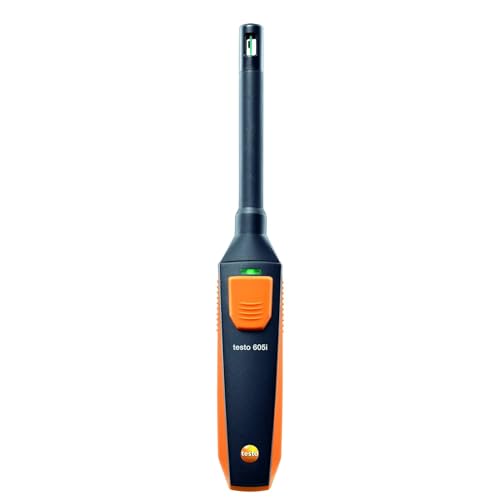
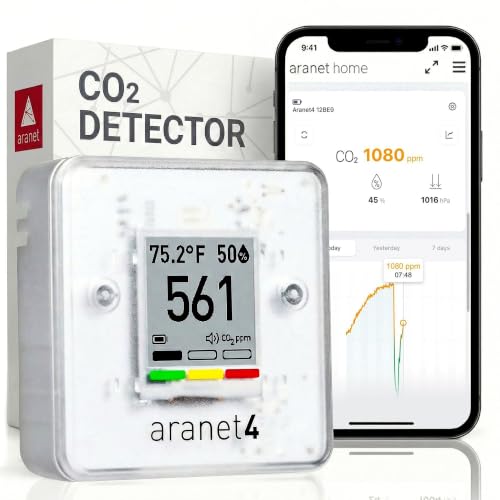

Fluke 117 Digital Multimeter, Non-Contact AC Voltage Detection, Measures Resistance/Continuity/Frequency/Capacitance/Min
View on AmazonProducts shown because their documented specifications fit this guide. Price and availability are on Amazon and can change.
Frequently Asked Questions
Which specification matters most?
For watching trends in one place, repeatability. For comparing with a threshold or another device, accuracy. Resolution only needs to be finer than the accuracy, and often already is.
Can I compare a spec given as ±2% with one given as ±0.5 units?
Convert both to absolute units at the value you care about. ±2 percent at 50% RH is ±1 point; ±0.5 units is ±0.5 points. Then compare.
What if a spec sheet omits repeatability?
Common on consumer devices. Assume it is a few counts of the last displayed digit for a settled sensor, or test it yourself with ten readings in a stable environment.
Affiliate disclosure: Akermin earns a commission from qualifying Amazon purchases made through links on this page. Our editorial picks are based on documented specifications and owner feedback, not commissions.