As an Amazon Associate, Akermin earns from qualifying purchases. Product links on this page are affiliate links.
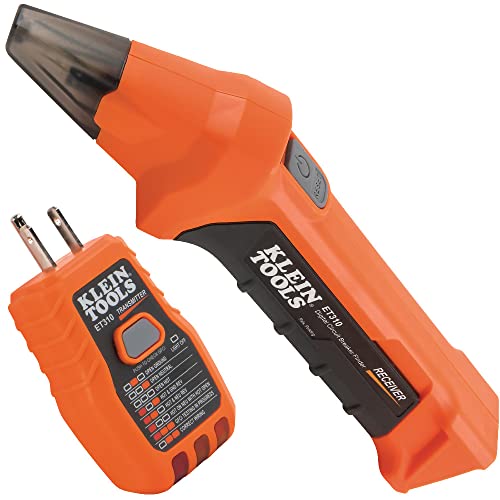
KLEIN TOOLS · Klein Tools ET310 AC Circuit Breaker Finder
View on AmazonPrice and availability are shown on Amazon and can change at any time.
A two part breaker finder: a transmitter that plugs into an outlet or connects at a fixture and injects a signal onto the circuit, and a receiver you sweep across the panel until it gives a visual and audible indication. One line in the listing settles the purchase. The compatibility bullet states 90 to 120 V AC, which is one supply voltage on one continent, so this tool is either exactly right for your panel or no use at all. The GFCI test function built into the transmitter is the best idea in the design.
Wide compatibility means one voltage and one continent
The bullet is headed WIDE COMPATIBILITY and then states operation on 90 to 120 V AC circuits, described as suitable for a variety of electrical systems and installations.
Read the figure rather than the heading. A window of 90 to 120 V AC is a 120 V nominal supply with some margin underneath it and nothing above it at all. That is the narrowest supply window a mains tool can be given.
What falls outside it:
- Any 240 V branch circuit, which is where a range, a dryer, a water heater, a vehicle charger and most central air equipment live.
- Any 230 V or 240 V nominal national supply, which is most of the world outside North America.
- Both legs of a split phase service taken together, since the tool works on one 120 V leg at a time.
So the heading promises variety and the number describes the opposite. This is not a safety problem, because a transmitter that cannot energise a circuit simply does nothing. It is a buying problem, and it has to be settled first. If your panel is a split phase load centre, this tool will trace the 120 V circuits in it and leave the 240 V ones to another method. Our roundup of circuit breaker finders covers which tools reach the higher voltage circuits.
The GFCI test is free by construction, and worth having
The fifth bullet states that the transmitter includes a GFCI outlet tester, for inspecting wiring conditions and testing GFCI devices.
That combination deserves credit because of where it sits. The transmitter already has to be plugged into the outlet with connections to the hot, neutral and earth conductors in order to inject its tracing signal. A receptacle wiring indicator and a GFCI trip button need exactly the same three connections. Adding them costs the design very little and saves you carrying a second tool and swapping it in and out of the socket.
A GFCI test button works by deliberately passing a small current from the hot conductor to the earth conductor, bypassing the neutral. A ground fault circuit interrupter is built to notice that imbalance and open. Pressing the button therefore tests the protective device rather than confirming that power is present, which is a different and more useful thing than a neon lamp.
One practical note the bullets do not make: tripping a GFCI while the transmitter is plugged into it also kills the signal you are tracing, so do the breaker hunt first and the GFCI test afterwards. Our guide to outlet testers explains what the wiring fault indications can and cannot tell you.
Nothing in the bullets narrows down the breaker next door
Every breaker finder has the same hard problem and this listing does not describe its answer to it.
Breakers in a panel are physically adjacent and their conductors are bundled together behind the deadfront. A receiver sensitive enough to pick up the transmitter signal through one breaker case will usually pick up some of it through the two or three cases either side. What you get is a region of the panel rather than a position.
The standard answer is a sensitivity control. Find the region at high sensitivity, wind the sensitivity down, sweep again, and repeat until only one breaker still responds. A finder with a usable sensitivity adjustment reaches a single answer. One without it leaves you switching candidates off and walking back to the outlet.
The listing offers clear indications, visual and audible cues, a hassle free locating process and accurate identification with precision. None of that is a sensitivity control, and no adjustment of any kind is mentioned in the five bullets. Treat it as not stated rather than as absent, but build your technique on the assumption that the last step may be yours.
The five bullets as a table, with the panel ratings missing
| Item | What the listing states |
|---|---|
| Supply range | 90 to 120 V AC circuits |
| Architecture | Two part, transmitter at the outlet or fixture, receiver at the panel |
| Indication | Visual and audible, from the receiver |
| Extra function | GFCI outlet test built into the transmitter |
| Receiver sensitivity adjustment | Not stated in the listing bullets |
| Measurement category rating | Not stated in the listing bullets |
| Battery type or battery life | Not stated in the listing bullets |
| Panel depth or breaker types supported | Not stated in the listing bullets |
| Working temperature range | Not stated in the listing bullets |
| Leads or adaptors for fixture connection | Not stated in the listing bullets |
The category rating is the omission worth pressing on. The receiver is held inside an opened load centre, inches from live busbars, which is exactly the environment such a rating exists to describe. It is a transient withstand classification rather than a working voltage limit, and on a tool used at a service panel it belongs on the page. Our explainer on CAT ratings sets out what each level actually covers.
The missing battery information is a smaller thing but a real one. A two part tool has two power sources, and a receiver with a weakening battery loses sensitivity gradually rather than switching off, which produces precisely the ambiguous result described above.
The buyer this suits, and the circuit it will not touch
Buy it if you work on 120 V branch circuits in a split phase North American installation and you spend time matching outlets to breakers in panels somebody else failed to label. The two part architecture is the right one, the GFCI function genuinely removes a tool from the bag, and the audible plus visual indication means you are not staring at a display inside a dark panel.
Do not buy it for a 230 V or 240 V supply of any kind, because the stated window excludes it and no accessory in the bullets extends it. Do not buy it expecting to trace a dead circuit, since the transmitter needs the circuit energised to put a signal on it. And if the panels you work in are crowded and you need an unambiguous answer every time, establish whether the receiver sensitivity can be adjusted before committing, because that is the feature which decides how often you get one.
Recommended Tools


Products shown because their documented specifications fit this guide. Price and availability are on Amazon and can change.
Frequently Asked Questions
Will the ET310 work on a 240 V circuit?
Not according to the listing. The compatibility bullet states operation on 90 to 120 V AC circuits, which is a 120 V nominal supply with margin below it and none above. A 240 V range circuit, a 240 V dryer outlet, a 230 V national supply and any hardwired 240 V appliance all fall outside that window. The transmitter has to energise the conductor with its own signal through a standard outlet connection, and nothing in the bullets describes an accessory that extends the range.
Does the receiver have adjustable sensitivity?
Not stated in the listing bullets, and it is the specification that separates a breaker finder you trust from one you argue with. Breakers sit physically adjacent in a panel with their conductors bundled behind them, so a receiver sensitive enough to find the signal will usually respond on two or three positions either side. The standard answer is a sensitivity control you wind down until only one breaker still responds. The bullets describe visual and audible cues and say nothing about adjusting a threshold, so plan on confirming the answer by switching the candidate off.
What does the built in GFCI tester actually do?
It deliberately passes a small current from the hot conductor to the earth conductor, bypassing the neutral. A ground fault circuit interrupter watches for exactly that imbalance and should open within a fraction of a second, so pressing the button is a functional test of the protective device rather than a check that power is present. The listing also describes it as inspecting wiring conditions, which is the receptacle wiring indication that comes free from the same three connections.
Is there a measurement category rating?
Not stated in the listing bullets. The receiver is a tool held inside an opened load centre with the cover off and live busbars a short distance from your hand, which is precisely the situation a category rating exists to describe. Its absence does not make the tool unsafe, but it does mean the listing gives you nothing to compare against another tool on that point, and the safe assumption is that your gloves, your eye protection and your technique are carrying the risk.
Can it find the breaker for a hardwired light fixture?
The listing describes the transmitter as connected to the outlet or fixture, so it contemplates fixtures as well as receptacles. The constraints are how you make the connection and whether the supply at that point sits inside the 90 to 120 V window. A lighting circuit at 120 V nominal is in range. The bullets do not describe leads, clips or an adaptor for connecting to anything other than an outlet, so establish what is in the box before planning to work that way.
Affiliate disclosure: Akermin earns a commission from qualifying Amazon purchases made through links on this page. Our editorial picks are based on documented specifications and owner feedback, not commissions.
Related Guides

Fluke 1AC II VoltAlert Review: Two Detection Thresholds in One Listing
A pocket sized non contact voltage tester whose tip glows red and beeper sounds when voltage is detected, with a continuous self test and a choice of audible or silent operation.
Read More→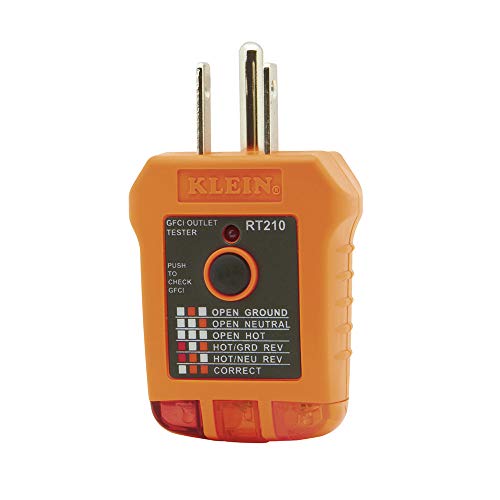
Klein Tools RT210 Review: A Fault Finder That Does Not List Its Faults
A three wire receptacle tester for standard and GFCI North American outlets, specified for 110 to 125 volts AC at 50 or 60 Hz, a 6.6 foot drop and an operating range of 32 to 140 degrees Fahrenheit.
Read More→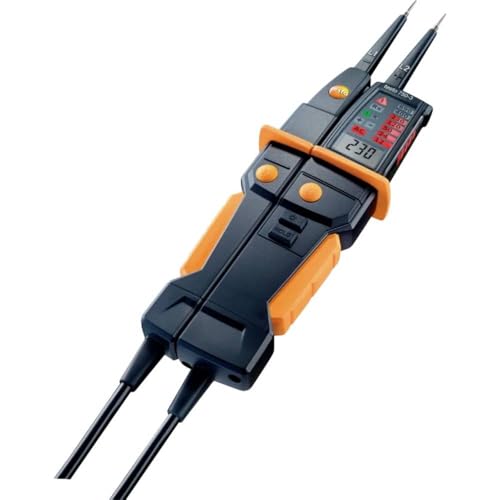
Testo 750-3 Review: Four Bullets, and No Published Category Rating
A two pole voltage tester with a three digit LCD showing measured voltage, a patented LED voltage bar viewable from any angle, polarity detection on DC and a GFCI test function for AC outlets.
Read More→