As an Amazon Associate, Akermin earns from qualifying purchases. Product links on this page are affiliate links.
For most surveys the honest answer is that you need both. A laser distance meter is faster and safer for long spans, high ceilings, and anything you cannot reach, and it removes the sag and stretch errors that make a long tape read short. A tape measure is the only one of the two that marks a point on a surface, measures around a corner, or confirms a dimension by contact. Use the laser for the room envelope and the tape for layout, offsets, and anything the beam cannot see. Neither instrument replaces a total station when the survey has a legal or engineering tolerance attached.
What each instrument physically measures, and why the numbers behave differently
A tape measure reports the distance along the tape between its zero hook and the mark you read. That sounds simple, but the tape is a physical object and it changes shape under load. A 30 m steel tape pulled taut between two points sags in the middle. The sag makes the tape follow a curve rather than a straight line, so the reading is longer than the true straight-line distance. The effect grows with the square of the span. At short room dimensions it is negligible. At 20 m or 30 m it is not, and a surveyor who pulls a long tape without correcting for tension and sag is recording a number that is wrong by a small but real amount.
A laser distance meter reports the time of flight of a light pulse to the target and back, converted to distance. The beam travels a straight line at a known speed, so the geometry is clean. The error sources are different: the beam must hit the target and return enough energy, the target surface must be diffuse enough not to scatter the return away from the detector, and the instrument must be held still and square to the surface. A laser does not sag. It also cannot measure through a window, around a corner, or to a surface that absorbs or scatters the beam badly.
The practical consequence is that the two instruments fail in opposite conditions. The tape is reliable at short range and awkward at long range. The laser is reliable at long range and awkward at short range, especially close to a wall where the instrument body gets in the way of its own beam.
Where the tape measure still wins, and why contact matters in a survey
A tape measure is a marking tool as much as a measuring tool. You hook the end on a corner, pull to a point, and the blade stays where you put it while you make a pencil mark. That sequence is the basis of setting out, checking square, and transferring a dimension from a drawing to a floor. A laser gives you a number on a screen; it does not hold a position on a surface while you work.
Contact also matters for confirmation. If a laser reading and a tape reading disagree, the tape is usually the one that tells you why. The beam may have caught a door frame, a curtain, or a surface at an angle. Walking the tape along the same line shows you what the beam actually hit. This is the single most useful diagnostic habit in a survey kit: when a laser number looks wrong, measure the same span with a tape before you write it down.
There is also the question of what the survey is for. A room survey that feeds a floor plan needs the envelope, but it also needs door and window positions, wall thicknesses, and service penetrations. Those are contact measurements. A laser distance meter speeds up the envelope and does nothing for the rest. A tape measure does both, more slowly.
The arithmetic of error: why a small percentage matters more than it looks
Laser distance meters are usually specified as an accuracy figure plus a small constant, something like plus or minus a few millimetres over the whole range. The constant matters because it is present on every reading, short or long. A tape measure’s error is dominated by reading and by tension, and it scales with length. The two error models are different shapes, which is why a single percentage comparison is misleading.
Consider a 25 m span. A tape pulled by hand at a tension well below its calibration tension will sag and read long. The correction depends on the tape’s weight per metre and the tension applied, and most hand surveys do not apply it. A laser on the same span reads the straight line directly. For a room envelope, the laser is the better instrument. For a 2 m offset from a wall to a column, the tape is faster and the error is irrelevant.
The general rule is that the instrument’s error should be a small fraction of the tolerance the survey has to meet. If the drawing tolerance is 10 mm, an instrument with a few millimetres of error is acceptable and a tape with centimetre-level sag error is not. If the tolerance is 2 mm, neither hand instrument is the right answer and the job belongs to a total station or a calibrated steel tape on a bench.
| Survey task | Tape measure | Laser distance meter |
|---|---|---|
| Room envelope, 3 m to 6 m spans | Good, watch the hook and the read | Good, faster, one person |
| Long span, 20 m or more | Sag and tension error, needs two people | Good, straight line by design |
| High ceiling or inaccessible surface | Not practical | The reason the instrument exists |
| Marking a point on a surface | The only option | Cannot do it |
| Around a corner or through a gap | Good | Beam cannot see the target |
| Confirmation of a doubtful reading | The reference check | Needs a second method |
The table is not a scorecard. It is a map of which instrument answers which question. A survey kit that contains only one of them will produce a plan with a predictable blind spot.
Targets, surfaces and the conditions that spoil a laser reading
A laser distance meter needs a return. Matte plasterboard, concrete, and timber return well. Glass returns poorly or not at all, and a beam that passes through a window measures the room beyond it, not the window. Polished metal and glossy tile can scatter the return away from the detector, giving a short or failed reading. In bright sunlight the ambient light can swamp the return on a consumer instrument, which is why outdoor use is the hardest case for a laser and the easiest for a tape.
Angle matters as much as surface. The beam must strike the target close to perpendicular. At an angle, the path length is longer than the perpendicular distance, and the error grows quickly. A reading taken across a room to a wall you are not square to is not the room dimension. The fix is to use the instrument’s indirect or Pythagorean mode, which measures two or three legs of a triangle and computes the third, or to take the reading from a position where the beam is square.
This is where a second instrument earns its keep. If you are unsure whether the beam hit the wall or the skirting, the tape tells you. If you are unsure whether the wall is square to your line, the tape and a 3-4-5 check tell you. The laser is a fast number generator, not a substitute for understanding the geometry.
What neither instrument does, and when the survey needs a different class of tool
Neither a tape nor a handheld laser measures angles to survey tolerance, records coordinates, or closes a traverse. If the survey has to tie into a grid, establish a boundary, or produce a drawing that will be relied on for construction or legal purposes, the correct instrument is a total station, and the handheld pair is a preliminary tool. Saying so is not a criticism of either instrument; it is a statement about what the job requires.
Neither instrument measures the environment the survey is taking place in, which is why environmental monitoring surveys use a different kit entirely. If the question is whether a room is noisy enough to affect a measurement or a worker, a sound level meter is the instrument, and a listing such as the RISEPRO digital sound level meter illustrates the class: it reports 30 to 130 dB with a stated plus or minus 1.5 dB, which is a different kind of number from a distance. If the question is indoor air quality, a CO2 monitor is the instrument, and the Dienmern 5-in-1 CO2 monitor shows what a listing in that class publishes, including a stated range of 400 to 5000 ppm and a stated accuracy of plus or minus 50 ppm. Those figures are useful because they are published; the same discipline applies to a laser distance meter, where the listing should state its accuracy and range, and where it does not, the honest entry is that the figure is not stated in the listing bullets.
The point is not to compare a laser to a sound meter. It is that every instrument has a domain, and a survey that mixes domains needs a kit list rather than a single favourite tool. A distance survey and an environmental survey may happen in the same building on the same day and share no instruments at all.
Building a kit that covers the blind spots
The practical recommendation is a short tape for offsets and marking, a long tape for confirmation and for anything the beam cannot see, and a laser distance meter for the envelope, the long spans, and the inaccessible surfaces. Add a target plate for the laser if the surfaces are glossy or the spans are long, and a spirit level or a 3-4-5 check for square. That kit covers most building surveys without pretending to be a total station.
Record which instrument produced each number. A plan that mixes laser and tape readings without noting which is which is harder to check later, and the check is where errors are caught. The same discipline applies to any measurement programme: state the instrument, state the method, and state the tolerance. The general principle is the same one that governs electrical and airflow measurement, where the instrument class and the technique decide whether the number means anything, as explained in how to measure current with a clamp meter and what an anemometer measures.
If the survey also has to characterise the space, the kit grows. A sound level meter, a CO2 monitor, and a light meter each answer a question a distance instrument cannot. The Aolidsive wall mount air quality monitor is an example of a fixed-position instrument that reports CO2, temperature and humidity with an NDIR sensor and a stated 1.5 second sampling interval, which is a different measurement regime from a handheld spot check. Choosing between them is a question of whether you need a snapshot or a record.
Finally, calibrate and check. A tape measure can be checked against a known length. A laser can be checked against a tape over a span you trust. Neither check is laboratory testing, and neither substitutes for one, but both catch the gross errors that spoil surveys.
The instrument follows the tolerance, not the other way round
A laser distance meter and a tape measure are not rivals. They answer different questions, fail in different conditions, and cover each other’s blind spots. Choose the instrument whose error model matches the tolerance of the survey, record which instrument produced each number, and keep both in the kit. Where the survey needs a legal or engineering tolerance, neither handheld instrument is the right answer, and the honest move is to say so and specify the instrument class that is.
Frequently Asked Questions
Can a laser distance meter replace a tape measure entirely?
No. A laser cannot mark a point on a surface, measure around a corner, or confirm a reading by contact. It is faster for the envelope and the only practical option for high or inaccessible surfaces, but a survey kit without a tape has a predictable blind spot.
Is a laser distance meter more accurate than a tape measure?
Not in every case. A laser reads a straight line without sag, which makes it better on long spans. A tape is better at short offsets and at confirmation. The right comparison is the error model against the survey tolerance, not a single accuracy figure.
Why does my laser read short on a glossy surface?
The beam scatters away from the detector instead of returning, or the instrument is not square to the surface. Use a target plate, change the angle, or confirm the span with a tape. Glass is the classic case: the beam may pass through and measure the room beyond.
Can I use a laser distance meter outdoors?
Consumer instruments often struggle in bright sunlight because ambient light swamps the return. The listing should state the range and the conditions; where it does not, the honest position is that the figure is not stated in the listing bullets. A tape remains the reliable outdoor instrument.
Does either instrument measure angles or produce coordinates?
No. Neither a tape nor a handheld laser closes a traverse or ties into a grid. If the survey needs coordinates or a legal tolerance, the correct instrument is a total station, and the handheld pair is a preliminary tool.
How do I check that my laser is reading correctly?
Measure a span you trust with a tape, then measure the same span with the laser from a position square to both surfaces. A disagreement of more than the instrument's stated accuracy means one of the two readings is wrong, and the tape usually shows you why.
Related Guides
Handheld Meter vs Fixed Installed Monitor: Which Do You Actually Need?
This page explains the engineering difference between spot measurement and continuous monitoring, and how that difference decides which instrument fits the job.
Read More→Single point reading against a logged average: which number should you trust?
This page explains when a single point reading is the honest answer, when an average is, and how to tell which your instrument is actually giving you.
Read More→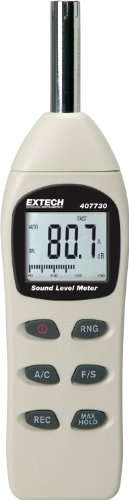
Extech 407730-NIST Sound Level Meter Review: Who It Is For, and Who Should Walk Away
This review explains what the Extech 407730-NIST measures, what its specifications mean in practice, and which buyers should choose a different instrument.
Read More→