As an Amazon Associate, Akermin earns from qualifying purchases. Product links on this page are affiliate links.

OBDResource · Car Battery Tester 6V 12V 24V Battery Voltage Tester, BR502 100-2000 CCA Internal Resistance Tester Automotive Accurate Digital Auto Battery Analyzer for Car Truck Marine Motorcycle SUV Boat
View on AmazonPrice and availability are shown on Amazon and can change at any time.
A clip on battery analyser for 6 V, 12 V and 24 V lead acid batteries from 100 to 2000 CCA, covering flooded, AGM flat plate, AGM spiral and gel types, reporting voltage, internal resistance, state of charge, state of health and a good, normal or poor verdict on a 1.8 inch screen within about two seconds, with reverse polarity protection and the ability to test a flat battery in or out of the vehicle. The measurement set is the right one for the job. The battery type list is the thing to read twice, because it is exhaustive and lithium does not appear in it.
Ninety nine point six percent of what, exactly
The third bullet promises results in under two seconds and an accuracy rate as high as 99.6 percent, based on the cold cranking amps standard. Read that again and notice what is missing: the quantity.
An accuracy specification has to name what is being measured and in what units the error is expressed. Voltage accurate to one hundredth of a volt. Cranking amps within five percent of the rated figure. Internal resistance resolved to a tenth of a milliohm. Those statements can be checked and can be wrong. A bare percentage attached to no quantity cannot be either.
The most charitable reading is that it describes how often the good, normal or poor verdict agrees with a full capacity test. That would be a useful thing to know, and it would need a sample size and a method to mean anything. The less charitable reading is that it is a number chosen for its shape. Either way the figures a buyer would use to compare this against another analyser are all absent, and a listing that prints one impressive percentage instead of three plain tolerances has made a choice about what it wants you to notice.
The type list is complete, and lithium is missing from it
The first bullet names regular flooded, AGM flat plate, AGM spiral and gel. Four chemistries and constructions, all of them lead acid. Nothing else is mentioned anywhere in the listing.
That is not an oversight to shrug at, because of how these instruments work. A handheld analyser injects a small signal and measures the battery response to it, then runs the result through a model of how lead acid plates behave as they age. The model is what converts an electrical measurement into cold cranking amps and a health verdict.
Point the same model at a lithium iron phosphate battery and it reports confidently wrong answers. Lithium chemistry has a much lower and flatter internal impedance, holds voltage almost level across most of its usable charge, and fails in a way that has nothing to do with sulfated plates. The screen will show a figure. It will not describe the battery.
With lithium now common in leisure, marine and some starting applications, this is the single most useful line in the listing, and it is useful precisely because the list is specific rather than vague. Our guide to automotive battery testers flags which instruments state lithium support outright.
Cold cranking amps is one rating system among several
The range is given as 100 to 2000 CCA, and the verdict is stated to be based on the cold cranking amps standard. Both of those depend on you entering the right number, and the number printed on a battery is not always in that system.
Cold cranking amps describes a defined test: chill the battery to minus 18 degrees Celsius, draw current for thirty seconds and require the terminal voltage to stay above a floor. Other systems use different durations, different voltage floors and in some cases different temperatures, so the same battery carries different figures in each. A European battery label often shows a figure established by a different method, and entering it as though it were cold cranking amps skews the comparison the analyser is making.
The practical rule is simple. Find the rating system printed next to the number on the battery. If it is not the one the tester expects, convert it or find the equivalent figure in the manufacturer data before trusting the verdict, because the instrument is comparing your entry against its measurement and has no way to know you typed the wrong standard.
Internal resistance needs a baseline before it means anything
The second bullet lists an internal resistance test, and it is the most informative measurement on the instrument as well as the easiest to misread.
Internal resistance rises as a lead acid battery ages. Plates sulfate, active material sheds, connections corrode, and the battery becomes less able to deliver a large current without its voltage collapsing. Watching that figure climb over a year of checks on the same battery is a far better predictor of failure than any single verdict, because you are comparing the battery against itself.
A single reading in isolation tells you much less, because the healthy value depends on the size and construction of the battery. A few milliohms is unremarkable on a large flooded battery and would be poor on a small one. State of charge and temperature both move the figure as well, so a cold battery at half charge reads worse than it is. Record the number each time rather than only the verdict, and the instrument becomes a trend tool. Our note on resistance testing for maintenance covers how to keep that record useful.
| Specification | Published in the listing |
|---|---|
| Battery voltages | 6 V, 12 V and 24 V |
| Cranking amps span | 100 to 2000 CCA |
| Battery types | Regular flooded, AGM flat plate, AGM spiral, gel |
| Measurements | Voltage, internal resistance, state of charge, state of health, cranking amps |
| Verdict | Good, normal or poor |
| Test time | Within two seconds |
| Screen | 1.8 inch |
| Protection | Reverse polarity connection protection |
| Flat battery testing | Stated, in or out of the vehicle |
| Lithium support | Not stated in the listing bullets |
| Voltage measurement tolerance | Not stated in the listing bullets |
| Internal resistance resolution | Not stated in the listing bullets |
| Other rating systems accepted | Not stated in the listing bullets |
| Cranking or charging system test | Not stated in the listing bullets |
| Power source and lead length | Not stated in the listing bullets |
| Data output or printing | Not stated in the listing bullets |
Two admissions in the small print, both to its credit
The fifth bullet does two things most listings in this category avoid.
It states that reverse polarity connection protection means the instrument simply will not operate if the leads are swapped, rather than claiming nothing can go wrong. That is the correct behaviour and the correct way to describe it: refusing to work is a protection mechanism, not a fault.
Then, in brackets at the very end, it says that if the clip is not properly clamped the screen will flicker. That is a failure mode published against interest, and it is genuinely helpful. Clamp on resistance readings are ruined by poor contact more than by anything else, because a few milliohms of oxide at the clip is the same order as the resistance being measured, and the result is a reading that makes a sound battery look worn. Knowing the instrument tells you by flickering turns a mystery into a procedure: reseat the clips and read again. Our note on testing a battery with a multimeter makes the same point about contact quality.
Who this tells enough, and who needs more
For a lead acid battery in a car, van, boat, motorcycle or trailer, and for anyone who would rather replace a battery in a driveway than on a hard shoulder, the measurement set here is the correct one. State of charge separates a flat battery from a dead one, internal resistance and the cranking estimate separate a worn battery from a healthy one, and the two second verdict makes it realistic to check a fleet rather than one vehicle.
Look elsewhere if your batteries are lithium, if the labels use a rating system this instrument does not accept, or if you need to know why a battery keeps failing rather than whether it has. That last question is a charging system question, and nothing in these bullets addresses it. Also look elsewhere if the readings have to support a warranty claim, because a verdict without a published tolerance is an opinion with a screen.
Recommended Tools


Products shown because their documented specifications fit this guide. Price and availability are on Amazon and can change.
Frequently Asked Questions
Will the BR502 test a lithium or LiFePO4 battery?
The bullets list regular flooded, AGM flat plate, AGM spiral and gel, and nothing else. That matters more than it looks, because a tester of this type does not actually load the battery. It measures the response to a small signal, then applies a model of lead acid behaviour to turn that into cold cranking amps and a state of health verdict. A lithium iron phosphate pack has a very different internal impedance and a far flatter voltage curve, so the same model produces a number that looks plausible and means nothing. If your vehicle or leisure system has moved to lithium, this is the wrong instrument.
What is the difference between state of charge and state of health?
State of charge is how full the battery is at this moment, which is mostly a question of voltage once the surface charge has settled. State of health is how much of its original capability remains after age, cycling and sulfation, which is a question of internal resistance and deliverable current. The two are independent. A worn battery that has just come off a charger reads a high state of charge and a poor state of health, and that is the combination that strands people, because the dashboard voltage looks fine until the starter asks for current.
What does CCA actually measure?
Cold cranking amps is defined by a test, not by a formula. The battery is chilled to minus 18 degrees Celsius and asked to deliver a current for thirty seconds while its terminal voltage stays above a defined floor, which for a twelve volt battery is 7.2 V. A handheld tester does none of that. It infers the figure from a small signal measurement in a couple of seconds, which is why the result should be read as a comparison against the battery rating rather than as a measurement of cranking performance.
Does it test the alternator or the starter?
Not according to these bullets. Everything described is a measurement of the battery itself: voltage, internal resistance, state of charge, state of health and a cranking amps estimate, with a verdict of good, normal or poor. There is no mention of a cranking voltage drop test or of a charging system or ripple test, and those are the two checks that tell you whether a healthy battery is being mistreated by the vehicle. A battery that fails twice in a row is usually a charging fault, and this instrument will not find it.
What accuracy figures does the listing publish?
None in measurement terms. The third bullet states an accuracy rate as high as 99.6 percent and attaches it to the test results being based on the cold cranking amps standard. There is no tolerance on the voltage reading, no tolerance on the cranking amps estimate, no resolution for the internal resistance measurement and no statement of the conditions under which the percentage was established. A number without a quantity is not a specification, and the useful figures for this class of instrument are the three that are missing.
Affiliate disclosure: Akermin earns a commission from qualifying Amazon purchases made through links on this page. Our editorial picks are based on documented specifications and owner feedback, not commissions.
Related Guides

Fluke 1AC II VoltAlert Review: Two Detection Thresholds in One Listing
A pocket sized non contact voltage tester whose tip glows red and beeper sounds when voltage is detected, with a continuous self test and a choice of audible or silent operation.
Read More→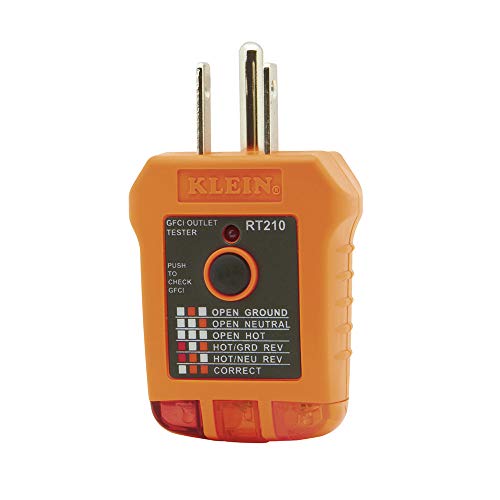
Klein Tools RT210 Review: A Fault Finder That Does Not List Its Faults
A three wire receptacle tester for standard and GFCI North American outlets, specified for 110 to 125 volts AC at 50 or 60 Hz, a 6.6 foot drop and an operating range of 32 to 140 degrees Fahrenheit.
Read More→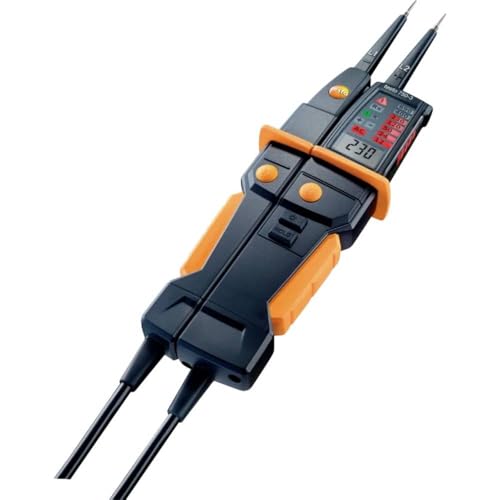
Testo 750-3 Review: Four Bullets, and No Published Category Rating
A two pole voltage tester with a three digit LCD showing measured voltage, a patented LED voltage bar viewable from any angle, polarity detection on DC and a GFCI test function for AC outlets.
Read More→