As an Amazon Associate, Akermin earns from qualifying purchases. Product links on this page are affiliate links.
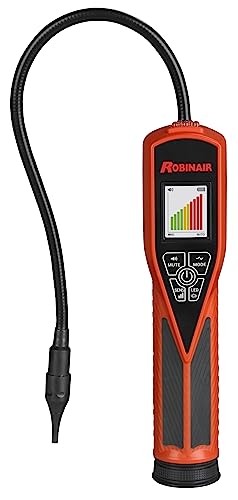
Robinair · Robinair LD9-TG Tracer Gas Leak Detector w/Color LCD, Sweep Mode + More | Uses UV Wavelength Technology and User Supplied Tracer Gas to Locate Automotive AC System Leaks
View on AmazonPrice and availability are shown on Amazon and can change at any time.
A tracer gas leak detector using ultraviolet wavelength sensing to find a 5 percent hydrogen and 95 percent nitrogen mixture, with stated sensitivity equivalent to 0.05 ounces per year of R-134a and 0.015 of R-1234yf, SAE J2970 compliance, a ten year sensor life, a 128 by 160 colour display with a sweep mode, three UV inspection LEDs at 395 to 415 nm, instant response, a warm up under twenty seconds, 4 AA cells for four hours and a seventeen inch probe. This is what a complete leak detector listing looks like.
Tracer gas is a different method, not a better sniffer
Every other leak detector in this project works the same way: the system is charged with refrigerant, refrigerant escapes, and the instrument sniffs for it. Sensitivity is then a question of how little refrigerant the sensor can detect.
This one inverts the problem. You recover the refrigerant, pressurise the system with hydrogen diluted in nitrogen, and hunt for the hydrogen.
Two things follow from that, and they are why the sensitivity figures look impossible.
First, hydrogen is the smallest molecule in existence. A gap that a large fluorinated refrigerant molecule barely negotiates is wide open to hydrogen. So the same physical leak produces far more escaping gas, and a detectable signal from a much smaller defect.
Second, the background is clean. Sniffing for R-134a in a workshop means working against whatever refrigerant has been vented in that bay over the years. Hydrogen at 5 percent in nitrogen is not otherwise present, and nitrogen is inert and cheap.
There is a third advantage that matters in practice: you can test a system with no refrigerant in it. After a repair, before recharging, you can pressurise and verify the joint is tight, instead of charging the system and waiting to find out.
The cost is that this is a procedure rather than a check. You need recovery equipment, a nitrogen regulator and a cylinder of the mixture, which the listing states is sold separately. Our guide to refrigerant leak detector methods sets out where each approach fits.
The sensitivity figures and what they are worth
The listing publishes sensitivity twice over: equivalent to 0.05 ounces per year for R-134a and 0.015 ounces per year for R-1234yf.
Giving two figures is better practice than giving one, because detector response genuinely differs between gases and a single number hides which one it was measured against. It also happens to name the two refrigerants that matter in vehicle air conditioning, one legacy and one current.
For scale, compare with the best figure elsewhere in this project. An infrared detector publishes a minimum detectable leak of 1 gram per year, which is roughly 0.035 ounces. This instrument claims 0.015 ounces per year equivalent on R-1234yf, which is better again, and the tracer gas method is why.
Two further specifications support the sensitivity claim rather than sitting beside it. Response time is given as instant, and warm up as under twenty seconds. A sensitive detector that takes minutes to respond cannot be swept along a joint; a sensitive detector that needs hours of warm up will be used cold and will under read. Neither problem applies here.
Naming a standard, and what the sweep mode does
SAE J2970 is a performance standard for refrigerant leak detectors in vehicle air conditioning service. Stating compliance is a different kind of claim from the adjectives this category usually offers, because a standard defines a test and a threshold.
Across every leak detector reviewed in this project, this is the only listing that names one.
The sweep mode is the other feature worth explaining. The listing describes a 128 by 160 full colour display conveying messages, graphics and prompts to help locate the source of a leak and ensure the detector is always at optimal performance.
That last clause is the interesting part. Leak detectors drift and saturate: hold a sensitive probe in a plume and it stops being able to tell you where the plume is strongest. A guided sweep mode that prompts the technician through a procedure, and that resets or rebaselines the instrument at the right moments, is how a detector stays useful through a hunt rather than only at the start of one.
The three UV LEDs at 395 to 415 nm are a separate tool in the same housing: that wavelength range excites the fluorescent dye commonly added to air conditioning systems, so the same instrument can hunt dye stains visually as well as sniff for tracer gas.
The full specification
| Specification | Published in the listing |
|---|---|
| Method | UV wavelength sensing of hydrogen tracer gas |
| Tracer gas | 5 percent hydrogen, 95 percent nitrogen, sold separately |
| Sensitivity | Equivalent 0.05 oz/yr R-134a, 0.015 oz/yr R-1234yf |
| Standard | SAE J2970 compliant |
| Sensor life | Ten years |
| Display | 128 by 160 full colour, sweep mode with prompts |
| Inspection light | Three UV LEDs, 395 to 415 nm |
| Response time | Instant |
| Warm up time | Under 20 seconds |
| Power | 4 AA alkaline, four hours continuous |
| Probe length | 17 inches |
| Correct sweep speed | Not stated in the listing bullets |
| Gas identification | Not applicable, it detects the tracer |
The seventeen inch probe is a specification most listings skip and it decides reach into an engine bay without moving your body. Four AA alkaline cells for four hours is a deliberate choice over rechargeable: you can always buy more cells at a filling station, and a flat lithium pack at the wrong moment ends the job.
The one technique figure missing is the correct sweep speed. A competing metal oxide detector publishes one inch per second, which remains good practice with any detector because gas takes time to reach a sensor. With an instant response time the constraint is less severe here, but it does not disappear.
Who should buy it
This is for a vehicle air conditioning workshop that does leak diagnosis properly: recover, pressurise with tracer gas, hunt, repair, verify before recharging. For that workflow the sensitivity, the named standard, the instant response, the twenty second warm up and the UV dye lamp in the same body make it the most complete instrument in this category.
It is the wrong purchase if you want to sniff a charged system for a quick answer, because that is what a refrigerant detector is for and this one needs the system emptied and pressurised first. It is the wrong purchase without recovery equipment and a gas cylinder. And remember the consumable: the tracer gas is not included, so the running cost is real.
Recommended Tools
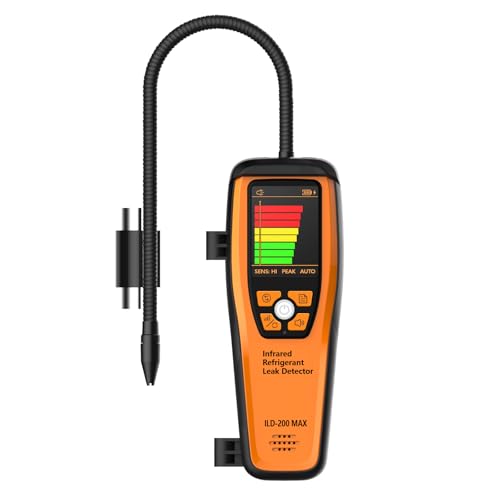

Products shown because their documented specifications fit this guide. Price and availability are on Amazon and can change.
Frequently Asked Questions
What is tracer gas detection and why is it different?
Instead of sniffing for escaping refrigerant, you recover the refrigerant, then pressurise the system with a mixture of 5 percent hydrogen in 95 percent nitrogen and hunt for the hydrogen. Hydrogen is the smallest molecule there is, so it escapes through openings that larger refrigerant molecules barely pass, which is why the sensitivity figures are so much better. It also works on an empty or repaired system where there is no refrigerant left to detect.
How good is 0.015 ounces per year?
Extremely good, and the comparison is the point. Another detector in this category publishes a minimum detectable leak of 1 gram per year, which is about 0.035 ounces. Here the stated equivalent is 0.015 ounces per year for R-1234yf and 0.05 for R-134a. Publishing two figures for two refrigerants is also more informative than one number, because sensitivity genuinely differs between gases.
What is SAE J2970?
A standard for the performance of refrigerant leak detectors used in vehicle air conditioning work. Stating compliance means the instrument has been held against a defined test rather than described as professional. Of all the leak detectors reviewed in this project, this is the only listing that names a standard.
Why does a 20 second warm up time matter?
Because the alternative is hours. A metal oxide detector elsewhere in this project carries an honest warning that it reaches full sensitivity only after running for several hours. Under twenty seconds means you switch on at the vehicle and start work. It is one of the strongest practical arguments for this sensing method.
What do I need that is not in the box?
The tracer gas, which the listing states is sold separately, and the means to recover refrigerant and pressurise the system. That is the real limitation: this is a workshop procedure rather than a quick check. It also runs on 4 AA alkaline cells for four hours, so carry spares rather than a charger.
Affiliate disclosure: Akermin earns a commission from qualifying Amazon purchases made through links on this page. Our editorial picks are based on documented specifications and owner feedback, not commissions.