As an Amazon Associate, Akermin earns from qualifying purchases. Product links on this page are affiliate links.

Thermal Master · Thermal Master Thor002 Handheld Thermal Camera, 512 × 384 X³ Resolution | 3.5" IPS Screen, 5 Imaging Modes, -4℉ to 1022℉, ±3.6℉ Accuracy Thermal Imaging Camera for Home, HVAC, Electrical Inspections
View on AmazonPrice and availability are shown on Amazon and can change at any time.
The Thor002 is a standalone handheld with a 256 by 192 detector presented as 512 by 384 after processing, 40 mK sensitivity, a 3.5 inch 640 by 480 screen, a 2 MP visible camera, adjustable emissivity, six simultaneous measurement points, laser aiming, WiFi and USB connectivity, 32 GB of storage and a 5000 mAh battery rated for 10.5 hours. Judge the resolution as 256 by 192. The six point measurement and the all day battery are the real reasons to choose this over a phone attachment.
The same upscaling story, told honestly again
The resolution bullet states that upgraded X3 IR technology boosts thermal resolution from 256 by 192 to 512 by 384. As with its siblings in this range, the manufacturer publishes both numbers and the relationship between them, which lets a buyer compare properly instead of accidentally.
The underlying detector has 49,152 elements. The 512 by 384 figure is 196,608 pixels, three quarters of which are calculated from their neighbours. Interpolation smooths the blocky steps between detector elements and makes an image easier to look at. It cannot reveal a warm component that fell between two elements, because nothing about that component was ever measured.
So for spatial capability this is a 256 by 192 camera, and that is a mid level detector rather than a high one. What raises it is everything built around the detector, which is where a standalone unit can spend money that a thumb sized attachment cannot.
Six points at once changes the method, not the numbers
The measurement bullet states six points simultaneously: centre, hottest, coldest and three user defined. This is the feature in the listing that most changes how the tool is used.
Work through a common task. A row of six identical motor terminations, and the question is whether one is running warmer than its neighbours. With one crosshair you read terminal one, move, read terminal two, move, and by terminal five you are comparing against a number you half remember, while the camera has possibly drifted its auto scaling in between.
With three user defined markers plus automatic hottest and coldest, you place markers on three suspects and read five numbers in one frame, at one moment, on one temperature scale. Nothing has been remembered and nothing has drifted. The reading is not more accurate in a specification sense, but the comparison is far more reliable, and most thermal diagnosis is comparison rather than absolute measurement.
Automatic hottest and coldest deserve separate mention. They remove the hunt. You point at a panel and the camera tells you where the extremes are rather than making you find them.
The battery is what a standalone unit is for
The listing states 5000 mAh, up to 10.5 hours of running, and 18 W fast charging.
Set that against the alternative. A phone attachment draws from the phone you also need for calls, photographs, job notes and navigation. On a long day the thermal camera and the thing that makes you contactable are competing for the same cell. The attachments in this range state five to eight hours and are drawing it from a battery with other jobs.
A camera with ten hours of its own is simply present for a whole working day, and 18 W charging means a lunch break restores a meaningful amount. For a surveyor walking a building or a technician on a shift, this is the practical difference, and it never appears in a resolution comparison. Our home inspection camera comparison weighs the standalone and attachment approaches against each other.
Emissivity, laser aiming and the reporting path
| Specification | Published in the listing |
|---|---|
| Native detector | 256 by 192 |
| Processed output | 512 by 384 via X3 IR |
| Sensitivity | 40 mK |
| Refresh rate | 25 Hz |
| Range and accuracy | Minus 4 F to 1022 F, plus or minus 3.6 F |
| Screen | 3.5 inch, 640 by 480 IPS |
| Visible camera | 2 MP |
| Measurement points | Six at once, three user defined |
| Emissivity | Customisable |
| Connectivity | USB to PC, WiFi to phone and tablet |
| Storage | 32 GB, with 8 GB RAM stated |
| Battery | 5000 mAh, up to 10.5 hours, 18 W charging |
| Other | Laser positioning, automatic high and low alarms |
| Field of view in degrees | Not stated in the listing bullets |
| Radiometric file format | Not stated in the listing bullets |
Adjustable emissivity is the quiet headline. Emissivity is how efficiently a surface radiates infrared, and a polished copper busbar radiates so poorly it can read tens of degrees below its real temperature. Without the setting, bare metal electrical work produces confidently wrong numbers. With it, you enter a value or tape the surface and read that.
Laser positioning solves a smaller but genuine annoyance: a thermal image of a uniform wall has no landmarks, so knowing which spot on the real wall you are measuring is harder than it sounds. A visible dot removes the doubt.
Two gaps. No field of view in degrees, which is what you would need to work out what one pixel covers at a given distance, and the 34.4 percent detection range claim is not a substitute because it has no stated baseline. And no named radiometric file format, so whether another package can reopen the temperature data is unknown.
The right buyer
This suits someone who needs a thermal camera as a working instrument for whole days: building surveys, electrical maintenance rounds, HVAC commissioning. The six point comparison, adjustable emissivity, laser aiming and 10.5 hour battery are all aimed at that, and the IP5 class rating the listing mentions suits a site rather than a bench.
It is the wrong purchase if spatial detail decides your outcome, because 256 by 192 is what the detector gives you no matter what the headline says. It is also the wrong purchase if you only reach for thermal imaging occasionally, where a pocket sized attachment that is always with you does more real work than a better camera left in the van.
Recommended Tools
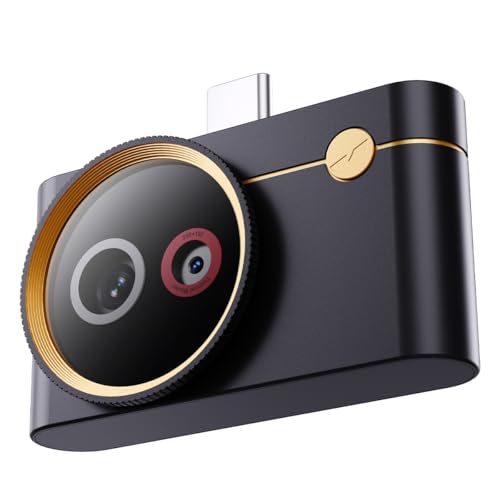

Products shown because their documented specifications fit this guide. Price and availability are on Amazon and can change.
Frequently Asked Questions
Is the detector 256 by 192 or 512 by 384?
The listing states that X3 IR technology boosts thermal resolution from 256 by 192 to 512 by 384. The detector is 256 by 192, which is 49,152 elements, and the larger figure is produced in software. The listing says so, which is more than many do, and it means you should compare this against other 256 by 192 cameras rather than against genuinely larger detectors.
What does six point measurement actually let you do?
The listing states measurement of six points at once, comprising centre, hottest, coldest and three user defined spots. In practice this is how you compare rather than hunt. Place three markers on three identical terminals and read all three plus the frame extremes in one glance, instead of moving a single crosshair and trying to remember what the last reading was.
Why does the battery figure matter on a thermal camera?
Because it decides whether the instrument is available for a full working day. The listing states a 5000 mAh battery for up to 10.5 hours with 18 W fast charging. A phone attachment, by contrast, runs on the phone you also need for everything else. For a surveyor doing a whole building, a camera with its own all day battery is a different proposition.
Does it support emissivity adjustment?
Yes, the listing states customisable emissivity settings for improved accuracy across diverse surfaces. That is the specification that separates a measuring instrument from a picture taker, because polished metal radiates poorly and reads far below its real temperature unless you can correct for it.
What is the 34.4 percent claim about the lens?
The listing states a 4.3 mm lens that extends detection range by 34.4 percent. It does not say what that is 34.4 percent more than, and without a baseline the number cannot be checked or used. A field of view figure in degrees would have been the useful specification, and it is not published.
Affiliate disclosure: Akermin earns a commission from qualifying Amazon purchases made through links on this page. Our editorial picks are based on documented specifications and owner feedback, not commissions.