As an Amazon Associate, Akermin earns from qualifying purchases. Product links on this page are affiliate links.

TOPTES · Decibel Meter, TopTes TS-501B Sound Level Meter with 2.25” Backlit LCD Screen, Portable SPL Tester with A/C Weighted, Range 30-130dB, MAX/MIN, Data Hold, Use for Home, Noisy Neighbor, Factory - Orange
View on AmazonPrice and availability are shown on Amazon and can change at any time.
Verdict
The TopTes TS-501B is a practical handheld sound level meter for finding out how loud something actually is. The listing states a 30 to 130 dB range with 1.5 dB accuracy, a frequency response from 30 to 8000 Hz, a precise condenser microphone, both A and C weighting, max and min capture, data hold and a 2.25 inch backlit screen. For a noisy neighbour, a workshop, a home theatre, a school hall or a machine you suspect is getting worse, it produces numbers you can compare. For a formal assessment that might be challenged, buy a classified meter with a calibrator.
Documented Specifications
| Item | Manufacturer listing |
|---|---|
| Range | 30 to 130 dB |
| Accuracy | 1.5 dB |
| Frequency response | 30 to 8000 Hz |
| Weighting | A and C |
| Microphone | Condenser |
| Functions | Max and min, data hold |
| Display | 2.25 inch backlit LCD |
| Classification | Not stated in the bullets |
Choosing the Right Weighting
This is the part that decides whether your number means anything. A weighting rolls off low frequencies, because human hearing is much less sensitive to them at ordinary levels. Nearly every regulation, occupational limit and community noise standard is written in A weighted decibels, so if you are comparing a reading against a published limit, A weighting is almost certainly what you need.
C weighting is close to flat across the audible range. It is used when low frequency content matters: a bass-heavy sound system through a wall, machinery rumble, a compressor, or peak measurement where the full energy matters. A large difference between the A and C readings of the same source is itself informative, because it tells you the problem is concentrated at low frequencies, which is the hardest kind of noise to block and the kind that travels through structures.
Max and Min Capture the Events
Continuous noise is easy to measure because you can stand and watch. The complaints people actually make are usually about events: a door slamming, a machine starting, a vehicle passing, music at midnight. Those are over before the display settles, and max capture is how you record them. Min is the quieter counterpart and is how you establish a background level, which is often the more persuasive number in a dispute.
Getting a Number You Can Defend
- Hold the meter away from your body and at arm’s length. Your torso reflects sound and changes the reading.
- Avoid corners and hard surfaces, which reinforce certain frequencies.
- Use a windscreen outdoors. Wind across a bare microphone generates large and meaningless readings.
- Record the background level as well as the source. A source that is 3 dB above background is very different from one that is 20 dB above it.
- Note the weighting and the response setting alongside every reading. A decibel figure without them is not a measurement.
The Missing Classification
The listing does not state a Class 1 or Class 2 classification under the international standard for sound level meters, and no calibrator is included. Neither is a fault at this price, but both determine where the readings can be used. For your own understanding, comparison and troubleshooting, this instrument is entirely adequate. For an occupational assessment, a planning submission or a formal complaint, a classified meter checked with a calibrator before and after the measurement is the right tool, as covered in the Extech SL510 and 407732 comparison.
Strengths
- Both A and C weighting, which many cheap meters omit.
- Published range, accuracy and frequency response.
- Max and min capture for events.
- Large backlit display.
Limitations
- No Class 1 or Class 2 classification stated.
- No calibrator included or calibration facility described.
- Frequency response stops at 8000 Hz.
- No logging or export.
How It Compares
The Extech SL510 states Class 2 and 1 dB accuracy, and the 407732 kit adds a calibrator for documented work. For general curiosity, workshop checks and comparing one room with another, the TS-501B does the job. Our ranking is in the sound level meter roundup.
How We Research
All figures come from the manufacturer listing. We did not run laboratory tests and publish no measurements of our own.
Recommended Tools

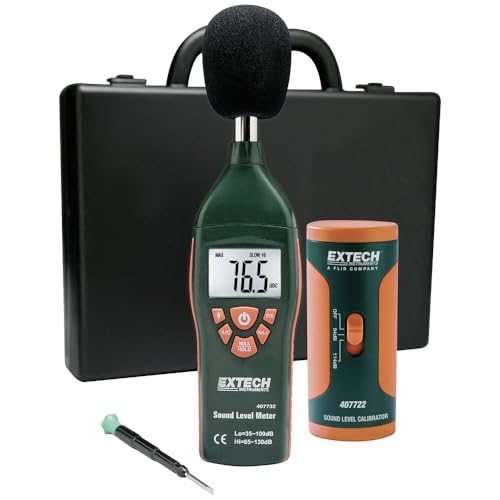
Products shown because their documented specifications fit this guide. Price and availability are on Amazon and can change.
Frequently Asked Questions
What is the difference between A and C weighting?
A weighting reduces the contribution of low frequencies to approximate how human hearing responds, and is what most noise regulations specify. C weighting is much flatter and is used for peak measurement and for assessing low frequency content such as machinery rumble or bass.
How accurate is it?
The listing states 1.5 dB accuracy across 30 to 130 dB. That is consistent with a general purpose meter rather than a Class 1 instrument, and it is adequate for comparing conditions and identifying problems.
What frequency range does it cover?
The listing states 30 to 8000 Hz. Human hearing extends higher, so very high frequency content such as some alarms and squeals will be under-reported.
Is it suitable for a formal noise assessment?
The listing does not state a Class 1 or Class 2 classification or include a calibrator. For formal, documented or disputed measurements use a classified meter with a calibrator, as discussed in our comparison of the Extech models.
Affiliate disclosure: Akermin earns a commission from qualifying Amazon purchases made through links on this page. Our editorial picks are based on documented specifications and owner feedback, not commissions.