As an Amazon Associate, Akermin earns from qualifying purchases. Product links on this page are affiliate links.
dBA means decibels measured with A-weighting, a filter that reduces the meter’s sensitivity to low frequencies (below about 500 Hz) and very high frequencies (above about 10 kHz) to approximate how the human ear responds at moderate levels. A 100 Hz tone that measures 70 dB unweighted reads about 51 dBA; a 1 kHz tone reads the same either way. Nearly all noise regulations, workplace exposure limits and equipment specifications use dBA because it tracks loudness and hearing risk better than the raw level.
Why weight at all
Ears are not equally sensitive across frequencies. A 60 Hz hum needs far more sound energy to seem as loud as a 1 kHz tone; above 10 kHz sensitivity falls off again. A meter that simply adds up all the energy (Z-weighting, or “flat”) would report a rumbling air handler and a shrill alarm as equally loud when the alarm is far more intrusive. The A-weighting curve, derived from equal-loudness measurements made in the 1930s, corrects for this.
The A-weighting curve
| Frequency | A-weighting adjustment |
|---|---|
| 31.5 Hz | −39 dB |
| 63 Hz | −26 dB |
| 125 Hz | −16 dB |
| 250 Hz | −9 dB |
| 500 Hz | −3 dB |
| 1 kHz | 0 dB |
| 2 kHz | +1 dB |
| 4 kHz | +1 dB |
| 8 kHz | −1 dB |
| 16 kHz | −7 dB |
A, C and Z compared
- A: hearing-like; the default for limits and specifications.
- C: nearly flat from 30 Hz to 8 kHz with gentle roll-off; used for peak (LCpeak) limits and for low-frequency noise assessments. A large gap between dBC and dBA readings (more than about 15 dB) signals strong low-frequency content.
- Z: flat, no weighting; used for spectrum analysis and research.
Typical dBA levels
| Source | Approximate level |
|---|---|
| Quiet bedroom at night | 25 to 30 dBA |
| Library, quiet office | 40 dBA |
| Normal conversation at 1 m | 60 dBA |
| Vacuum cleaner, busy office | 70 dBA |
| Busy road, kitchen blender | 80 dBA |
| Workplace 8-hour exposure limit (many jurisdictions) | 85 dBA |
| Lawn mower, motorcycle | 90 to 95 dBA |
| Chainsaw, rock concert | 100 to 110 dBA |
Reading it on a meter
Set the weighting switch to A unless a specification says otherwise. Pair it with the required time response (fast, slow) or integration (LAeq for exposure, LAmax for events, LA90 for background). A reading labeled “LAeq,15min = 58 dBA” is the A-weighted equivalent continuous level over 15 minutes, which is the form most limits take. See what a sound level meter is for classes, calibration and method; instruments are in the environmental monitoring category.
Recommended Tools


Products shown because their documented specifications fit this guide. Price and availability are on Amazon and can change.
Frequently Asked Questions
What is the difference between dB and dBA?
dB (or dBZ) is the unweighted sound level. dBA applies the A-weighting filter, which reduces low-frequency and very high-frequency content before the level is calculated. For most everyday sounds, dBA is a few dB lower than dBZ.
Why do noise limits use dBA?
Because A-weighted levels correlate best with perceived loudness and with hearing damage for the frequency mix of typical noise. It has been the standard for occupational and environmental limits for decades.
When would I use dBC?
For peak levels (impulsive noise such as hammering or gunfire) and for low-frequency noise from subwoofers, plant and traffic rumble, where A-weighting understates what people hear.
Affiliate disclosure: Akermin earns a commission from qualifying Amazon purchases made through links on this page. Our editorial picks are based on documented specifications and owner feedback, not commissions.
Related Guides

CPS LS790B Leak-Seeker Review: Non Combustible Is the Deciding Word
An ion pump refrigerant leak detector individually calibrated to find a leak rate better than a quarter of an ounce per year, with ten selectable sensitivity ranges, a water vapour filter and a bar graph plus tone display.
Read More→
BW Clip BWC2-H Review: Alarm Points Set Before the Clock Starts
A single gas hydrogen sulfide detector with one button operation, hibernation mode, automatic logging of the 35 most recent gas events and bump test results, and compatibility with IntelliDoX and MicroDock II docking.
Read More→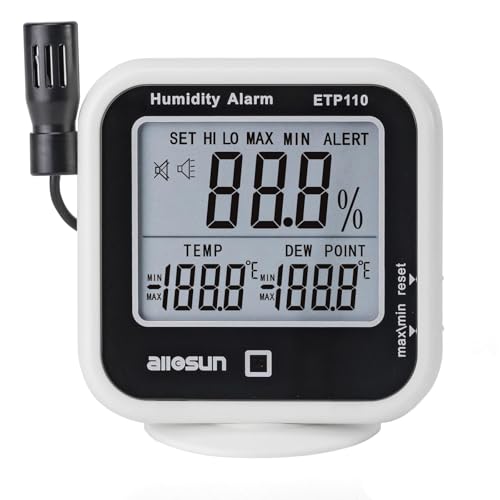
ALLOSUN Thermometer Hygrometer Review: Half a Metre of Lead and No Tolerance
A battery powered thermometer and hygrometer showing temperature, relative humidity and dew point, with a settable humidity alarm, a sensor on a lead of about 50 cm, maximum and minimum memory and a large LCD.
Read More→