As an Amazon Associate, Akermin earns from qualifying purchases. Product links on this page are affiliate links.
A sound level meter measures sound pressure with a calibrated microphone and reports it in decibels. It applies a frequency weighting (usually A, to mimic hearing), a time response (fast or slow), and on better meters an integrating function that averages energy over a period (Leq). Meters are built to IEC 61672 as Class 1 or Class 2, which defines how accurately they must read across frequencies. That standard is what separates a measurement that can be compared with a noise limit from a number on a phone screen.
What it measures
Sound pressure level (SPL) in decibels relative to 20 micropascals, the threshold of hearing. The scale is logarithmic: +10 dB is ten times the sound energy and roughly twice the perceived loudness; +3 dB is double the energy and barely noticeable. Typical values: a quiet bedroom 30 dBA, conversation 60 dBA, a vacuum cleaner 70 to 75 dBA, a busy road 80 dBA, a chainsaw 100 to 110 dBA.
The parts that matter
- Microphone. A condenser capsule with a flat response. Cheap meters use electret capsules with more variation.
- Weighting. A-weighting follows the ear’s sensitivity and is used for almost all limits; C-weighting is nearly flat and is used for peak levels and low-frequency noise. See what dBA means.
- Time response. Fast (125 ms) follows fluctuations; slow (1 s) smooths them. Limits specify which.
- Integration. Leq is the constant level with the same energy as the fluctuating sound over a period; it is the basis of workplace exposure limits. Lmax, Lmin and percentiles (L90 for background) are related statistics.
- Range. Typically 30 to 130 dB; some meters switch ranges.
- Calibration. An acoustic calibrator (a 94 or 114 dB reference tone at 1 kHz) checks the meter before and after a measurement session. Class 1 and 2 meters accept one; many consumer meters do not.
Class 1 and Class 2
| Class 1 | Class 2 | |
|---|---|---|
| Tolerance at 1 kHz | ±1.1 dB | ±1.4 dB |
| Frequency range with stated tolerance | 16 Hz to 16 kHz | 20 Hz to 8 kHz |
| Required for | Environmental noise, legal evidence, research | Workplace noise surveys, general checks |
| Cost | High | Moderate |
Consumer meters that do not claim a class are unclassified; treat their readings as indicative. Meters such as the Extech SL510 state Class 2 and accept a calibrator.
Common uses
- Workplace noise exposure against 85 dBA daily limits.
- Checking HVAC, generators and pumps against equipment specifications.
- Neighbor and venue noise complaints, where Class 1 and a calibration record are usually needed.
- Home theaters and studios, where a meter sets speaker levels.
- Sleep and study environments, where a logging meter shows what a night sounds like.
Measuring properly
- Calibrate with an acoustic calibrator before and after.
- Hold the meter at arm’s length or on a tripod, microphone toward the source, away from walls and your body.
- Use the weighting and response the limit specifies, usually A and slow or Leq.
- Measure long enough to capture the pattern; a 15-minute Leq for steady noise, longer for intermittent.
- Record background level with the source off.
Sound meters appear alongside anemometers and light meters in multifunction environmental instruments; see the environmental monitoring category.
Recommended Tools


Products shown because their documented specifications fit this guide. Price and availability are on Amazon and can change.
Frequently Asked Questions
What is the difference between a Class 1 and Class 2 sound level meter?
Both follow IEC 61672. Class 1 has tighter tolerances across a wider frequency range and is required for legal and environmental measurements; Class 2 is accepted for general workplace and screening use.
Is a phone app as good as a sound level meter?
No. Phone microphones are not calibrated, roll off at low and high frequencies, and vary between models. Apps can indicate roughly loud versus quiet; they cannot support a measurement against a limit.
What does dBA mean?
Decibels with A-weighting, a filter that reduces low and very high frequencies the way human hearing does. Nearly all noise limits are in dBA.
Affiliate disclosure: Akermin earns a commission from qualifying Amazon purchases made through links on this page. Our editorial picks are based on documented specifications and owner feedback, not commissions.
Related Guides

CPS LS790B Leak-Seeker Review: Non Combustible Is the Deciding Word
An ion pump refrigerant leak detector individually calibrated to find a leak rate better than a quarter of an ounce per year, with ten selectable sensitivity ranges, a water vapour filter and a bar graph plus tone display.
Read More→
BW Clip BWC2-H Review: Alarm Points Set Before the Clock Starts
A single gas hydrogen sulfide detector with one button operation, hibernation mode, automatic logging of the 35 most recent gas events and bump test results, and compatibility with IntelliDoX and MicroDock II docking.
Read More→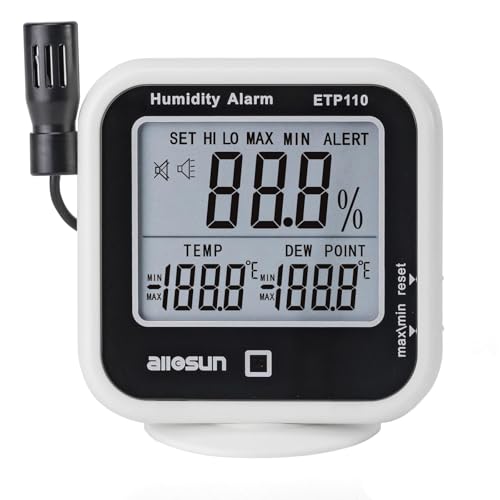
ALLOSUN Thermometer Hygrometer Review: Half a Metre of Lead and No Tolerance
A battery powered thermometer and hygrometer showing temperature, relative humidity and dew point, with a settable humidity alarm, a sensor on a lead of about 50 cm, maximum and minimum memory and a large LCD.
Read More→