As an Amazon Associate, Akermin earns from qualifying purchases. Product links on this page are affiliate links.
For a kitchen, the pick that fits most homes is the Airthings 2960 View Plus, because it is the only unit here whose listing names PM2.5, VOCs, CO2 and humidity together, and the listing describes VOCs specifically as airborne kitchen gases, fumes and cleaning products. If your question is ventilation rather than pollution, the Aranet4 is the better instrument: it is a CO2 meter with temperature, humidity and pressure, and CO2 is the number that tells you whether the extractor fan is actually clearing the room. The Amazon Smart Air Quality Monitor is the value choice if you already use Alexa, since it tracks PM2.5, VOCs, carbon monoxide, humidity and temperature and pushes alerts to your phone. The Zemeollo 10-in-1 Air Quality Tester and the LifeBasis 11-in-1 Air Quality Detector both claim wide multi-gas coverage, but their listings mix consumer-grade gas sensing with precision language, and neither publishes a CO2 accuracy figure, so treat their numbers as indicative rather than reference.
Why a kitchen is not just another room to monitor
Cooking is a controlled combustion and aerosol event. Frying meat or vegetables produces fine particles in the PM2.5 range, the same size fraction that reaches deep into the lungs. Boiling pasta or running a dishwasher raises humidity, which matters because high moisture plus organic residue is a mould recipe. Gas hobs add nitrogen dioxide and carbon monoxide, and cleaning sprays add volatile organic compounds. A monitor that only measures temperature and humidity will tell you nothing about any of that.
The practical consequence is that kitchen monitoring is about two different questions. The first is pollution: are particles and VOCs present at levels worth doing something about? The second is ventilation: is the air actually being exchanged, or is the extractor recirculating the same air? Carbon dioxide is the honest proxy for the second question, because humans and combustion both produce it and it dilutes only when fresh air arrives. If you want a deeper treatment of that distinction, the guide to CO2 monitors generally covers the sensor types and what each can and cannot see.
For kitchens specifically, the useful instrument is one that covers particles and VOCs for the pollution question, and CO2 for the ventilation question. That combination is rarer than the marketing suggests, because most consumer units specialise in one side or the other.
What the five listings actually publish, side by side
The table below is built only from the supplied listing text. Where a listing is silent, the cell says so rather than guessing.
| Unit | Gases and particles named | CO2 sensor type as stated | Alert method as stated | Power and connectivity as stated |
|---|---|---|---|---|
| Airthings 2960 View Plus | Radon, PM2.5, CO2, VOCs, humidity, temperature, pressure | Not stated in the listing bullets | Air quality notifications via app | Battery powered, WiFi, app required, internet required |
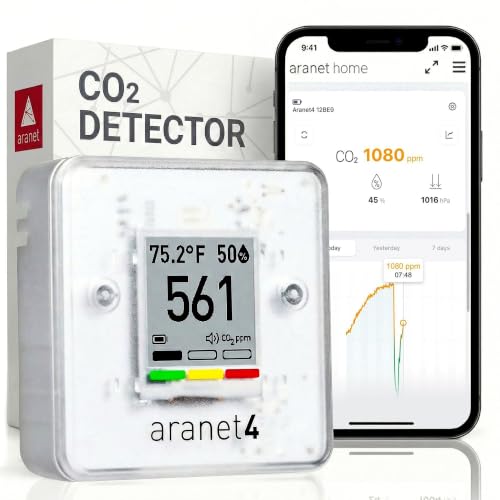
| Aranet4 | CO2, temperature, humidity, pressure | Not stated in the listing bullets | Colour coding and optional buzzer | Battery up to 4 years claimed, e-ink display, app for history |
| Zemeollo 10-in-1 Air Quality Tester | CO2, HCHO, TVOC, benzene, PM2.5, PM10 | Dedicated intelligent sensing for CO2, no accuracy figure published | Screen changes colour above threshold | Not stated in the listing bullets |
| LifeBasis 11-in-1 Air Quality Detector | AQI, CO2, PM1.0, PM2.5, PM10, particles, HCHO, TVOC, temperature, humidity | NDIR infrared carbon dioxide sensor | Ticking sound, flashing indicator, colour change | Not stated in the listing bullets |
| Amazon Smart Air Quality Monitor | PM2.5, VOCs, carbon monoxide, humidity, temperature | Not stated; CO2 is not among the five factors | Colour-coded LED plus phone notifications and Echo announcements | Not stated in the listing bullets |
Two things stand out. First, only the LifeBasis 11-in-1 Air Quality Detector names the CO2 sensor technology, NDIR, which is the type that measures CO2 directly by infrared absorption rather than inferring it from other gases. Second, only the Aranet4 and the Amazon Smart Air Quality Monitor are explicit about how they alert you without opening an app, and the Amazon Smart Air Quality Monitor is the only one that can speak the warning aloud through a separate device.
Five kitchen monitors, judged on what cooking puts in the air
Airthings 2960 View Plus
The only listing here that names PM2.5, VOCs, CO2, humidity, temperature, pressure and radon in one unit, with VOCs described in the listing as kitchen gases, fumes and cleaning products.
Aranet4
A CO2-first instrument with temperature, humidity and pressure, an e-ink display and a listing that claims up to four years of battery life, which makes it the ventilation checker rather than the pollution checker.
Zemeollo 10-in-1 Air Quality Tester
A portable multi-gas tester whose listing claims CO2, HCHO, TVOC, benzene, PM2.5 and PM10 with an error margin under plus or minus five percent, and a colour screen that changes when thresholds are exceeded.
LifeBasis 11-in-1 Air Quality Detector
An eleven-index desktop monitor with an NDIR carbon dioxide sensor, laser particle sensor and a dual visual and audible alert system that ticks and flashes when levels rise.
Amazon Smart Air Quality Monitor
A five-factor monitor for PM2.5, VOCs, carbon monoxide, humidity and temperature that reports through the Alexa app and can announce poor air quality on Echo devices.
Particles, VOCs and the number that tells you the fan is working
PM2.5 is the particle fraction most kitchen monitors report, and it is the right one to watch during frying. The listing for the Airthings 2960 View Plus names PM2.5 directly and describes VOCs as airborne kitchen gases, fumes and cleaning products, which is unusually explicit about the kitchen case. The Amazon Smart Air Quality Monitor also names PM2.5 and VOCs, plus carbon monoxide, which is relevant if you cook on gas. The Zemeollo 10-in-1 Air Quality Tester and the LifeBasis 11-in-1 Air Quality Detector both claim particle coverage, with the LifeBasis 11-in-1 Air Quality Detector naming PM1.0, PM2.5 and PM10 through a laser particle sensor and the Zemeollo 10-in-1 Air Quality Tester claiming PM2.5 and PM10.
VOCs are harder to interpret than particles because the sensor responds to total concentration, not to which compound is present. A reading that spikes while you clean may be the cleaner itself, not a hazard. The useful behaviour is trend: if the number falls back to baseline within a reasonable time after you stop, the room is clearing. If it sits high, ventilation is inadequate.
CO2 is the clearest ventilation signal in a kitchen, and it is where the listings diverge most. The Aranet4 is built around it, with a prominent number and colour coding. The LifeBasis 11-in-1 Air Quality Detector uses an NDIR sensor, which is the reference method for the gas. The Airthings 2960 View Plus measures CO2 but does not publish the sensor type. The Amazon Smart Air Quality Monitor does not measure CO2 at all, so it cannot answer the ventilation question, only the pollution question. The Zemeollo 10-in-1 Air Quality Tester claims dedicated CO2 sensing but publishes no accuracy figure, so its CO2 number should be treated as a relative indicator rather than a calibrated reading. For more on how these accuracy claims are usually framed, see the note on indoor air quality monitors.
Placement, grease and the maintenance nobody mentions
Every optical particle sensor in this group works by drawing air past a light source and counting scattering events. Grease aerosol coats the inside of that path. A monitor mounted directly beside the hob will read high for a while and then drift low as the optics foul, and the drift is invisible because the display still shows a number. The practical rule is to place the unit at breathing height, a metre or two from the cooking surface and out of the direct plume, so it sees room air rather than the plume itself.
Humidity matters for the same reason. Steam from boiling and from the dishwasher can saturate the sensing chamber and produce false particle readings, and it also raises the risk of condensation on the electronics. The Airthings 2960 View Plus publishes an operating temperature range of 4 to 40 degrees Celsius, which is the only environmental limit stated in any of these listings; the others do not publish one. None of the listings states a cleaning interval or a calibration schedule, so the honest position is that the maintenance requirement is undocumented. What is reasonable general practice is to keep the intake clear of grease, avoid mounting above the hob, and expect any optical sensor in a working kitchen to need attention sooner than the same sensor in a bedroom.
Battery and power also shape placement. The Aranet4 claims up to four years from an e-ink display, which means it can sit on a shelf without a cable. The Airthings 2960 View Plus is battery powered and WiFi connected, but the listing states that the monitor and the app both require internet access and an account, so it is not a standalone instrument. The Zemeollo 10-in-1 Air Quality Tester, the LifeBasis 11-in-1 Air Quality Detector and the Amazon Smart Air Quality Monitor do not publish power details in the supplied bullets, so check the full listing before deciding where each can live.
Where a kitchen monitor stops being the right answer
A consumer air quality monitor is not a safety device. None of these five is certified as a carbon monoxide alarm, and the Amazon Smart Air Quality Monitor’s carbon monoxide channel is a trend indicator, not a life-safety detector. If you have a gas appliance, you still need a dedicated CO alarm with its own certification. Similarly, none of these units detects combustible gas leaks, and none should be relied on for that purpose.
Radon is a separate case. The Airthings 2960 View Plus measures radon, which is a long-term, whole-home concern rather than a kitchen concern, and the listing states that radon is the leading cause of lung cancer among non-smokers. If radon is your question, a dedicated monitor placed in the lowest lived-in room is the right instrument, and the kitchen is the wrong place to put it. The guide to radon monitors for multi-floor homes covers that decision properly.
Finally, if your real problem is smoke from outside rather than cooking inside, a kitchen monitor will still respond, but the placement logic changes and you want one that handles outdoor particle loads. In that case the comparison of monitors for wildfire smoke tracking is the more useful starting point.
Recommended Tools



Products shown because their documented specifications fit this guide. Price and availability are on Amazon and can change.
Frequently Asked Questions
Do I need a CO2 sensor in a kitchen monitor?
It depends on what you want to know. CO2 is the clearest signal that fresh air is actually entering the room, so it is the number that tells you whether the extractor fan and any open window are working. If your concern is frying particles and cleaning fumes, PM2.5 and VOC channels matter more. The Aranet4 and the LifeBasis 11-in-1 Air Quality Detector measure CO2; the Airthings 2960 View Plus measures it but does not publish the sensor type; the Amazon Smart Air Quality Monitor does not measure it at all.
Which of these can warn me without opening an app?
the Aranet4 has colour coding on an e-ink display plus an optional buzzer. The LifeBasis 11-in-1 Air Quality Detector has a ticking sound, a flashing indicator light and a colour change on the screen. The Zemeollo 10-in-1 Air Quality Tester changes screen colour above threshold. The Airthings 2960 View Plus relies on app notifications. The Amazon Smart Air Quality Monitor uses a colour-coded LED on the device, and can also announce through Echo devices if you have them.
Are the multi-gas claims on the Zemeollo 10-in-1 Air Quality Tester and the LifeBasis 11-in-1 Air Quality Detector believable?
Treat them with care. The Zemeollo 10-in-1 Air Quality Tester claims an error margin under plus or minus five percent across CO2, HCHO, TVOC, benzene, PM2.5 and PM10, but publishes no accuracy figure for any individual channel and no sensor type for CO2. The LifeBasis 11-in-1 Air Quality Detector names an NDIR CO2 sensor and a laser particle sensor, which are credible technologies, but publishes no accuracy figure either. Both are useful as trend indicators. Neither listing supports treating the numbers as calibrated reference measurements.
Can I mount one of these directly above the hob?
No listing recommends it, and the mechanism argues against it. Optical particle sensors draw air past a light path that grease aerosol will coat, causing readings to drift low over time without any visible warning. Steam also causes false particle counts. Place the unit at breathing height, a metre or two away and out of the direct plume. The Airthings 2960 View Plus is the only listing that publishes an operating temperature range, 4 to 40 degrees Celsius.
Does any of these replace a carbon monoxide alarm?
No. The Amazon Smart Air Quality Monitor measures carbon monoxide as one of five tracked factors, but it is a consumer air quality monitor, not a certified life-safety alarm, and the listing does not present it as one. If you have a gas hob, boiler or fire, you still need a dedicated CO alarm. None of these units detects combustible gas leaks either.
Do I need an account or internet connection?
For the Airthings 2960 View Plus, yes. The listing states that the monitor requires the Airthings app, that an account is required, and that both the monitor and the app need internet access, with data stored in the cloud. The Aranet4 offers a free app for up to 90 days of history, but the display works without it. The Zemeollo 10-in-1 Air Quality Tester, the LifeBasis 11-in-1 Air Quality Detector and the Amazon Smart Air Quality Monitor do not publish account or connectivity requirements in the supplied bullets, so check the full listing if that matters to you.
Affiliate disclosure: Akermin earns a commission from qualifying Amazon purchases made through links on this page. Our editorial picks are based on documented specifications and owner feedback, not commissions.