Best Electrical Fault Finders: 9 Advanced Picks for Faster Troubleshooting
Fault finding is not one measurement, it is a set of instruments that each answer a different question about where a circuit has gone wrong. This page compares nine tools whose listings state a fault location function, from dedicated ground fault locators to circuit analyzers, and names the three products removed because they locate nothing.
As an Amazon Associate, Akermin earns from qualifying purchases. Product links on this page are affiliate links.
Our Top Picks
Only instruments whose own listing states a fault location or fault identification function are included. Protective devices, performance testers and wall scanners were removed rather than counted. Figures come from manufacturer listings alone, blanks read Not stated, and no prices appear on this page.
Best Overall
Armada Technologies GFL3000 Ground Fault Locator
Built for one job: finding the cut or nick in a buried wire that is leaking to earth.
Locates ground faults in buried wires, stated on the listing
Cuts and nicks named specifically as the fault type
Single purpose instrument rather than a combination tool
Aimed at the fault that other instruments only confirm exists
Every fault type and figure is quoted from the manufacturer listing at the time of research. Most listings in this group publish no voltage or reach figure, and those cells read Not stated rather than an estimate. No measurement on this page is ours.
How to Choose an Electrical Fault Finder
Four questions, and the fault type answers the first three:
Name the Fault First
A ground fault, an open conductor, a dead short and a misbehaving protective device need four different instruments. Buying before naming the fault is how people end up with a tool that confirms a problem they already knew about.
AC Circuit or DC Array
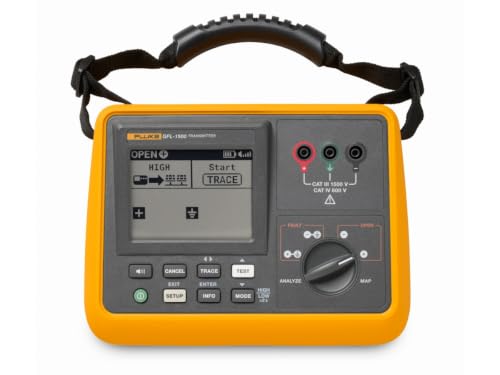
The Fluke GFL-1500 states 1500 V and is built for PV arrays, where the source cannot be switched off in daylight. Nothing else on this page is designed for a live DC string.
Locate or Detect
An insulation tester detects a fault, a locator finds where it is. The Armada and the Fluke are locators. The analyzers and breaker finders detect and identify without walking you to a point on a buried cable.
Published Working Voltage
Only two listings publish one, the Ideal at 480 V AC and DC and the Fluke at 1500 V. Where nothing is stated, the manual has to settle it before the tool goes near a live board.
What is the difference between detecting a fault and locating one?
An insulation resistance tester detects a ground fault by showing a resistance that has collapsed, and a protective device detects one by opening. Neither tells you which metre of a buried run is damaged. A locator injects a signal and is walked along the route until the signal behaviour changes at the fault. The Armada GFL3000 and the Fluke GFL-1500 are locators, and most of the rest of this page detects and identifies instead.
Why does a PV array need its own ground fault locator?
Because the array generates whenever light falls on it, so the circuit cannot simply be isolated and worked on dead. System voltages reach 1000 V on commercial strings and 1500 V on utility arrays, the conductors run across roofs and fields, and the connections are MC4 rather than terminals. The Fluke listing states 1500 V and supplies a transmitter, receiver and clamp for exactly that situation.
Can a circuit analyzer find a fault a tester misses?
Yes, and voltage drop is the reason. A plug-in tester checks the circuit with no load on it, which is the condition where a loose lug or a backstabbed receptacle looks perfect. The Klein RT390 listing states voltage drops and device trip time alongside wiring faults, AFCI and GFCI behaviour, so it loads the circuit and watches what happens.
Which three products were removed and why?
A DC ground fault circuit breaker, which is a protective device that interrupts a fault rather than an instrument that finds one. A five in one stud finder and wall scanner, which locates studs, metal and live AC cable behind plasterboard but diagnoses no circuit. And a photovoltaic I-V curve tracer, which measures array performance against an expected curve and is a performance instrument rather than a fault locator. None of the three would have added a fault finder to the table.
Do these instruments work on de-energised circuits?
It varies and the listings are specific. The Ideal SureTrace states energised and non-energised tracing up to 480 V AC and DC. The VEVOR locator states the opposite restriction, non-energised cables or 24 V and below. The breaker finders work by injecting a signal into a live circuit from an outlet. Read the line on the listing before connecting anything, because the wrong choice damages the transmitter.
Reviews
Armada Technologies GFL3000 Ground Fault Locator Best Overall
Most instruments in this category tell you that a ground fault exists. An insulation tester gives you a resistance figure that has collapsed, a protective device keeps opening, and neither tells you where along two hundred metres of buried cable the damage sits. The GFL3000 exists for that final step, and the Armada listing is refreshingly narrow about it: it locates ground faults, described as cuts and nicks, in buried wires.
Naming cuts and nicks rather than just faults is worth noticing. That is the damage a spade, a trencher, a rock or forty years of ground movement causes, and it is characteristically a small breach in the insulation rather than a clean break. A break can be found by continuity. A pinhole leaking to wet soil cannot, which is exactly why a dedicated locator exists.
The listing publishes nothing else: no working voltage, no maximum cable length, no resolution on the fault position, no battery figure and no ingress rating for a tool that works outdoors. That is a lot of silence for a specialist instrument, and it means the buying decision rests on the single stated function rather than on comparable specifications.
Strengths
Dedicated to locating the fault rather than confirming it
Cuts and nicks in buried wire named explicitly
No competing functions to compromise the design
Answers the question insulation testers leave open
Fluke GFL-1500 Solar Ground Fault Locator Best for Solar Arrays
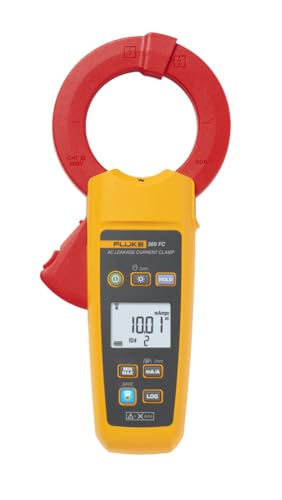
A ground fault on a PV array is one of the harder faults in the trade. The array is an energised DC source whenever light falls on it, the conductors run across a roof or a field rather than through accessible trunking, and the inverter simply reports a fault and stops. Fluke states a 1500 V solar ground fault locator supplied as a transmitter, receiver and clamp, and the voltage figure is the part that matters most: 1500 V is the utility scale system voltage, above the 1000 V typical of commercial and residential strings.
The three piece format tells you how it works. A transmitter injects a signal onto the faulty conductor, the clamp couples or measures it, and the receiver is walked along the run until the signal behaviour changes at the fault. That is the same principle as the buried wire locators elsewhere on this page, adapted to a high voltage DC source that cannot simply be switched off in daylight.
The listing publishes only the three included parts and the voltage. No range, no resolution, no battery life and no ingress rating appear, which for an instrument designed to be carried across an array is a meaningful gap. Our PV ground fault testing comparison covers the wider workflow.
Strengths
1500 V figure covers utility scale arrays
Transmitter, receiver and clamp supplied together
Purpose built for DC ground faults rather than adapted
Addresses a fault inverters report but cannot locate
KAIWEETS KT302P Circuit Breaker Finder Tool Kit Best Value
Most building faults are not exotic. A circuit is dead and nobody knows which breaker feeds it, an outlet behaves oddly and the wiring order is suspect, or a GFCI has stopped protecting the circuit it is fitted to. KAIWEETS states all three functions on the KT302P: locating breakers, checking outlet wiring and testing GFCI protection, with dual sided LED indicators so the readout is visible from either side of the tool.
Combining them in one kit reflects how the work actually runs. You start at the outlet, establish whether the wiring is correct and whether the protective device still trips, then trace back to the breaker if the answer is neither. Doing that with one transmitter and receiver pair rather than three separate tools is the value here.
The listing states no accuracy, no working voltage, no safety category and no battery figure. Breaker finders also share a weakness worth repeating: signal coupling between conductors in a shared conduit can light the receiver on the wrong breaker, so confirm the identification by switching it off and checking that the load died.
Strengths
Three everyday fault jobs in one kit
Dual sided LED indicators for panel work
Lowest specification barrier of the nine here
Covers the faults that come up weekly rather than yearly
Limitations
No working voltage or safety category stated
Adjacent circuit coupling needs a confirming switch off
Short answer: the Armada Technologies GFL3000 is the best general buy for buried wire work, because it is built to locate the cut or nick causing a ground fault rather than to confirm one exists; the Fluke GFL-1500 is the tool for PV arrays, stated at 1500 V and supplied as a transmitter, receiver and clamp; and the KAIWEETS KT302P is the value pick for everyday building faults, stating breaker location, outlet wiring checks and GFCI testing in one kit.
Three listings were removed and nine remain
The research list held twelve products. Three of them find no faults and were taken out rather than used to fill the table. The first is a DC ground fault circuit breaker for din rail mounting, which is a protective device: it interrupts a fault, which is the opposite end of the job from locating one. The second is a five in one stud finder and wall scanner, stated to find studs, metal and live AC wires behind drywall, which is a construction tool rather than a circuit diagnostic. The third is a photovoltaic I-V curve tracer stated for 1500 V and 15 A, which measures how an array is performing against an expected curve and is a performance instrument rather than a fault locator. Nine genuine fault finding instruments remained, which matches the number in the heading.
Four kinds of fault, four kinds of instrument
The word fault covers problems that have nothing in common. A ground fault is current escaping to earth through damaged insulation, and the two dedicated locators here exist for it. An open conductor or a break is a continuity problem, which is what the VEVOR locator states it detects and what the underground tracers find by following a signal until it stops. A dead short or a splice error is a wiring problem, and the Ideal SureTrace listing names both specifically. A protective device that has stopped opening is a device problem, which the Klein RT390 addresses by measuring trip time and AFCI and GFCI behaviour. Buying before you have named which of the four you are chasing is the single commonest way to end up with an instrument that duplicates something already in the bag.
The ground fault locators, and why they are separate tools
Two instruments here do one thing and do not pretend otherwise. Armada states that the GFL3000 locates ground faults, described as cuts and nicks, in buried wires. Fluke states that the GFL-1500 is a solar ground fault locator at 1500 V, supplied as a transmitter, receiver and clamp. In both cases the fault has already been detected by something else, usually an insulation resistance test or an inverter that has stopped, and the question that remains is where. That question is genuinely hard, because a pinhole in insulation leaking into wet soil passes a continuity test perfectly. For the wider workflow around insulation faults see insulation resistance testers and, on the PV side, PV ground fault testing tools.
Two published working voltages, and seven blanks
Only two listings in this group publish a voltage at all. Ideal states electrical systems up to 480 V AC and DC including three phase for the SureTrace, and Fluke states 1500 V for the GFL-1500. The VEVOR listing publishes a limit rather than a capability, stating that it locates non-energised cables or those at 24 V and below, which is just as useful to know. The other six publish nothing. For an instrument that gets connected to a live board, an unpublished working voltage is not a small omission, and the manual has to settle it before the transmitter goes on. The same applies to safety category, which no listing in this group states.
Where the analyzers and breaker finders fit
Five of the nine are building circuit tools rather than locators, and they earn their place because most faults are ordinary. The Klein RT390 states wiring faults, AFCI and GFCI testing, voltage drops and device trip time on a colour LCD, which covers the socket end of a diagnosis completely. The Klein ET310 and ET310KIT and the KAIWEETS KT302P identify which breaker feeds a circuit, with the ET310 adding an integrated GFCI outlet tester and the KT302P adding outlet wiring and GFCI testing with dual sided LED indicators. The Ideal SureTrace bridges both worlds, tracing energised or de-energised conductors while also reporting dead shorts and splice errors. For deeper coverage of tracing specifically, see circuit tracers.
Guides in This Category
Best circuit tracers for anyone whose fault is really a question of which conductor goes where.
Listings were compared on the fault type each states it locates or identifies, stated working voltage, stated reach or depth, what the kit contains and whether the instrument locates a fault or only detects one. Owner feedback was reviewed for recurring reports of false indications. Nothing here was tested by us and no figure appears that the manufacturer did not publish first.
A first-hour review of the HiLetgo LCR-T4 kit, covering what it measures, what the listing leaves out, and when a different instrument is the better answer.