Best Weather Stations: 6 Picks for Real Data From Your Own Garden
A forecast tells you what the region will probably do. A weather station tells you what your own garden actually did, which is the number that matters for irrigation, frost, spraying and knowing whether the roof really did take 50 mile per hour gusts.
As an Amazon Associate, Akermin earns from qualifying purchases. Product links on this page are affiliate links.
Our Top Picks
Stations were compared on the parameters the outdoor array measures, wireless range between array and display, WiFi band support, whether data can be shared to a public network, stated sensor accuracy, data storage and power arrangements. We did not run laboratory tests and publish no measurements of our own.
Best Overall
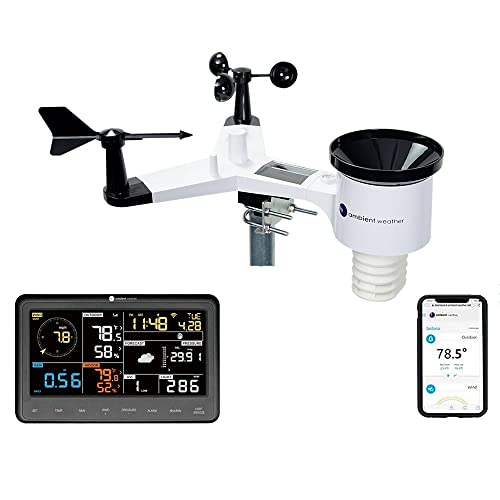
Ambient Weather WS-2902
A full seven parameter array including UV and solar radiation, with smart home integration.
Osprey sensor array with rain cup plus a colour LCD display
Measures wind speed and direction, temperature, humidity, rainfall, UV intensity and solar radiation
Parameter counts in this category often include derived values such as dew point and feels-like temperature, which are calculated from the primary sensors rather than measured separately.
How to Choose a Weather Station
Siting the array badly will ruin a good station faster than any specification will save a mediocre one.
Siting Beats Specification
An array on a fence next to a wall reports the wall. Wind wants open exposure well above obstructions; temperature wants shade and airflow. Plan the mounting before buying.
Pressure Carries the Forecast
The forecast icon on any console is derived from the pressure trend in the unit itself. Falling pressure suggests unsettled weather. It is local and short range, not a meteorological service.
Calibration Protects Year-to-Year Comparisons
Sensors drift and rain funnels silt up. If you are comparing this season against last, being able to apply an offset matters more than the initial accuracy.
Solar Arrays Keep Reporting
The most common reason a home station goes quiet is a flat battery on a pole in winter. A solar panel with cells as backup removes the chore for most of the year.
Check the WiFi Band
Many consoles are 2.4 GHz only, which trips up households with a single combined network name. Dual band support avoids an evening of router settings.
Rain Gauges Need Cleaning
Every tipping bucket collects leaves, pollen and insects, and a blocked funnel reads zero in a downpour. Plan to clean it seasonally whichever station you buy.
As a general principle, wind sensors want open exposure well clear of buildings and trees, rain gauges want open sky without overhang, and temperature sensors want shade with free airflow. Perfect siting for all three is rarely possible at home, so decide which parameter you care about most and site for that one.
Is the forecast on the console any good?
It is derived from the barometric pressure trend measured inside the unit, not from a forecasting service. Falling pressure indicates unsettled conditions and rising pressure improvement, over the next several hours and for your immediate location. Treat it as a barometer with an icon rather than a forecast.
Why does my station read higher than the official one nearby?
Usually siting. A sensor near a wall, a patio or a roof reads the heat those surfaces store, particularly overnight. Official stations use standardised screens in open grass. Differences of a couple of degrees from siting alone are entirely normal.
How often does the rain gauge need cleaning?
At least seasonally, and more often under trees. Every tipping bucket collects leaves, pollen, grit and insects, and a blocked funnel reports zero rainfall during the exact downpour you wanted to record. It is the most common failure in home weather stations.
Can I share my data publicly?
Several of these support it. The AcuRite listing states a Weather Underground connection and the Sainlogic states Wunderground sync. Sharing gives you comparison against neighbouring stations, which is often more useful than your own figure alone.
Do I need UV and solar radiation?
Only if you grow things or care about sun exposure. Solar radiation drives evapotranspiration and therefore irrigation need, and UV tells you whether shade cloth is working. For general household interest they add cost without changing any decision.
Reviews
Ambient Weather WS-2902 Best Overall
Seven parameters in one array is the complete set for a home station, and the two that distinguish it from cheaper units are UV intensity and solar radiation. Both matter for anyone growing anything: solar radiation is the input that drives evapotranspiration and therefore irrigation need, and UV is what determines whether shade cloth is doing anything useful.
The smart home integration is more practical than it first appears. IFTTT support means a rainfall total can switch off an irrigation controller, or a wind threshold can send a warning before a greenhouse vent is left open in a gale. That is automation with a real purpose rather than a novelty, and it is the reason this platform has such a following among gardeners and smallholders.
Strengths
Complete seven parameter array including UV and solar
IFTTT, Google Home and Alexa integration
Colour display alongside remote access
Well established platform with a large user base
Limitations
No stated sensor accuracy in the listing bullets
Rain cup needs periodic cleaning like every tipping bucket
Sainlogic 5G and 2.4G WiFi Station Best Published Accuracy
Naming the sensor chip and publishing its accuracy is rare in this category and worth a great deal. A stated 0.2 C and 1.8 percent relative humidity puts the temperature and humidity channel in a different class from the unspecified sensors most home stations use, and it is verifiable because the part is named.
Dual band WiFi solves the most common setup frustration. Many stations are 2.4 GHz only, and households whose router presents a single combined network name have to dig through settings to force the band. Supporting both removes that entirely. The stated 443 foot range and two years of stored data round out a station that publishes more of its specification than its competitors, which is the best proxy a buyer has for build quality.
Strengths
Sensor chip named with published accuracy
Dual band WiFi avoids the 2.4 GHz setup problem
Stated wireless range of 443 feet
Two year data storage and over the air updates
Limitations
Accuracy is published only for temperature and humidity
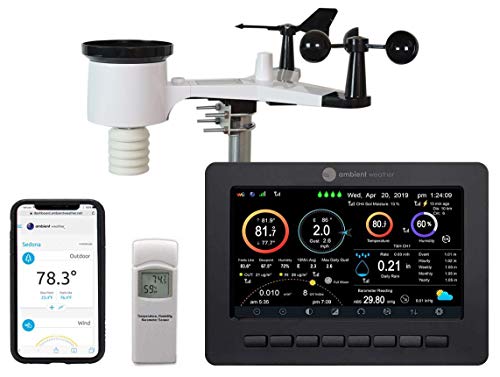
Calibration availability is the feature that separates a station you can trust from one you simply read. Home weather sensors drift, rain gauges under-read as the funnel silts up, and temperature sensors sit in imperfect radiation shields. Being able to apply an offset means a station checked against a reference, or against a nearby official observation, can be corrected rather than quietly wrong.
That matters most if you intend to share data or make decisions from it. A gardener deciding when to irrigate, or a smallholder tracking frost dates across seasons, is comparing this year against last year, and a slow drift corrupts exactly that comparison. The TFT console and dual unit support are conveniences; the calibration is the reason to pay the difference.
Strengths
Readings can be calibrated rather than accepted
Full seven parameter array
Both unit systems supported
Large colour console
Limitations
No stated accuracy figures
Premium price for the platform
Calibration still requires something to calibrate against
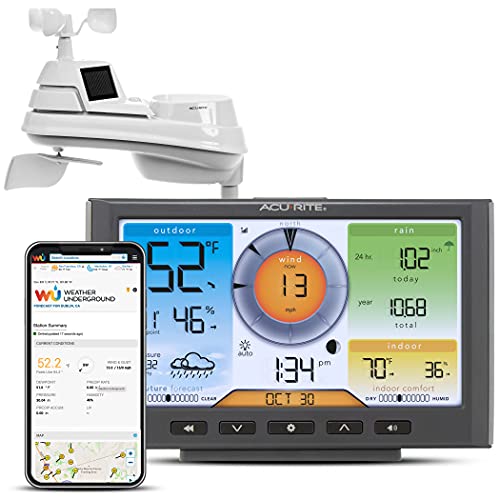
Contributing to a public network changes what a station is for. Your own readings become part of a dense local observation grid, and in return you get context: whether the gust you recorded was local or regional, whether your rainfall matched the next village, whether your frost was a valley effect. That is considerably more useful than a number in isolation.
The five parameter array omits UV and solar radiation, which matters for growers and not for general interest. What it does include is barometric pressure, which is the parameter that actually carries short-term forecasting information: it is the trend rather than the value that indicates change, and the console's adjustable dimmer is a small but welcome detail for a device that usually lives in a kitchen or hallway.
A solar panel on the outdoor array is the practical detail that decides whether a station keeps running. Battery changes on a pole-mounted sensor array in February are the reason many home stations quietly stop reporting, and an array that tops itself up from daylight removes that chore for most of the year while keeping cells as a backup.
The 7.5 inch display is genuinely large for this price, and a weather console is one of the few instruments where display size translates directly into use, because it is read from across a room rather than held. The listing describes the full sensor complement including UV and a light sensor, which puts it alongside the premium arrays on parameters, if not on published specification.
Ten parameters is the largest count here, and for a buyer who wants every channel a home station can provide without moving to professional equipment, that is the appeal. Home arrays commonly derive several of their reported values, dew point and feels-like temperature among them, from the primary measurements rather than measuring them separately, so treat a parameter count as a feature list rather than a sensor count.
As with most of this bracket, the listing publishes no accuracy figures, which is the honest limitation to record. If you want a named sensor with a stated tolerance, the dual band Sainlogic model above publishes one for temperature and humidity. If you want breadth at the lowest cost, this is where the category lands.
Strengths
Largest parameter count in this group
WiFi with app access
Low cost for the sensor breadth
Single array installation
Limitations
No accuracy figures published
Several parameters are derived rather than measured
Short answer: the Ambient Weather WS-2902 is the best all-round buy with a full seven parameter array and genuinely useful automation hooks; the Sainlogic dual band station is the one to choose if you want a named sensor with published accuracy; and the AcuRite Iris is the pick for anyone who wants to contribute to and benefit from a public observation network.
Siting matters more than the specification sheet
This is the single most important thing to understand before spending anything. A weather station reports the conditions where its sensors are, and at a typical house those conditions are heavily influenced by the building. An array mounted on a fence beside a brick wall will read warm at night because the wall radiates stored heat. One tucked under an eave will under-read rainfall badly. One at head height in a sheltered garden will report almost no wind. None of that is a fault in the instrument, and no amount of sensor accuracy corrects it.
The professional answer is a standardised screen in open grass with the anemometer ten metres up, which no ordinary garden can provide. The practical answer is to decide which parameter you actually care about and site for that one, accepting compromise on the others.
The forecast icon is a barometer with pictures
Every console here shows a forecast symbol, and it is worth being clear about what produces it. The station measures barometric pressure, watches the trend over several hours, and maps falling pressure to unsettled symbols and rising pressure to clear ones. That relationship is real and genuinely useful for the next few hours in your immediate area. It is not connected to any meteorological service, has no knowledge of approaching fronts, and should not be compared with a national forecast built from satellite data and numerical models.
Why calibration is the underrated feature
Home weather sensors drift. Temperature sensors age inside imperfect radiation shields, humidity sensors drift as all capacitive sensors do, and rain gauges gradually under-read as the funnel accumulates dust and pollen. If you use the station casually, none of that matters much. If you are comparing this April with last April to decide planting dates, or tracking whether your rainfall is genuinely lower than the next parish, drift corrupts precisely the comparison you are making. A station that allows an offset to be applied, as the WS-2000 listing states, can be corrected against a reference. One that cannot is slowly and invisibly wrong.
The rain gauge is the part that fails
Almost every home station uses a tipping bucket: rain funnels into a small see-saw, each tip is counted, and the count becomes a total. It is elegant, cheap and completely defeated by a leaf. Under trees, a funnel can block within a fortnight, and the console then confidently reports zero rainfall through a thunderstorm. Plan to lift the cover and clean it seasonally, check it after heavy pollen and leaf fall, and treat a suspiciously dry reading during obvious rain as a maintenance prompt rather than a measurement. Our rain gauge roundup covers dedicated units, and the anemometer roundup covers handheld wind measurement.
How We Research
Stations were compared on the parameters the outdoor array measures, whether sensor chips and accuracy figures are named, wireless range between array and console, WiFi band support, public network sharing, data storage duration, calibration options and power arrangements for the array. We did not run laboratory tests and publish no measurements of our own.
Five handheld meters that measure more than wind, compared on the derived values each one calculates and whether the body is rated for the weather it measures.
Five WiFi and LoRa freezer alarms compared on stated probe accuracy, how many alert channels they use, whether they warn you when the hub itself goes offline, and how they handle defrost cycles.
Six loggers split between single-use shipment recorders and reusable units, compared on stated accuracy at cold temperatures, memory depth, calibration certificates and how the report is retrieved.