As an Amazon Associate, Akermin earns from qualifying purchases. Product links on this page are affiliate links.
Choose a field weather meter by listing the numbers your decisions use and requiring an honest specification for each: wind speed with gust and average (±3 percent) for spraying, drones, sailing and cranes; temperature and humidity (±1 °C, ±3 percent RH) for heat stress and dew point; pressure (±1.5 hPa) for altitude and trend; and the calculated values you would otherwise look up, such as heat index, wind chill, wet bulb and density altitude. Then require weatherproofing (IP67), a drop rating, a lanyard, and logging or Bluetooth if readings go into a record.
Step 1: Which numbers
| Activity | Readings that matter | Derived values |
|---|---|---|
| Pesticide and herbicide spraying | Wind speed and direction, temperature, humidity | Delta T (wet-bulb depression); drift risk |
| Drone and model flying | Wind speed and gust, temperature | Density altitude on advanced units |
| Sailing, kiting, paragliding | Wind speed, gust, direction | |
| Cranes, scaffolding, roofing | Wind speed and gust | Comparison with site limits |
| Wildland fire | Wind, temperature, humidity | Fine fuel moisture proxies |
| Athletics and outdoor work safety | Temperature, humidity, wind | Heat index, wet-bulb globe temperature (needs a globe), wind chill |
| Hiking, mountaineering | Pressure, temperature | Altitude, pressure trend |
| Ballistics, aviation | Pressure, temperature, humidity | Density altitude |
Step 2: Sensors
- Wind: a small impeller, user-replaceable, with average and gust (max) functions; a range of 0.4 to 40 m/s covers most needs. Direction needs a separate vane or compass.
- Temperature: a thermistor exposed to airflow; readings in still air with sun on the case are wrong.
- Humidity: capacitive; check the stated accuracy.
- Pressure: a barometric sensor; requires setting a reference for altitude.
Step 3: Derived values
The point of a weather meter over an anemometer is the calculation. Confirm the meter computes what you need: dew point (see what dew point is), wet bulb, heat index, wind chill, delta T, altitude and density altitude. Each is a formula the meter runs from its sensors; see how to calculate dew point for one of them.
Step 4: Build
- IP67 waterproofing; the meter will be rained on and dropped in puddles.
- Drop rating and a protective cover for the impeller.
- Lanyard and a tripod thread for hands-free averaging.
- Backlight; long battery life on common cells.
Step 5: Data
Hold, min/max and average are the minimum. Logging with time stamps and Bluetooth to a phone turn readings into a record for spray logs, site safety and research. See how to set up long-term environmental data logging for fixed installations.
Handheld or station
A handheld weather meter measures where you stand, when you are there. A weather station (Newentor, Netatmo, Ecowitt and similar) measures continuously at one place and logs; it is the right tool for a farm, a site or a home record and the wrong one to carry. Many field users have both.
Using it well
- Hold the meter into the wind at arm’s length, above head height if possible, away from buildings and your body.
- Average over 30 to 60 seconds; note the gust.
- Shade the sensors from direct sun for temperature and humidity.
- Let it equilibrate after coming from a pocket or a vehicle. See why sensors need time to stabilize.
Anemometers and weather instruments are in the environmental monitoring category; see also what an anemometer measures.
Recommended Tools
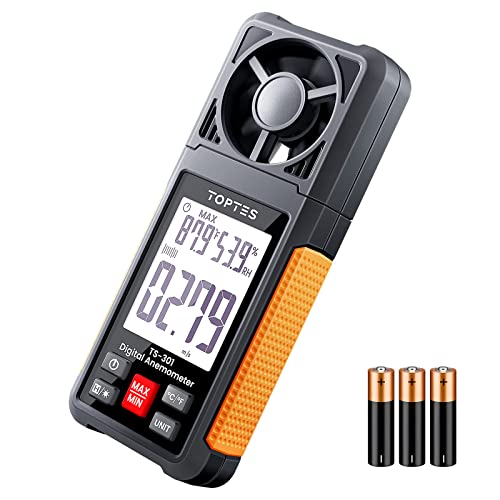


Products shown because their documented specifications fit this guide. Price and availability are on Amazon and can change.
Frequently Asked Questions
What is the difference between a weather meter and an anemometer?
A weather meter is an anemometer plus temperature, humidity and often pressure sensors, with calculated values such as wind chill, heat index and dew point. Anemometers alone measure air speed.
Do I need barometric pressure?
For altitude, density altitude (aviation, ballistics), trend forecasting and some agricultural spraying rules, yes. For wind and comfort checks, no.
How accurate are pocket weather meters?
Good ones state ±3 percent on wind, ±1 °C on temperature, ±3 percent RH and ±1.5 hPa on pressure. Cheap ones may not state accuracy at all.
Affiliate disclosure: Akermin earns a commission from qualifying Amazon purchases made through links on this page. Our editorial picks are based on documented specifications and owner feedback, not commissions.
Related Guides
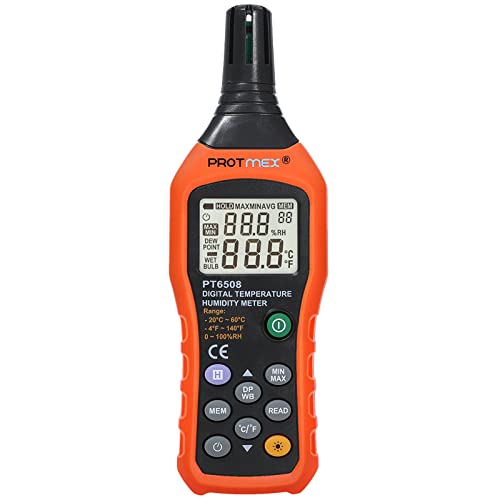
Protmex PT6508 Temperature Humidity Meter Review: One Instrument, Four Numbers
A single-product review of the Protmex PT6508, explaining what its four measurements mean in practice, where the design forces a compromise, and who should buy a different kind of instrument.
Read More→Bluetooth Logger or WiFi Logger for a Cellar: Which One Actually Works
This article explains how Bluetooth and WiFi data loggers differ in a cellar, what each can and cannot do, and how to pick the one that matches your building and your alarm requirements.
Read More→
Testo 510i Differential Pressure Manometer: A Single Product Review
A mechanism-first review of the Testo 510i differential pressure manometer, based only on the manufacturer listing.
Read More→