As an Amazon Associate, Akermin earns from qualifying purchases. Product links on this page are affiliate links.
Dew point is the temperature to which air must be cooled for its water vapor to start condensing. It depends only on how much water the air holds, not on the current temperature, so it is the steady measure of moisture that relative humidity is not. Indoors it answers a practical question: any surface colder than the dew point of the room air will collect condensation. A room at 21 °C and 55 percent RH has a dew point near 12 °C; a window frame at 8 °C will be wet, and a wall corner at 11 °C will be damp enough for mold.
Dew point, temperature and RH
The three are linked: given any two, the third follows. Relative humidity is how close the air temperature is to the dew point. When they are equal, RH is 100 percent and condensation begins. As the air warms with the same moisture, the gap widens and RH falls; the dew point stays put.
| Room temperature | RH | Dew point |
|---|---|---|
| 20 °C | 30% | 1.9 °C |
| 20 °C | 50% | 9.3 °C |
| 20 °C | 70% | 14.4 °C |
| 24 °C | 50% | 12.9 °C |
| 16 °C | 70% | 10.5 °C |
Why it matters indoors
Condensation and mold
Surfaces in a heated room are not all at room temperature. Single-glazed windows, aluminum frames, uninsulated external walls, cold-bridged corners and the wall behind a wardrobe can be 5 to 10 °C colder than the air. If the dew point of the room air is above the surface temperature, water condenses there. Mold grows where surface RH stays above about 80 percent, which happens well before visible condensation. Knowing the dew point tells you which surfaces are at risk. See why condensation forms on windows.
Tracking moisture sources
Because dew point ignores temperature, a rising dew point means water is being added: a shower, cooking, drying laundry, more people. A falling dew point means ventilation is removing it. Watching RH alone confuses these with the heating cycle. See why humidity changes throughout the day.
Comfort
People perceive mugginess by dew point more than by RH. Indoors, dew points above about 15 °C feel humid and sticky; below about 2 °C feel dry and static-prone. A comfortable indoor band is roughly 5 to 12 °C.
Calculating it
The Magnus approximation is accurate to a fraction of a degree across indoor conditions. Digital hygrometers often compute it; the humidity checker does it from any temperature and RH pair. See how to calculate dew point for the formula.
Using it in practice
- Read room temperature and RH; get the dew point.
- Measure a suspect surface with an infrared thermometer.
- If the surface is within 2 to 3 °C of the dew point, it is at mold risk; if below it, it will be wet.
- Fix by lowering the dew point (ventilate, extract at source, dehumidify) or raising the surface temperature (insulate, improve heating, move furniture off cold walls).
Thermal cameras make step 2 a whole-wall survey; see best thermal cameras for home inspection.
Recommended Tools
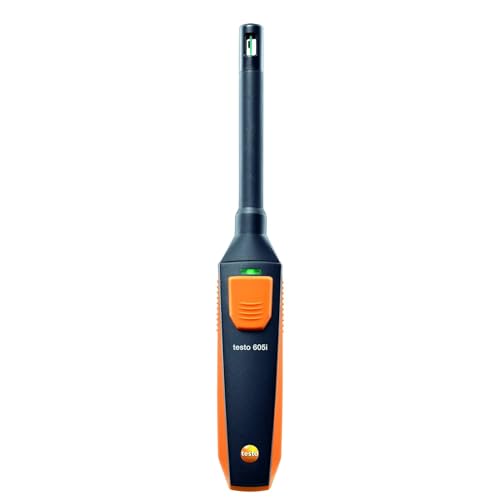

Products shown because their documented specifications fit this guide. Price and availability are on Amazon and can change.
Frequently Asked Questions
What is a comfortable indoor dew point?
Roughly 5 to 12 °C (41 to 54 °F) for a room at 20 to 22 °C. Above about 15 °C the air feels humid indoors; below about 2 °C it feels dry.
How do I get dew point from a hygrometer?
Many digital hygrometers display it. Otherwise enter temperature and RH into the humidity checker; the Magnus formula gives it to within a fraction of a degree.
Why does dew point matter more than RH for condensation?
Condensation forms on any surface colder than the dew point regardless of what the room RH reads. A room at 55 percent RH and 21 °C has a dew point of about 12 °C; a window frame at 8 °C will be wet.
Affiliate disclosure: Akermin earns a commission from qualifying Amazon purchases made through links on this page. Our editorial picks are based on documented specifications and owner feedback, not commissions.