As an Amazon Associate, Akermin earns from qualifying purchases. Product links on this page are affiliate links.
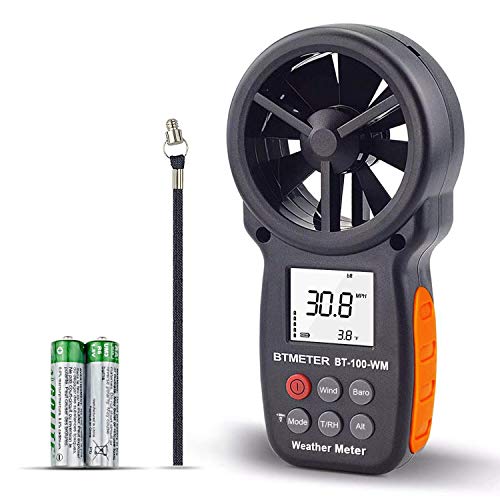
BTMETER · BTMETER BT-100WM Handheld Anemometer, Wind Speed Meter, Digital Barometer
View on AmazonPrice and availability are shown on Amazon and can change at any time.
A pocket weather meter that reports seven quantities: wind speed, wind temperature, wind chill, relative humidity, dew point, barometric pressure and altitude. Two of the seven arrive with a tolerance. The casualty is dew point, which is computed from temperature and humidity and therefore has no stated uncertainty at all, because the humidity accuracy is nowhere in the bullets. A second detail to settle before buying: the temperature tolerance is printed in two units at once.
Seven quantities, two tolerances
The first bullet lists what the instrument reports. The second, headed HIGH PRECISION, gives tolerances for wind speed and wind temperature and then switches to ranges and resolutions for everything else.
Laid out plainly, that means:
- Wind speed has an accuracy figure, plus or minus 5 percent, over 0.67 to 67.1 mph.
- Wind temperature has an accuracy figure, discussed below, over minus 10 to 45 C.
- Relative humidity has a resolution of 0.1 percent RH and no accuracy figure.
- Barometric pressure has units but neither a range nor an accuracy figure.
- Altitude has a range of 0 to 19,685 feet and no accuracy figure.
- Dew point has nothing at all beyond being named.
A resolution without an accuracy is half a specification, and the halves are easily confused, which is why we wrote a separate piece on accuracy against resolution and repeatability. A humidity channel stepping in tenths of a percent looks precise on the display. Nothing on this page says how close those tenths are to the truth.
Pressure is the one to watch hardest. People carry a barometer to see a change of a few millibars, which is a very small fraction of the roughly 1,000 millibar ambient. Without a tolerance there is no way to know whether a change of that size is weather or instrument.
A tolerance cannot be written in two units at once
The wind temperature accuracy is printed as plus or minus 2 C slash F.
Those are not interchangeable. A Celsius degree is 1.8 times a Fahrenheit degree, so two Celsius degrees is 3.6 Fahrenheit degrees, and a slash between the units leaves the reader choosing between two tolerances that differ by nearly a factor of two. A tolerance with a choice in it has stopped being a tolerance.
The sensible reading is the looser of the two, so treat the air temperature as good to a couple of Celsius degrees. For the uses named in the bullets, long range shooting, sailing, kite flying and drone work, a couple of degrees is fine. It is not fine where a single degree matters, and it is a reminder to check how carefully the rest of the figures were written.
Dew point is computed, and one of its inputs has no tolerance
Dew point is the temperature at which the air being measured would become saturated. There is no dew point sensor in this instrument or in almost any other. It is computed from the measured air temperature and the measured relative humidity using a standard relation, and our page on calculating dew point shows the arithmetic.
The consequence is that dew point inherits the uncertainty of both inputs. One input, temperature, has a tolerance on this page, loosely expressed. The other, relative humidity, has none at all. So the computed dew point has no bounded uncertainty either, and a number with no bound is one you can look at but not quote.
How much that matters depends entirely on the job. For deciding whether it will be a damp night it does not matter. For the work people actually buy dew point readings to do, deciding whether a surface sits far enough above dew point to paint or coat it, it matters a great deal, because that decision turns on a margin of a few degrees and usually has to be recorded. An instrument that reports dew point without publishing a humidity accuracy is not the instrument for that decision.
Altitude is the pressure sensor under another name
Nothing in the bullet list could produce altitude except the pressure sensor, and the range gives it away: 0 to 19,685 feet is 6,000 metres to within an inch or two. Another metric figure dressed for an imperial market.
So pressure and altitude are one measurement reported two ways, through the standard atmosphere relation between them. That has a consequence the bullets do not mention. Because the conversion assumes a reference pressure at sea level, and real sea level pressure moves with the weather, the altitude reading at a fixed spot changes from day to day. A deep low can add a few hundred feet to a stationary instrument.
Nothing in the five bullets describes setting a reference or calibrating the altitude, which is the normal way of dealing with this. Read the altitude as a relative measurement, good for the difference between two points measured within a short time of each other, and not as a position.
Sixteen records, stated plainly, and what they are good for
The fourth bullet says the instrument can log 16 groups of barometric pressure data for record, comparison and analysis.
Credit the specificity first. The usual phrasing in this category is data logging, full stop, which could mean a dozen readings or a month at one minute intervals. Sixteen is a number you can plan around.
What you can plan is a short session. Sixteen pressure records will show a direction of travel across an afternoon, which is genuinely what a field barometer is for. They are not a dataset, they cannot be exported, and they will not give an overnight trend at any interval you would choose. The bullets do not state the gap between records, whether it can be set, or whether the records survive a battery change.
One tension in the listing deserves naming. It describes a tripod hole for mounting and, separately, automatic shutdown after 10 minutes without operation. The reason to put a weather meter on a tripod is to leave it alone, and ten minutes is not leaving it alone. A sibling instrument in the same family states an adjustable power off time, so the fixed interval here is a choice rather than a limitation.
The table, and who the extra sensors are actually for
| Quantity or feature | What the bullets give |
|---|---|
| Wind speed | 0.67 to 67.1 mph, plus or minus 5 percent, resolution 0.2 mph |
| Speed units | mph, ft/min, km/h, m/s, knots |
| Wind temperature | Minus 10 to 45 C, 14 to 113 F, tolerance given as plus or minus 2 C slash F |
| Wind chill | Reported, computed from speed and temperature |
| Relative humidity | Resolution 0.1 percent RH, accuracy not stated in the listing bullets |
| Dew point | Reported, no range or tolerance stated in the listing bullets |
| Barometric pressure | Units inHg, hPa and mbar, range and accuracy not stated in the listing bullets |
| Altitude | 0 to 19,685 feet, metres or feet, accuracy not stated in the listing bullets |
| Readings available | Current, maximum, minimum and average |
| Pressure log depth | 16 groups |
| Log interval | Not stated in the listing bullets |
| Display | Backlit LCD |
| Mounting | Tripod hole |
| Auto shutdown | After 10 minutes without operation |
| Battery type and runtime | Not stated in the listing bullets, low battery indicator present |
| Wireless link or export | Not stated in the listing bullets |
| Ingress protection rating | Not stated in the listing bullets |
| Support | 365 day quality assurance stated |
Read the table rather than the first bullet and the instrument comes into focus. It is a wind meter with a pressure and humidity sensor attached, specified properly for wind and loosely for everything else.
That is the right instrument for somebody who wants one thing in a pocket to say what the air is doing before a shot, a flight or a sail. The maximum, minimum and average readings matter more there than a tolerance does, because the question being asked is comparative rather than absolute. It is the wrong instrument for anyone whose humidity, pressure or dew point figures have to stand on their own, and the comparison to make is against the portable weather meters that publish a tolerance for every channel they report.
Recommended Tools

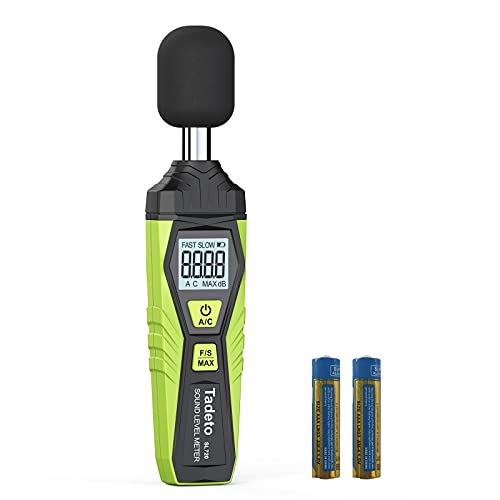
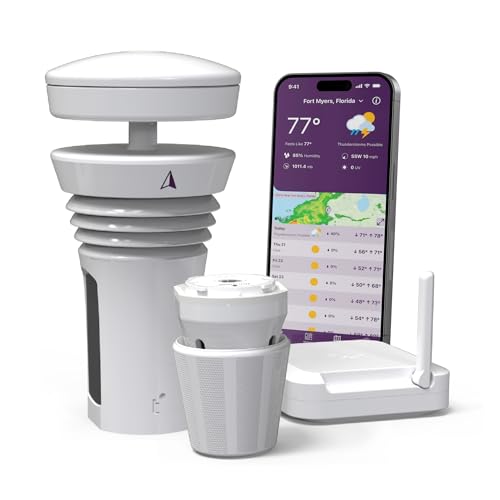
Products shown because their documented specifications fit this guide. Price and availability are on Amazon and can change.
Frequently Asked Questions
Which measurements come with an accuracy figure?
Two of the seven. Wind speed is given as plus or minus 5 percent over 0.67 to 67.1 mph, and wind temperature as plus or minus 2 over a range of minus 10 to 45 C. Relative humidity, dew point, barometric pressure and altitude have resolutions or ranges but no tolerance anywhere in the five bullets. That matters most for pressure, where a change of a few millibars is the whole signal people carry a barometer to see.
Why is a tolerance of plus or minus 2 C slash F a problem?
Because the two units are different sizes. A Celsius degree is 1.8 times a Fahrenheit degree, so two Celsius degrees is 3.6 Fahrenheit degrees. Written as a slash between the units, the figure offers the reader a choice between two tolerances that differ by nearly a factor of two, and a tolerance with a choice in it is not really a tolerance. Read it as the looser of the two if you need a figure you can defend.
Can I trust the dew point reading for a coating job?
Not without establishing the humidity tolerance from somewhere other than this listing. Dew point is not sensed, it is computed from the measured air temperature and the measured relative humidity, so its uncertainty is inherited from both inputs. The listing publishes a humidity resolution of 0.1 percent RH and no humidity accuracy at all. Resolution is the step size of the display and says nothing about how close the reading is to the truth, so the computed dew point has no stated uncertainty.
What does logging 16 groups of barometric data give you?
A short series you can eyeball, and the listing deserves credit for stating the number rather than saying it logs data. Sixteen records will show you whether pressure has risen or fallen across a session. They will not give you a trend over a day at any useful interval, and they are not a dataset you can export and analyse. The bullets do not state the interval between records or whether they survive a battery change.
How is altitude measured?
From pressure, because nothing else in the sensor list could produce it. That is why the altitude range stops at 19,685 feet, which is 6,000 metres to within an inch or two, and why pressure and altitude are really one sensor reported two ways. The consequence is practical. A pressure derived altitude moves when the weather moves, so the same spot reads differently on different days unless the reference is reset, and the bullets do not describe a reference setting or calibration procedure.
Does the tripod mount work with the auto shutdown?
Only for a short session. The listing states a tripod hole for mounting and, separately, automatic shutdown after 10 minutes without operation. Those two sentences pull against each other, because the reason to mount a weather meter is to leave it alone. A sibling model in the same family states an adjustable power off time instead, so the fixed 10 minutes here is a product decision rather than a limit of the design. Plan on touching it, or plan on a different instrument for unattended work.
Affiliate disclosure: Akermin earns a commission from qualifying Amazon purchases made through links on this page. Our editorial picks are based on documented specifications and owner feedback, not commissions.
Related Guides

Ideal Sciences Temp Stick Review: One WiFi Logger, No Subscription
A buyer-focused review of the Ideal Sciences Temp Stick, covering its alerting model, battery life claim, offline logging and the jobs it does not fit.
Read More→
Elitech RC-4HPro Temperature and Humidity Data Logger Review
A specification-led review of the Elitech RC-4HPro, covering its -40 to 85 degrees C range, 64,000 point capacity, shadow data function, PDF and CSV reporting, and the limits the listing does not publish.
Read More→
VIVOSUN Digital pH and TDS Meter Kit Review: The Calibration Powder Is the Story
A plain review of the VIVOSUN pH and TDS pen kit, with attention to the calibration buffers the listing mentions only in the included-items line.
Read More→