As an Amazon Associate, Akermin earns from qualifying purchases. Product links on this page are affiliate links.

FROGBRO · FROGBRO 1800W Solar Panel Tester MPPT Photovoltaic Multimeter | Upgraded solar tester with smart MPPT display, wide measuring range 5~1800W, 20~120V, 0~60A for accurate PV data reading
View on AmazonPrice and availability are shown on Amazon and can change at any time.
The FROGBRO 1800W Solar Panel Tester is for the installer or homeowner who needs to confirm that a single panel or a short series string is producing voltage and current in the field, without carrying a battery-powered meter and a separate clamp. It measures 20V to 120V and up to 60A, and its MPPT function sweeps the operating point to show peak power. It is the wrong buy for anyone working on a 1500V commercial string, for anyone who needs insulation resistance testing, and for anyone who wants a general-purpose multimeter. If you are testing a 400W panel on a roof, this is the right shape of tool. If you are commissioning a 100kW array, it is not.
The measurement window: 20V to 120V and 60A
The listing states a voltage range of 20V to 120V and a current range up to 60A. Those two figures define the tool more than any other specification. The lower bound of 20V matters because many small panels and most single 12V-nominal panels sit below it. A 100W panel with an open-circuit voltage around 22V is inside the window; a 50W panel with a Voc around 18V is not. The listing does not publish a resolution or accuracy figure, so you cannot know from the bullets how precisely it reads within that window. That is a gap you should notice before buying.
The 60A ceiling is generous for a single panel and adequate for a short parallel group, but it is not a string-level figure for commercial work. A series string of ten 400W panels can push past 10A at 400V, which is outside both the voltage and the current window. The 1800W headline in the product name is the maximum power the tester is rated to handle, not a measurement you can take on any array. It is the product of the voltage and current limits, and you should treat it as a ceiling, not a target.
The double voltage range is described as an upgrade to 20V to 120V, supporting series-connected panels below that limit. In practice that means two or three domestic panels in series, not a full roof string. If your work is residential rooftop maintenance on a single string, check the string Voc against 120V before you buy. If it is higher, this tester will not help you.
No battery, no separate clamp: what that changes on a roof
The listing says the tester requires no batteries: you connect it to the solar panel and it starts. That is a real practical advantage. A battery-powered clamp meter and a separate multimeter mean two instruments, two sets of leads, and the risk that one has a flat cell when you are already on the roof. A panel-powered tester removes that failure mode. The trade-off is that it only works when the panel is producing, so you cannot use it to check a panel in the dark or to trace a dead circuit with no irradiance. It is a daylight tool.
The box includes MC4 and alligator clip cables. MC4 is the standard connector on most modern panels, so for a direct panel test you may not need adapters. The alligator clips are for bare leads or for connecting to a combiner or a battery bus. The listing does not state the cable length, the lead gauge, or whether the MC4 connectors are the locking type. Those are details a daily user will care about, and the bullets are silent on them.
Weight is published at 460 grams and the case is described as a durable EVA box. That is light enough to hang from a tool belt or drop in a bag. It is not a reason to buy on its own, but it is consistent with the intended use: a carry-in instrument for service calls, not a bench meter.
What the MPPT sweep tells you, and what it does not
The product name includes MPPT, and the listing describes the tester as a photovoltaic multimeter. An MPPT sweep means the tester varies its own input impedance to find the point on the panel’s current-voltage curve where power is highest, then reports that maximum power point. This is more informative than a simple open-circuit voltage or short-circuit current reading, because it shows what the panel can actually deliver into a load, not just what it can deliver into an open circuit.
What the listing does not publish is the sweep time, the number of points sampled, or whether it reports the full I-V curve or only the maximum power point. Those distinctions matter if you are trying to diagnose a partially shaded panel or a failing bypass diode. A full curve tracer shows the shape of the curve and the knee; a single MPP reading shows only one number. The listing gives you the latter description, not the former. If you need curve-level diagnosis, this is not the instrument, and you should look at a dedicated I-V curve tracer instead.
The MPPT function also depends on stable irradiance. If a cloud passes during the sweep, the reported maximum power will be low for reasons that have nothing to do with the panel. The listing does not state whether the tester averages or repeats the sweep. That is a limitation you should plan around by taking several readings and comparing them, rather than trusting a single number.
The safety protections are real, but they are not a licence to work live on high voltage
The listing states overvoltage, overheating, overcurrent, and reverse polarity protection. Those are sensible features for a device that connects directly to a live DC source. Reverse polarity protection matters because MC4 connectors are easy to cross when you are working quickly. Overvoltage protection matters because a 120V rated input can see higher transient voltages when a string is switched or when a cloud-edge effect occurs. The listing does not publish the category rating, the impulse withstand voltage, or the pollution degree. Those are the figures a professional would want before trusting the device on a commercial site.
The tester is not a safety device. It does not replace a lockout/tagout procedure, and it does not make a live DC circuit safe to touch. It is a measuring instrument with protections built in, not a substitute for safe working practices. If you are working on a roof, the relevant safety standard is your own procedure, not the tester’s protection list.
One more limit: the listing does not state whether the tester is fused, and it does not publish a CAT rating. For domestic work at 120V DC, that is usually acceptable. For commercial work, it is a reason to check with the manufacturer before relying on it.
The buyer this tester is wrong for
This tester is wrong for three buyers. The first is the commercial solar technician working on 1000V or 1500V strings. The 120V ceiling puts that work out of scope entirely. The second is the homeowner who wants a general-purpose multimeter for house wiring, automotive checks, and appliance repair. This is a single-purpose PV instrument, and it will not measure resistance, continuity, capacitance, or diode drop. The third is the diagnostic specialist who needs insulation resistance testing or full I-V curve tracing. Those are different instruments with different specifications, and no amount of MPPT functionality turns this into one of them.
It is also wrong for anyone who needs to test a panel in low light or at night. The no-battery design means the tester is powered by the panel under test, so it needs irradiance to function. If your work involves fault-finding on a dark roof, you need a battery-powered meter.
The right buyer is the residential installer, the maintenance technician, or the serious DIY owner who needs a quick, repeatable check of a single panel or a short series string in daylight. For that buyer, the combination of no batteries, MC4 leads, and an MPPT sweep is a sensible package. For everyone else, the measurement window and the missing specifications will be the deciding factors.
The verdict: a focused field tool with a hard voltage ceiling
The FROGBRO 1800W Solar Panel Tester is a good fit for residential and light-commercial PV work where the string voltage stays below 120V and the current stays below 60A. It is light, battery-free, and includes the connectors most panels use. It is not a general multimeter, not a high-voltage string tester, and not a curve tracer. The listing does not publish accuracy, resolution, or a CAT rating, so you are buying on the stated range and the MPPT function, not on a detailed specification sheet. If your work fits inside 20V to 120V and 60A, it is worth considering. If it does not, look elsewhere.
Recommended Tools


Products shown because their documented specifications fit this guide. Price and availability are on Amazon and can change.
Frequently Asked Questions
Can this tester measure a 1500V commercial string?
No. The listing states a maximum voltage of 120V. A 1500V string is more than ten times that limit. You need a 1500V-rated multimeter or string tester for that work.
Does it work on a single 12V panel?
Not reliably. The lower voltage limit is 20V. A 12V-nominal panel with an open-circuit voltage around 18V to 22V may sit at or below the threshold. Check the panel's Voc against the 20V minimum before buying.
Do I need batteries?
No. The listing states the tester requires no batteries and is powered by the panel under test. That also means it only works when the panel is producing, so it is a daylight instrument.
What does the MPPT function actually do?
It sweeps the tester's input impedance to find the panel's maximum power point and reports that value. The listing does not state whether it reports a full I-V curve or only the maximum power point, so do not assume curve-level diagnosis.
Is it accurate enough for professional commissioning?
The listing does not publish an accuracy figure, a resolution, or a calibration statement. Without those, you cannot compare it to a bench meter or a calibrated string tester. It is a field check tool, not a commissioning instrument.
Can I use it to test insulation resistance?
No. Insulation resistance testing requires a dedicated insulation tester that applies a high DC voltage and measures leakage. This tester measures voltage, current, and power at the panel's operating point. It is a different instrument for a different job.
Affiliate disclosure: Akermin earns a commission from qualifying Amazon purchases made through links on this page. Our editorial picks are based on documented specifications and owner feedback, not commissions.
Related Guides

Gain Express USB Temperature Data Logger Review: One Trade-off Decides the Job
A three-channel USB data logger with 16,000-record storage and built-in reporting software, reviewed around the Windows dependency that shapes ownership.
Read More→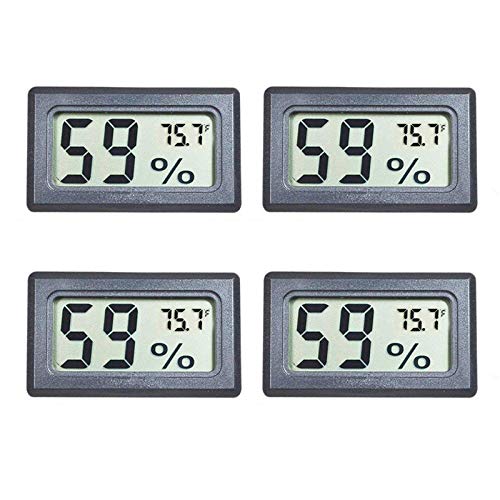
Veanic 4-Pack Mini Indoor Temperature Humidity Meter Review
A close look at the Veanic 4-pack mini humidity and temperature gauge, what its stated accuracy can and cannot support, and where it stops being the right instrument.
Read More→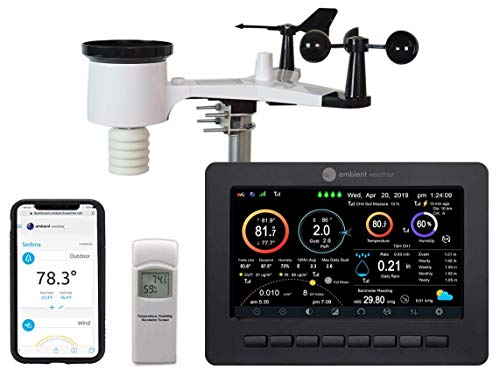
Ambient Weather WS-2000 Review: The First Hour and the First Believable Reading
A first-hour walkthrough of the Ambient Weather WS-2000, covering what the listing states, what it leaves out, and how to reach a first believable reading.
Read More→