As an Amazon Associate, Akermin earns from qualifying purchases. Product links on this page are affiliate links.
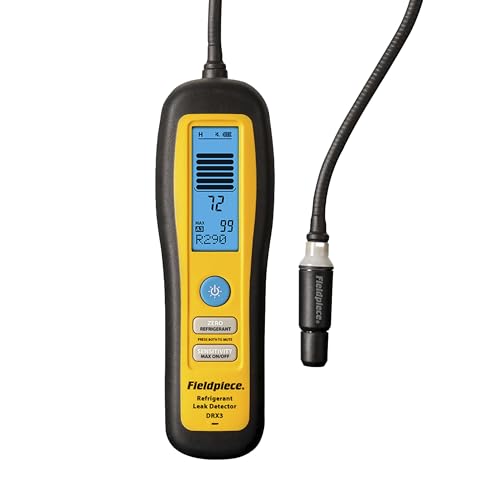
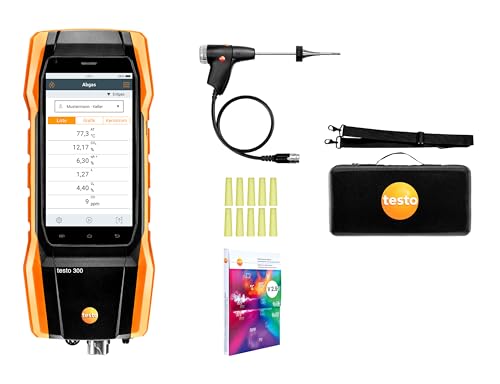
For the leak check itself, the Fieldpiece DRX3 Refrigerant and Combustible Gas is the pick for most appliance installers because it is the only listing here that states a field-replaceable heated diode sensor and adjustable sensitivity, which is what lets you chase a small leak down a manifold without swapping tools. The Testo 0632 0336 Gas Leak Detector is the alternative if you want a dedicated combustible sniffer and can accept a listing that publishes almost no specification. The Inficon AST100FG Forming Gas Leak Detector is the specialist choice when you are pressure testing with forming gas rather than sniffing live gas, and its intrinsically safe rating matters if you work in confined plant rooms. The Testo 310 II Combustion Analyzer HVAC and the Testo 300 Combustion Analyzer HVAC Kit are combustion analyzers, not leak detectors: they tell you how the appliance burns, not where gas is escaping, and buying one instead of a sniffer leaves the leak-finding job undone.
Two jobs, and the instrument that does each one
An appliance installer finishes a job twice. The first finish is mechanical: the bayonet, the union, the flexible connector, the isolation valve. You have remade a joint and you need to know it holds. The second finish is combustion: the appliance lights, the flame sits where it should, and the products of combustion leave through the flue rather than into the room. These are separate measurements and, with one exception, separate instruments.
A combustible gas sniffer is the tool for the first finish. It draws air across a sensor that responds to the gas you are working with, and it tells you, by a change in tick rate or a display, that the concentration near the probe tip has risen. You sweep it along every joint you touched, and along the joints you did not touch but disturbed. The instrument does not measure concentration in any calibrated sense in most cases; it localises. That is exactly what you want, because the question is not how much, it is where.
A combustion analyzer is the tool for the second finish. It sits in the flue and measures oxygen, carbon monoxide, temperature and draft, and from those it calculates efficiency and flue gas loss. It tells you the appliance is burning cleanly and drafting correctly. It does not tell you that the union behind the boiler is weeping, and no amount of CO reading will substitute for putting a sniffer on that union.
The mistake this page exists to prevent is buying one and thinking you have both. The two Testo combustion analyzers here are excellent at the second job and silent on the first. If your work includes making gas connections, you need a sniffer in the van as well. Our toolkit guide covers how the pieces fit together.
What the listings publish, and what they leave to you
The table below is built only from the supplied listing text. Where a listing does not state a figure, the cell says so. That is not a criticism of the product; it is a warning that you cannot compare on a number that was never given.
| Pick | Stated sensor or measurement | Stated gas coverage | Stated safety rating | Stated sensor life |
|---|---|---|---|---|
| Testo 0632 0336 Gas Leak Detector | Not stated in the listing bullets | Not stated in the listing bullets | Not stated in the listing bullets | Not stated in the listing bullets |
| Fieldpiece DRX3 Refrigerant and Combustible Gas | Heated diode, field replaceable | A3, A2L, A1 refrigerants; HC, HFC, HCFC, CFC, HFO, H2/N2 tracer gas and blends; heating gases | Not stated in the listing bullets | Not stated in the listing bullets |
| Inficon AST100FG Forming Gas Leak Detector | Not stated in the listing bullets | Hydrogen forming gas, gasoline, natural gas, propane, butane and more | Intrinsically safe | Long sensor life, no figure stated |
| Testo 310 II Combustion Analyzer HVAC | O2, CO without H2 compensation, ambient CO, K and J thermocouple temperature, draft, pressure | Not stated as a leak detector; described as a natural gas leak detector in the title | Not stated in the listing bullets | Not stated in the listing bullets |
| Testo 300 Combustion Analyzer HVAC Kit | CO and O2 sensor, temperature, draft, differential pressure | Not stated as a leak detector; described as a natural gas leak tester in the title | Not stated in the listing bullets | Up to 6 years stated for the CO and O2 sensor |
Two things stand out. First, the Testo 0632 0336 Gas Leak Detector publishes no technical specification at all, so any comparison involving it is a comparison of brand reputation and nothing else. Second, the Testo 310 II Combustion Analyzer HVAC and the Testo 300 Combustion Analyzer HVAC Kit carry the words leak detector and leak tester in their titles while their bullets describe combustion measurement. The wording is marketing; the bullets are the specification. Read the bullets.
Why the heated diode matters on an appliance call
The Fieldpiece DRX3 Refrigerant and Combustible Gas is the only pick that states its sensor type, and it is the right type for the widest range of appliance work. A heated diode is a ceramic element held at high temperature. Halogenated gases and combustible gases that reach it change its electrical behaviour, and the instrument reads that change. The practical consequence is speed: a heated diode responds quickly and recovers quickly, so you can move from joint to joint without long waits for the reading to fall back to zero.
The listing states auto and manual zero modes and high, medium and low sensitivity settings. On a real call this is the difference between finding a leak and missing it. High sensitivity finds the general area but saturates when you get close. You then drop to medium and low to pin the source down. An installer who leaves the instrument on one setting either chases phantom readings or walks past a real one. The manual zero matters in a room that already smells of gas, because it lets you set a background and work against it.
The same listing states A3, A2L and A1 refrigerant coverage, which is a reminder that the refrigerant classes a modern heat pump technician meets are not the same as the ones from a decade ago. If your appliance work overlaps with heat pumps, see our explanation of the A2L change before you assume an older detector still covers the job.
The four tools, and what each one is actually for
Testo 0632 0336 Gas Leak Detector
A dedicated combustible gas sniffer from a brand appliance technicians already carry. The listing gives a part number and a product class and nothing else, so treat it as a known-name option whose sensitivity, sensor type and battery arrangement you will need to confirm from the manufacturer’s own documentation before you rely on it for a final tightness test.
Fieldpiece DRX3 Refrigerant and Combustible Gas Leak Detector
The only pick here that publishes a sensor technology and a sensitivity control scheme. A heated diode responds to halogenated refrigerants and to combustible gases, and the listing states A3, A2L and A1 refrigerant coverage alongside heating gases. For an installer who also does refrigeration or heat pump work, one instrument covers both call types.
Inficon AST100FG Forming Gas Leak Detector
Forming gas, a hydrogen and nitrogen mix, is used to pressure test a system before the real gas goes in. This listing states hydrogen forming gas detection plus gasoline, natural gas, propane and butane, and states intrinsic safety. That makes it the pick when the test happens in a plant room or a void where a spark is the last thing you want.
Testo 310 II Combustion Analyzer HVAC Set with Printer
A flue gas analyzer, not a leak sniffer. The listing states temperature on K and J thermocouples, flue gas O2, draft, flue gas loss, efficiency, pressure, CO without H2 compensation and ambient CO. It answers whether the appliance is burning safely after you have finished the connection, which is a different question from whether the connection leaks.
Testo 300 Combustion Analyzer HVAC Kit
The larger combustion analyzer of the two Testo listings. It states CO and O2 measurement, temperature, draft and differential pressure, a CO and O2 sensor with up to six years of stated life expectancy, a range up to 4,000 ppm, magnets for hands-free use and a touch display. Again: combustion performance, not leak location.
Forming gas, pressure testing and the intrinsically safe case
The Inficon AST100FG Forming Gas Leak Detector is the odd one out and earns its place for a specific procedure. When you pressure test a new installation before the gas is turned on, you can use the gas itself, or you can use forming gas, a hydrogen and nitrogen mixture. Hydrogen has small molecules and low viscosity, so it escapes through a joint that might hold against a heavier gas. A detector tuned to hydrogen finds those leaks while the system is still full of a harmless mixture.
The listing states hydrogen forming gas detection alongside gasoline, natural gas, propane and butane, and states intrinsic safety. Intrinsic safety means the instrument is designed so that it cannot produce a spark or a hot surface capable of igniting a flammable atmosphere. If you test in a basement plant room, a service void, or anywhere gas could accumulate, that rating is not a luxury. It is the difference between a tool you can use and a tool you should not.
What it does not do is replace a sniffer for routine appliance work. It is a specialist instrument for a specialist procedure, and if you never pressure test with forming gas you will not get value from it. For the general case, our HVAC technician guide covers the everyday options.
The combustion analyzers, and the limits of what they prove
The Testo 310 II Combustion Analyzer HVAC and the Testo 300 Combustion Analyzer HVAC Kit measure how an appliance burns. The Testo 310 II Combustion Analyzer HVAC states temperature on K and J thermocouples, flue gas O2, draft, flue gas loss, efficiency, pressure, CO without H2 compensation and ambient CO, with a smart app for simultaneous measurements. The Testo 300 Combustion Analyzer HVAC Kit states CO and O2 measurement, temperature, draft and differential pressure, a stated sensor life of up to six years, a range up to 4,000 ppm, magnets for hands-free use and a touch display.
The distinction between CO without H2 compensation and a compensated reading matters if you work on appliances where hydrogen is present in the flue, because an uncompensated sensor can read high. The listing states the limitation plainly, which is more than many do.
Neither instrument locates a leak. If you buy one expecting to sweep a manifold, you will be disappointed. What they do is close the loop after the leak check: you have proved the joint tight, and now you prove the appliance is safe to leave running. An installer who does both jobs needs both instruments, and the budget conversation should be about which one you buy first, not which one replaces the other.
The maintenance nobody schedules
Sensors age. A heated diode degrades with contamination, and a combustion analyzer’s electrochemical cells deplete with exposure to the gases they measure. The Fieldpiece DRX3 Refrigerant and Combustible Gas states a field-replaceable sensor and field-replaceable batteries, which is the ownership model that keeps a tool in service for years. The Inficon AST100FG Forming Gas Leak Detector states long sensor life without a figure. The Testo 300 Combustion Analyzer HVAC Kit states up to six years for its CO and O2 sensor. The Testo 0632 0336 Gas Leak Detector and the Testo 310 II Combustion Analyzer HVAC state nothing about sensor life or replacement.
The practical rule is that the sensor is the instrument. A detector with a healthy sensor and a scratched case is a working tool. A detector with a dead sensor and a clean case is a paperweight that still beeps. Before you commit to any of these, find out what a replacement sensor costs and whether you can fit it yourself. The listing text will not always tell you; the manufacturer’s support pages will.
Calibration is the other half. A sniffer that has never been checked against a known concentration is a go/no-go indicator, not a measurement device. For appliance work that is often enough, because you are locating, not quantifying. But you should know which one you own.
Recommended Tools



Products shown because their documented specifications fit this guide. Price and availability are on Amazon and can change.
Frequently Asked Questions
Can I use a combustion analyzer to find a gas leak?
No. A combustion analyzer measures what is in the flue after the appliance has lit. It responds to combustion products, not to a leak at a joint behind the appliance. The Testo 310 II Combustion Analyzer HVAC and the Testo 300 Combustion Analyzer HVAC Kit both carry leak detector wording in their titles, but their stated measurements are O2, CO, temperature, draft and pressure. Use a sniffer for the leak check and an analyzer for the combustion check.
Do I need an intrinsically safe detector?
You need one if you work in an area where a flammable atmosphere could accumulate and where a spark from the instrument could ignite it. The Inficon AST100FG Forming Gas Leak Detector is the only pick whose listing states intrinsic safety. If your work is domestic kitchens and utility rooms with the gas on and the appliance running, a standard sniffer is the normal tool. If you test in plant rooms or voids, read the rating carefully.
What does a heated diode sensor detect?
the Fieldpiece DRX3 Refrigerant and Combustible Gas states that its heated diode covers A3, A2L and A1 refrigerants, HC, HFC, HCFC, CFC, HFO, H2/N2 tracer gas and blends, plus heating gases. A heated diode responds to halogenated compounds and to many combustible gases, which is why one instrument can serve both refrigeration and gas appliance work. It is not a universal sensor; it will not respond to everything, and the listing is the authority on what it covers.
How often should a detector be calibrated?
The listings do not state a calibration interval, so the manufacturer's documentation is the place to look. What can be said generally is that a detector used to locate leaks is usually treated as a go/no-go indicator, while one used to quantify concentration needs a calibration schedule. Decide which job you are doing and treat the instrument accordingly.
Is one detector enough for appliance installation work?
Only if your work stops at the mechanical connection. If you also commission the appliance, you need a combustion analyzer as well, because the two instruments answer different questions. The Fieldpiece DRX3 Refrigerant and Combustible Gas covers the leak-finding job across refrigerants and heating gases. The Testo 310 II Combustion Analyzer HVAC or the Testo 300 Combustion Analyzer HVAC Kit covers the combustion job. Neither replaces the other.
Why does the Testo 0632 0336 Gas Leak Detector listing give so little detail?
The supplied listing for the Testo 0632 0336 Gas Leak Detector contains a brand, a part number and a product class, and no technical specification. That is a limitation of the data, not necessarily of the product. If you are considering it, confirm sensor type, gas coverage, battery arrangement and replacement parts from the manufacturer before you rely on it for a tightness test.
Affiliate disclosure: Akermin earns a commission from qualifying Amazon purchases made through links on this page. Our editorial picks are based on documented specifications and owner feedback, not commissions.