As an Amazon Associate, Akermin earns from qualifying purchases. Product links on this page are affiliate links.
Test a hygrometer by sealing it in a container above a slurry of saturated salt and water, leaving it at a steady temperature for at least eight hours, and comparing the reading against the published equilibrium humidity for that salt. Ordinary table salt holds about 75 percent relative humidity above a saturated solution, which is the standard check. A pass tells you the instrument is working at one point on the scale at one temperature. It does not make it accurate everywhere.
A saturated salt jar is a one point check
The physics behind the method is clean. A solution holding as much dissolved salt as it can, with undissolved crystals still present, fixes the vapour pressure of the water above it. Seal that solution in a container and the air inside settles at a relative humidity determined by the salt, not by the room, not by the weather, and only weakly by temperature. The values are published reference data, measured and tabulated for a long list of salts, and four of them are easy to reach in a kitchen or a hardware cupboard.
| Salt | Published equilibrium humidity near room temperature | Where that point is useful |
|---|---|---|
| Lithium chloride | About 11 percent | Desiccant and dry storage work, the bottom of the scale |
| Magnesium chloride | About 33 percent | Winter indoor air and heated rooms |
| Sodium chloride, ordinary table salt | About 75 percent | The default check, and humidor and curing work |
| Potassium chloride | About 84 percent | Near the band where mould growth becomes a risk |
One salt gives one point. Two salts give an offset and a slope, which is far more informative: an instrument four points low at 33 percent and four points low at 75 percent has a fixed offset you can subtract, while one that is accurate at 33 and eight points low at 75 has a gain error you cannot. Nothing in this method says anything about the dry end if you only ever use table salt, which is worth remembering before concluding that a unit reading 28 percent in a dry January is wrong.
Setting up the salt reference without ruining it
The mistakes are all in the preparation, and each one produces a reading that looks like an instrument fault.
- Make a slurry, not a solution. Add water a few drops at a time until the salt is wet through and holds together like damp sand, with crystals clearly still solid. A clear liquid with no crystals left is an unsaturated solution and holds no defined humidity at all.
- Seal it properly. A resealable bag with the air pressed out works better than a jar with a loose lid, because the smaller the air volume the faster it equilibrates and the less a leak matters.
- Keep the sensor out of the salt. Liquid water or crystals on the sensing element gives a reading of 100 percent and can permanently damage a capacitive sensor. Suspend or prop the instrument clear of the slurry.
- Hold the temperature still. A cupboard away from radiators, sunlight and draughts. A jar that warms during the day is never at equilibrium, and the reading will wander.
- Do not open it to check. Every peek replaces the air inside with room air and the clock restarts. This is the single strongest argument for testing a sensor you can read remotely.
Remote reading is where a connected sensor earns its place in this procedure. The Govee H5179 thermometer and hygrometer states humidity accuracy of plus or minus three percent relative humidity, temperature accuracy of plus or minus 0.3 degrees Celsius, a refresh every two seconds, and twenty days of online history with export of longer records. Sealed in the bag it reports from inside without being disturbed, and the history is what shows you whether the value had actually settled or was still drifting when you looked. Note that a two second refresh is an update rate rather than a sensor response time, and neither the response time nor a long term drift figure appears in the listing text. Not stated in the listing bullets, which is precisely why an occasional salt check is worth the effort on any of these devices.
Reading the result without fooling yourself
Judge the reading against the instrument tolerance, not against perfection. An instrument stating plus or minus three percent relative humidity, which is the common figure for a consumer capacitive sensor, passes a table salt check anywhere from 72 to 78 percent. Treating 74 as a failure is a misreading of the specification. Treating 65 as a pass is the opposite mistake.
Three further effects explain most of the confusing results. Hysteresis means a sensor arriving at 75 percent from a dry room reads slightly differently from one arriving from a damp bathroom, so note which direction the unit came from. Response time means a sensor still equilibrating reads between the room and the jar, and cheap sensors behind a thick vented case are slow. And self heating matters for devices with a display and a radio inside the same enclosure, because a warmer sensor sees a lower relative humidity for the same water content in the air. These are reasons to give the test a long settling period rather than reasons to doubt the method.
If the unit offers an adjustment, apply the correction and repeat the test to confirm the offset took. The mechanics of that step differ by model and are covered in calibrating a hygrometer. If it offers no adjustment, write the error on a label on the back and apply it by hand, which is a perfectly respectable way to use an instrument whose fault is known and stable.
Rule out the power source before you blame the sensor
A wireless sensor on a weakening cell behaves in ways that look exactly like sensor failure: values that freeze, updates that stop and resume, readings that drop out of range, or a radio that reconnects and reports the last value it held. Replacing the cell before running a salt test saves a wasted day, and so does knowing whether the cell is actually weak.
Open circuit voltage is a poor indicator for a lithium coin cell, which can read close to nominal and still collapse under the current pulse a radio transmission demands. The quantity that reveals a tired cell is internal resistance, measured with an alternating current method rather than by loading it. A dedicated instrument such as the T-king YR1035 internal resistance meter states a four wire method with a range up to 200 ohms and a minimum resolution of 0.01 milliohms, which is the kind of resolution the measurement needs because the figures of interest are milliohms rather than ohms. The four wire arrangement is there for the same reason it appears on a bench multimeter: the leads would otherwise contribute more resistance than the thing being measured. The simpler voltage check, which is still worth doing on larger cells, is described in testing a battery with a multimeter.
Two hygrometers that disagree with each other
Two units side by side showing different numbers is the most common reason people start testing in the first place, and the salt jar settles the argument that comparison never can. Comparison without a reference tells you only that they differ. The jar tells you which one is wrong, and by how much.
Before assuming either is faulty, check that they were genuinely in the same air. Relative humidity depends on temperature, so a unit on an outside wall, near a window, above a radiator or in a draught from a door is reading a different microclimate rather than reading incorrectly. A difference of two degrees between the two positions is enough to produce several points of relative humidity difference with identical water content in the air. Put both in the same bag with the same salt and the honest comparison appears. Reviews of specific units, such as the Jedew hygrometer notes and the Allsun thermometer and hygrometer notes, record what each model publishes about its own tolerance, which is the number any test result has to be judged against.
What to do with a hygrometer that fails the check
A unit reading within tolerance goes back where it was and gets re-checked in a year or after anything dramatic happens to it. A unit with a stable, known error gets a correction applied in software if it allows one, or on a label if it does not. A unit that reads 100 percent, reads nothing, or gives a different answer each time it is tested has a failed sensing element, and those are not repairable at the component level in a consumer device.
The one result worth taking seriously is a sensor that passes the salt test and still disagrees with the room. That is not an instrument fault, it is the instrument telling you something true about where it sits. Move it to the middle of the room, away from walls and vents, give it an hour, and read it again. The test proved the sensor. Placement is a separate problem and the one that more often produces a misleading number.
Frequently Asked Questions
How long does the salt jar need to sit?
Give it at least eight hours and preferably a full day in a place with a steady temperature. The jar reaches equilibrium faster than that, but the hygrometer itself has a response time and the air inside has to settle after you sealed it. Opening the jar to peek restarts the clock.
Which salt should I use for a general check?
Ordinary table salt, giving a published equilibrium of about 75 percent relative humidity. It is the easiest to obtain, the value is well documented, and the point sits in the part of the scale where damp problems live. Use a second salt if you want to know whether the error is a fixed offset or a slope.
My hygrometer reads 71 percent in the salt jar. Is it broken?
It is four points low against a reference of about 75. For an instrument stating plus or minus three percent that is marginally outside tolerance, and for one that publishes no tolerance it is unremarkable. If the unit allows a calibration offset, apply it. If not, note the error and subtract it mentally.
Does temperature change the salt reference value?
A little, and much less than people expect. The equilibrium humidity above saturated sodium chloride shifts by well under one percentage point across normal room temperatures, which is what makes it a practical reference. What does matter is temperature stability, because a jar warming in sunlight is not at equilibrium at all.
Can I test a wireless sensor the same way?
Yes, and it is easier because you can read it from outside the jar without breaking the seal. Put the sensor in with the salt, close the bag, and watch the value settle on the app. Confirm the battery is healthy first, because a sensor reporting a stale value looks exactly like a sensor reading the wrong humidity.
Related Guides

Gain Express USB Temperature Data Logger Review: One Trade-off Decides the Job
A three-channel USB data logger with 16,000-record storage and built-in reporting software, reviewed around the Windows dependency that shapes ownership.
Read More→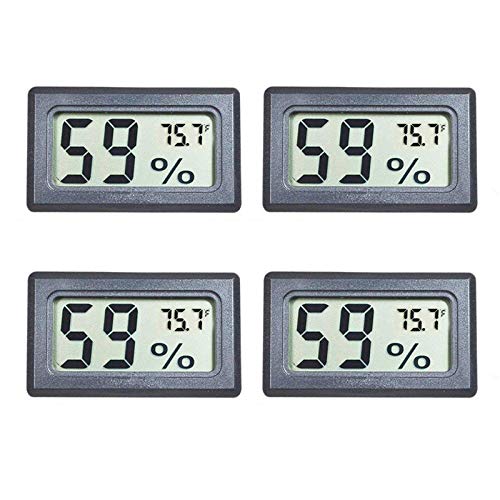
Veanic 4-Pack Mini Indoor Temperature Humidity Meter Review
A close look at the Veanic 4-pack mini humidity and temperature gauge, what its stated accuracy can and cannot support, and where it stops being the right instrument.
Read More→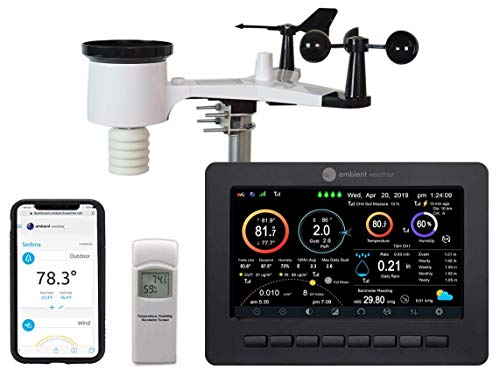
Ambient Weather WS-2000 Review: The First Hour and the First Believable Reading
A first-hour walkthrough of the Ambient Weather WS-2000, covering what the listing states, what it leaves out, and how to reach a first believable reading.
Read More→