As an Amazon Associate, Akermin earns from qualifying purchases. Product links on this page are affiliate links.
For genuine four-wire low-resistance work, P2 (Extech 380560) is the pick because it is the only listing that publishes a resolution figure, 0.1 milliohm, alongside gold-plated Kelvin clip leads on three ranges. P3 (AideTek VC480C) is the alternative when you need a backlit display and a calibration certificate, and P4 (GOWENIC) is the budget entry whose listing is thin on numbers. P1 (Fluke 289) is a logging multimeter, not a milliohm meter, and is included only because its listing appeared under this topic; it does not publish a low-resistance resolution and should not be bought for this job.
Why two-wire resistance readings fall apart below an ohm
An ordinary multimeter pushes a small current through the component and measures the voltage that appears across it. The problem is that the same pair of leads carries both the current and the sense signal, so the resistance of the leads themselves, plus the contact resistance at the probe tips, is added to whatever you are trying to measure. A decent pair of test leads can contribute a few tenths of an ohm. If you are checking a motor winding that should read 0.4 ohm, that lead resistance is a large fraction of the answer and you cannot separate it from the winding.
A four-wire, or Kelvin, connection breaks that loop. Two leads carry a known current into the part; a second, separate pair of leads senses the voltage directly at the part. Because the sense pair carries almost no current, the voltage drop along it is negligible, and the meter reports the resistance between the two sense contact points. That is the whole mechanism, and it is why every serious low-resistance instrument has four terminals rather than two.
Three of the four products on this page are described as four-wire instruments. P2 and P3 both specify Kelvin clip leads, which are spring clips with two separate contacts built into each jaw so the current and sense paths meet at the part rather than at the meter. P4 states the four-wire method in its bullets. P1, the Fluke 289, is a general logging multimeter and its listing does not claim four-wire low-resistance measurement at all.
What the listings publish, and where they go quiet
The single most useful number on a milliohm meter is its resolution, the smallest change it can display. It tells you whether the instrument can see the difference between a good joint and a marginal one. The second most useful number is the accuracy specification, because a resolution of 0.1 milliohm means nothing if the reading is off by several milliohms.
Only one listing here publishes a resolution figure. P2 states 0.1 milliohm resolution across its ranges. P3 states high accuracy and low-resistance capability but does not publish a resolution number. P4 does not publish one either. None of the four listings publishes an accuracy tolerance in percent of reading, which is the figure you would normally want before trusting a pass or fail decision.
That gap matters more than it sounds. Resolution and accuracy are different things, and a listing that quotes only resolution is telling you how finely it can display a number, not how close that number is to the truth. If your procedure has a pass limit written into it, ask the supplier for the accuracy statement before you buy. The listing alone will not give it to you.
| Product | Lead configuration | Ranges | Resolution | Display | Zero adjustment |
|---|---|---|---|---|---|
| P1 Fluke 289 | Not stated in the listing bullets | Not stated in the listing bullets | Not stated in the listing bullets | TrendCapture graphical logging | Not stated in the listing bullets |
| P2 Extech 380560 | 4-wire gold-plated Kelvin clips | 200 milliohm, 2000 milliohm, 20 ohm | 0.1 milliohm | Large high-contrast LCD, data hold | Not stated in the listing bullets |
| P3 AideTek VC480C | 4-wire Kelvin clip | Not stated in the listing bullets | Not stated in the listing bullets | Large backlit LCD, data hold | Manual zero display adjust |
| P4 GOWENIC | 4-wire DC | Six gears, values not stated | Not stated in the listing bullets | Large-screen LCD | Not stated in the listing bullets |
Read that table as a map of what you still have to ask. The blank cells are not a fault in the products, they are a fault in the listings, and the supplier is the only place to fill them in.
Kelvin clips, lead dress and the measurement you cannot repeat
A Kelvin clip is not a convenience feature. It is the part of the instrument that decides whether the four-wire method actually works in your hand. Each jaw carries an insulated outer contact for the current and an inner contact for the sense voltage, so the two circuits meet at the surface of the part. If the clip is dirty, corroded or sprung, the current and sense points drift apart and the reading moves. Gold plating, as stated on the P2 leads, resists that corrosion and keeps contact resistance stable between jobs.
Lead dress is the other half. The sense pair is a high-impedance input, so it will pick up whatever magnetic field is nearby. P3 and P4 both mention anti-magnetic and anti-jamming behaviour in their bullets, which is the manufacturer telling you the input is sensitive to nearby transformers, contactors and motor fields. The practical consequence is that you should not lay the sense leads across a running drive or coil, and you should not measure a winding while the machine is energised. Bring the part to the meter, not the meter to the noise.
Repeatability is the test that nobody runs. Before you trust a single reading, measure the same joint three times, lifting and re-clamping the Kelvin clips between each. If the three numbers agree, the setup is sound. If they scatter, the problem is contact, not the instrument. This is also the reason a manual zero adjustment is useful: P3 publishes one, and it lets you null out the residual of the leads and clips before you start, which is the closest a listing gets to telling you the instrument is stable.
If you are working on batteries rather than joints, the same four-wire principle appears in a different instrument class; our page on battery internal resistance testers covers where the two overlap and where the test method diverges.
The four instruments, and what each is actually for
Fluke 289 True-RMS Logging Multimeter
A general-purpose logging multimeter whose listing does not publish a low-resistance resolution, so it cannot be judged as a milliohm instrument.
Extech 380560 Precision Milliohm Meter
Four-wire Kelvin clips, three ranges and a published 0.1 milliohm resolution, the only listing here that states its resolution.
AideTek VC480C Precision Milliohm Meter
Four-wire Kelvin clips with a backlit LCD, manual zero adjustment and a calibration certificate, for bench and panel work.
GOWENIC 6-Gear Digital Milliohmmeter
A four-wire DC low-resistance tester with six gears, but a listing that publishes almost no figures.
Where a milliohm meter is the wrong instrument
Low-resistance measurement is a narrow job. It is the right tool when you need to prove that a joint, a contact, a shunt or a short length of conductor is electrically sound, and when the difference between good and bad is measured in fractions of an ohm. It is the wrong tool for almost everything else.
It will not tell you whether a circuit is live. It will not measure insulation resistance, and it will not find a fault to earth. It is not an alarm and it is not a safety device; it gives you a number and leaves the decision to you. If you are fault-finding on a live panel, the instrument you want is a multimeter or a clamp, and our guide to choosing a multimeter for home electrical work covers that decision. If you are chasing a drive problem, the four-wire meter has no role until the power is off and the motor is isolated.
There is also a resolution trap. A meter that reads to 0.1 milliohm is not automatically better than one that reads to 1 milliohm, because the accuracy may be far coarser than the last digit. Buying resolution you cannot trust is a common and expensive mistake. Decide what tolerance your procedure allows, then buy an instrument whose accuracy statement sits comfortably inside it, and treat the last displayed digit as a hint rather than a fact.
P1 is a different instrument, and the listing says so
The Fluke 289 is a true-RMS logging multimeter. Its listing describes ShareLive video sharing, TrendCapture graphical logging with up to 14 times zoom, a selectable AC smoothing filter, a low-pass filter for voltage and frequency work on adjustable speed drives, and a LoZ function for eliminating ghost voltages. Those are real and useful capabilities, and they belong to a general electrical troubleshooting instrument.
What the listing does not describe is four-wire low-resistance measurement, a milliohm range, or a low-resistance resolution. It is therefore not a milliohm meter on the evidence available, and it should not be bought as one. It is included here because it was supplied under this topic, and the honest thing to do is say that plainly rather than manufacture a low-resistance specification it does not publish.
If you already own a 289 for drive and voltage work and you also need milliohm readings, the two instruments are complementary rather than alternatives. The 289 finds the problem while the circuit is live; the four-wire meter proves the joint once it is dead. If you are working on drives specifically, our page on clamp meters for VFD measurements deals with the live side of that job.
Choosing between the three real candidates
P2 is the pick because it is the only listing that publishes a resolution, and it publishes the lead type alongside it. Gold-plated Kelvin clips, three ranges from 200 milliohm to 20 ohm, data hold, overload protection and auto power-off. The ranges are sensible for joint and contact testing, and the 0.1 milliohm resolution is fine enough for the work. Its weakness is that the listing does not state an accuracy tolerance, so you are trusting the resolution figure on its own.
P3 adds two things the others do not state: a backlit display and a calibration certificate. The backlight matters in a panel or a plant room where the light is poor. The certificate matters if your quality system requires traceability for the instrument itself. It also publishes a manual zero adjustment, which is the feature that lets you null the leads before a measurement. What it does not publish is a range list or a resolution figure, so you cannot compare it numerically with P2 from the listings alone.
P4 is the budget entry. Six gears, four-wire DC measurement, a large LCD and a stated resistance to magnetic interference. The listing gives no range values, no resolution and no accuracy, so it is the hardest of the three to specify against a procedure. If your requirement is simply to confirm that a joint is continuous and roughly in the right decade, that may be enough. If you have to record a number against a tolerance, ask for the missing figures first.
Two of these instruments are functionally close in the way that matters, four-wire Kelvin measurement with a handheld display. Where that is true, the deciding factor is not a feature difference but which listing answers your traceability and resolution questions, and which one you can actually get.
Recommended Tools


Products shown because their documented specifications fit this guide. Price and availability are on Amazon and can change.
Frequently Asked Questions
Can I use an ordinary multimeter for low-resistance testing?
You can get a number, but it will include the resistance of your test leads and probe contacts, which at milliohm levels can be most of the reading. Two-wire measurement cannot separate the part from the leads. A four-wire instrument, like P2, P3 or P4, does that separation by using a separate sense pair. P1's listing does not publish a low-resistance resolution, so it is not presented here as a milliohm instrument.
What does 0.1 milliohm resolution actually mean?
It means the display can show a change of one ten-thousandth of an ohm. It does not mean the reading is accurate to that figure. Resolution is the fineness of the display; accuracy is how close the displayed value is to the true value. Only P2 publishes a resolution figure among these listings, and none of the four publishes an accuracy tolerance, so ask the supplier for the accuracy statement before you rely on the last digit.
Why do the listings mention anti-magnetic or anti-jamming functions?
Because the sense input in a four-wire measurement is high impedance and will pick up interference from nearby transformers, contactors and motor fields. P3 and P4 both state anti-magnetic and anti-jamming behaviour. The practical rule is to keep the sense leads away from energised equipment and to measure the part with the circuit dead.
Do I need a calibration certificate?
If your quality system or customer requires traceability for the instrument, yes. P3 is the only listing here that states a calibration certificate is included. The others do not mention one, which does not mean it is unavailable, only that the listing does not publish it.
Is a milliohm meter a safety device?
No. It measures resistance and displays a number. It does not detect live voltage, it is not an alarm, and it will not protect you from a circuit that is still energised. Isolate and prove dead before you connect Kelvin clips to anything.
Which of these should I buy if I only need to check joint continuity?
If you only need to confirm that a joint is continuous and in the right decade, P4 is the budget entry and its six-gear four-wire design covers that. If you need to record a number against a tolerance, P2 is the safer choice because it publishes its resolution, and P3 is the choice when you need the backlight and the calibration certificate.
Affiliate disclosure: Akermin earns a commission from qualifying Amazon purchases made through links on this page. Our editorial picks are based on documented specifications and owner feedback, not commissions.
Related Guides
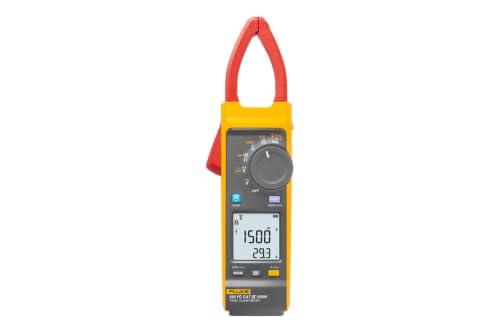
Fluke 393 FC Review: Is This 1500V Solar Clamp Meter Worth the Professional Price?
A CAT III 1500 V, IP54 True RMS clamp meter for photovoltaic work with DC power, audio polarity, visual continuity, a thin jaw and Fluke Connect.
Read More→
Fluke 325 Review: Is This Compact True-RMS Clamp Meter Still the Smart Professional Buy?
The Fluke 320 series clamp with True RMS AC and DC current to 400 A, voltage to 600 V, resistance to 40 kΩ, frequency, capacitance and temperature.
Read More→
Fluke 323 Review: Compact True-RMS AC Clamp Meter
A compact True RMS clamp meter measuring AC current to 400 A, AC and DC voltage to 600 V and resistance to 4 kΩ, rated CAT IV 300 V and CAT III 600 V.
Read More→