As an Amazon Associate, Akermin earns from qualifying purchases. Product links on this page are affiliate links.
A Protimeter moisture meter measures moisture inside a building material. A hygrometer measures water vapour in the air. They are separate quantities with separate units, and no arithmetic converts one into the other without also knowing which material you are standing in front of and what temperature it is. Both readings are needed in a damp investigation, and quoting one as evidence for the other is the most common mistake in the whole subject.
Material Moisture and Air Moisture Are Separate Readings
Think about where the water is. Air moisture is vapour drifting between molecules of nitrogen and oxygen, present in grams per cubic metre and reported as a percentage of what that air could hold at its current temperature. Material moisture is liquid water held in pores, bound to cellulose, or sitting in capillaries in brick and plaster, reported as a percentage of weight or on a comparative scale.
The quantities behave on completely different timescales, and that difference is the practical heart of the comparison. Open a window on a cold day and the relative humidity in a room changes in minutes. Open the same window onto a wall that took in water from a burst pipe and the wall releases moisture for weeks. Any investigation that samples the air once and declares the fabric dry has measured the fast variable and ignored the slow one.
Scale matters too. A moisture meter reports a point, a spot the size of its pins or its sensing pad, which is why the technique is to take many readings in a grid and look at the shape rather than quote one figure. A hygrometer reports a volume average for the air around it, so a single well placed sensor genuinely represents a room in a way a single pin reading never represents a wall.
What the Pin and Pinless Modes Each Respond To
Two physical principles sit behind almost every moisture meter sold. The pin mode passes a small current between two insulated electrodes and measures electrical resistance. Water with dissolved salts in it conducts; dry timber does not. Resistance falls steeply as moisture rises, which makes the method sensitive in the range that matters for timber and very sensitive to anything else conductive, including salt contamination from old rising damp and the staple in a plasterboard joint.
The pinless mode radiates a radio frequency field from a pad on the back of the instrument and watches how the dielectric properties of what lies underneath load that field. Water has a far higher dielectric constant than wood, plaster or brick, so more water means a larger response. Nothing is pushed into the surface, which is the entire selling point. The Protimeter Aquant BLD5770 states detection up to three quarters of an inch, given as 20 mm, below the surface without damaging walls or floors.
That depth figure is the one to understand properly. A pinless reading is an integration of everything inside the field, weighted toward the surface. A thin wet skin on a dry substrate and a damp substrate under a dry skin can return similar numbers, because the instrument is summing rather than profiling. Which is why dual function instruments exist: the Protimeter SurveyMaster BLD5375 states switching between pin and non invasive modes across wood, drywall, concrete and fibreglass boat hulls, so a pinless sweep finds the area and the pins then say whether the moisture is at the face or deeper in.
Equilibrium Moisture Content Is the Bridge
The two measurements are not unrelated. Left alone long enough at a steady air condition, a porous material stops exchanging water with the air and settles at a moisture content determined by that air. That settled value is the equilibrium moisture content, and it is the one genuine link between a hygrometer reading and a moisture meter reading.
Two things follow, and both are useful on site. First, a material at equilibrium with dry heated air will read low even if the surrounding structure is soaked, because thin material equilibrates quickly. Second, the same material in a cold unheated room at high relative humidity will read higher than the one indoors with no water ingress anywhere. Timber joinery in a room held at a high relative humidity for a long period will reach a higher moisture content than the same joinery in dry air, with no leak involved at all.
This is also why surveyors drill a hole, seal a sleeve into it and leave a hygrometer probe to equilibrate rather than reading the surface. Measuring the air inside the fabric sidesteps the salt problem and the calibration scale problem in one step, because the vapour pressure in the pore does not care what the material is. It takes hours rather than seconds, which is the trade.
What the Protimeter Listings Publish
| Item | Aquant BLD5770 | SurveyMaster BLD5375 |
|---|---|---|
| Measurement modes | Non invasive only | Pin and non invasive |
| Stated sensing depth | Up to three quarters of an inch, 20 mm | Not stated in the listing bullets |
| Materials named | Walls, floors and other materials | Wood, drywall, concrete, fibreglass boat hulls |
| Data route | Bluetooth to the Protimeter Connect app, logging with time and date stamps | Bluetooth to the Protimeter Connect app, saving and downloading readings |
| Field calibration | Automatic calibration checks plus user field calibration | Not stated in the listing bullets |
| Display | Backlit LCD, rugged housing | Larger display than previous models |
| Battery claim | Up to three times longer than previous models | Three times longer than previous models |
| Air humidity measurement | Not stated in the listing bullets | Not stated in the listing bullets |
The bottom row is the point of the table. Neither listing offers a relative humidity reading as part of the base instrument, so anyone expecting one device to cover both quantities is relying on something the bullets do not promise. Numeric measurement ranges and accuracies are also absent from both, which is normal for trade instruments where that detail lives on the datasheet rather than the retail page. Our longer notes on the Protimeter Aquant set out what the retail listing covers.
Which Reading Settles a Damp Argument
Map the fabric with the moisture meter and describe the air with a hygrometer, then compare the two over time rather than at one moment. Surface wetness that appears on cold mornings, with air readings high and the fabric behind reading low, points at condensation. Fabric readings that stay high while the room air is dry and warm point at water arriving from somewhere, and the shape of the wet area suggests from where.
Whatever the air instrument is, check it before the argument rather than after. Follow the salt chamber routine in how to calibrate a hygrometer, and keep in mind that a basic unit such as the JEDEW hygrometer or the allsun thermometer hygrometer is a monitoring device rather than a reference. For continuous air records alongside a fabric survey, the Govee H5179 states app alerts on preset ranges and 20 days of online data with export covering a longer window, which is enough to show whether a room dries each afternoon or never does.
Frequently Asked Questions
Is a Protimeter a hygrometer?
Not in the normal sense. The core function of a moisture meter is to read moisture in a material, either by resistance between two pins or by a radio frequency field pushed into the surface. Several Protimeter instruments can accept a separate hygrometer probe or hygrostick to read air conditions as well, which is why the brand turns up in humidity searches, but the base function and the air function are different measurements made by different sensors.
Why does the wall read wet when the air reads dry?
Because material moisture responds far more slowly than air moisture. Air in a heated room can swing twenty points of relative humidity in an hour. A saturated plaster wall gives up water over weeks, and masonry over months. A dry room and a wet wall is the normal picture during drying, and it is also the picture when water is still arriving from behind, so the reading alone does not tell you which.
What does percent WME mean on a moisture meter?
It stands for wood moisture equivalent. Resistance meters are calibrated against wood, so when the pins are pushed into plaster or brick the instrument still reports the number a piece of wood at that conductivity would have given. It is a comparative scale, not an absolute moisture content for that material, which is why readings are used relatively across a wall rather than quoted as an absolute figure for masonry.
Does a pinless meter work through tiles or paint?
Through paint, usually yes, because the film is thin and the field passes into the substrate behind it. Through tile, adhesive and screed the picture gets unreliable, because the field is responding to everything within its depth of penetration and to the density of the material. Metal mesh, foil backed board and conductive plaster all produce false highs for the same reason.
Which instrument proves the cause of damp?
Neither alone. A moisture meter maps where water is and a hygrometer describes the air that is either drying the surface or condensing onto it. Causation usually comes from the pattern: a plume that rises from a floor, a halo around a pipe, a sharply bounded patch under a window, or surface wetness that appears only on cold mornings and vanishes by afternoon.
Related Guides

Gain Express USB Temperature Data Logger Review: One Trade-off Decides the Job
A three-channel USB data logger with 16,000-record storage and built-in reporting software, reviewed around the Windows dependency that shapes ownership.
Read More→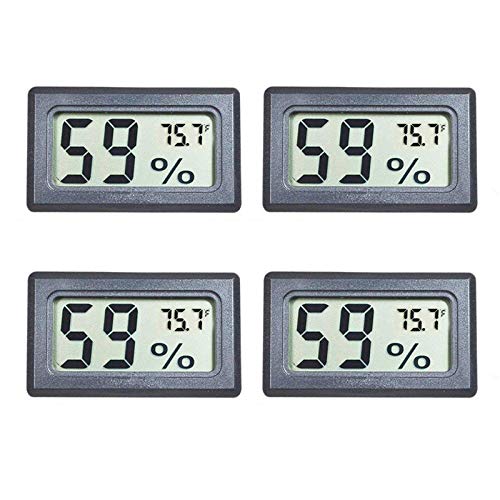
Veanic 4-Pack Mini Indoor Temperature Humidity Meter Review
A close look at the Veanic 4-pack mini humidity and temperature gauge, what its stated accuracy can and cannot support, and where it stops being the right instrument.
Read More→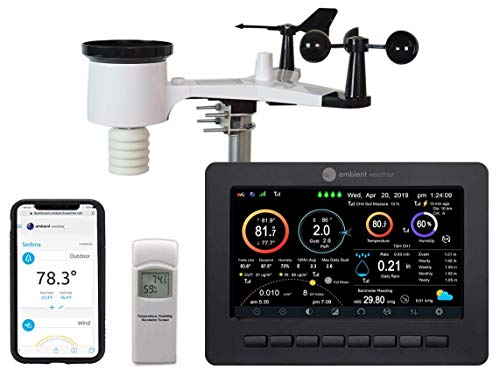
Ambient Weather WS-2000 Review: The First Hour and the First Believable Reading
A first-hour walkthrough of the Ambient Weather WS-2000, covering what the listing states, what it leaves out, and how to reach a first believable reading.
Read More→