As an Amazon Associate, Akermin earns from qualifying purchases. Product links on this page are affiliate links.
For commissioning and fault-finding on a PV array, P2 is the only listing here that publishes a complete Category 1 and Category 2 test set under IEC 62446-1, including I-V curve tracing and irradiance measurement, so it is the pick when you need to prove array performance rather than just read a voltage. P1 is the pick when the job is string troubleshooting with a current clamp: its listing publishes CAT III 1500 V on the meter and leads, a 60 A AC/DC wireless clamp, and polarity indicators. P3 is the general-purpose multimeter option, and its own listing is honest that the MC4 leads are rated CAT III 1000 V, not 1500 V, which is the number that decides whether it belongs on a utility-scale array. P4 is not a tester at all; it terminates MC4 pins, and the listing says so.
Why the MC4 lead, not the meter, is the deciding part
An MC4 connector is a touch-safe, polarity-keyed DC connector used on PV modules and strings. Its rated voltage is a property of the connector and the cable assembly, not of the meter you plug into it. That is why the first question on any of these listings is not how many digits the display has, but what the lead assembly is rated for.
P1 publishes CAT III 1500 V on the supplied Staubli MC4 leads. P3 publishes CAT III 1000 V / CAT IV 600 V on its MC4 lead set. Those two numbers describe different ceilings, and the ceiling applies to the whole measurement chain: meter, lead, connector, and the person holding it. A 1500 V meter with a 1000 V lead is a 1000 V instrument in practice. This is the single most common way a solar tester purchase goes wrong, and it is invisible until someone reads the listing carefully.
The second consequence of MC4 leads is that they let you work on a live string without opening it. A standard probe tip needs a touch point; an MC4 lead mates with the connector already on the module. That is convenient, and it is also why the safety rating has to cover the connector, because you are now measuring at a point that was designed to be touched only when mated.
Two measurement jobs, and one termination job
The four listings divide cleanly. P1, P2 and P3 measure. P4 terminates. Mixing those categories is how people end up buying a crimper when they needed a curve tracer, or a curve tracer when they needed to re-terminate a damaged connector.
Within the measurement group there is a second split. P2 is a commissioning instrument: its listing publishes IEC 62446-1 Category 1 and Category 2 coverage, VOC to 1000 V DC, ISC to 20 A DC, on-location I-V curve comparison, and an included wireless irradiance meter. That combination is what you need to hand over a system with performance evidence. P1 and P3 are troubleshooting instruments: they read voltage, current and polarity at a point in the string, quickly, and they are built to survive being carried up a ladder.
If your work is fault-finding on an existing array, the commissioning feature set is mostly weight you carry. If your work is handing over a new array, a clamp meter alone cannot produce the record. The listings make that distinction for you if you read the measurement ranges rather than the product names.
What the listings publish, side by side
| Listing | Type | Published DC voltage limit | Published current limit | MC4 lead rating as stated |
|---|---|---|---|---|
| P1 | Multimeter kit with wireless clamp | Not stated as a DC figure; meter rated CAT III 1500 V | 60 A AC/DC with the a283 FC clamp | CAT III 1500 V Staubli MC4 leads |
| P2 | PV tester and performance analyzer | 1000 V DC VOC | 20 A DC ISC | Not stated in the listing bullets |
| P3 | Multimeter with solar lead kit | Not stated as a DC figure; meter rated CAT III 1000 V / CAT IV 600 V | Not stated in the listing bullets | CAT III 1000 V / CAT IV 600 V |
| P4 | MC4 crimping tool | Not applicable | Not applicable | Not applicable; crimps 10 to 14 AWG |
The table shows the shape of the decision. P1 is the only listing that publishes a 1500 V rating on both the meter and the MC4 leads. P2 is the only listing that publishes a DC voltage and current limit for the PV test itself, and those limits are 1000 V and 20 A. P3 publishes a 1000 V lead rating, which is the number to check before you take it onto a 1500 V array. P4 publishes no electrical ratings because it is a hand tool.
Note also what is missing. None of the three measurement listings publishes an accuracy figure for the PV functions, and none publishes a measurement category for the MC4 connector itself beyond the lead rating. If a specification you need is not in the table, the listing does not publish it, and you should ask the supplier rather than assume.
The four listings, and what each one is for
Fluke 283FC/PV Kit
The listing publishes a CAT III 1500 V safety rating on the meter and on the supplied MC4 leads, which is the combination that matters when you are working on a 1500 V string. The 60 A AC/DC wireless clamp is the part that changes the job: you can clamp a string and read it without breaking the circuit. Polarity indicators are a small feature with a large consequence, because reversed module wiring is one of the few PV mistakes that damages hardware rather than just wasting time.
Fluke SMFT-1000 Solar Tools Kit
This is the only listing here that describes itself as an all-in-one PV system test solution meeting IEC 62446-1 for Category 1 and Category 2 tests. The published VOC limit is 1000 V DC and the ISC limit is 20 A DC, so the listing itself tells you it is not a 1500 V instrument. The I-V curve comparison on screen and the included irradiance meter are what turn a set of readings into a performance record.
Fluke 87V Max with Solar Test Lead Kit
A general multimeter with a solar lead kit, and the listing is unusually clear about the split: the meter is CAT III 1000 V / CAT IV 600 V, and the MC4 leads are rated CAT III 1000 V / CAT IV 600 V. That is a lower ceiling than P1, and it is the reason this is a maintenance and general electrical pick rather than a utility-array pick. The IP67 case and the published 4 metre drop rating are the reasons to choose it on a rooftop or in a plant room.
Klein Tools 3010CR MC4 Ratcheting Crimper
Not a tester, and the listing does not pretend otherwise. It crimps MC4 style pins onto 10 to 14 AWG stranded copper wire, with a ratchet that forces a full cycle and a dial for crimping force. If you are assembling strings rather than measuring them, this is the tool in this group that matches the job, and it does not measure anything.
The maintenance and setup nobody mentions
MC4 leads are a wear item. The connector is a spring-loaded contact, and it is rated for a finite number of mating cycles; the listing for P1 names Staubli as the lead maker, which tells you the connector is a branded part rather than a generic one, but no listing here publishes a cycle count. In practice the failure mode is a lead that still looks fine and reads open or intermittent under load. If a string reads correctly with one lead set and wrongly with another, suspect the lead before the module.
P4 has its own maintenance point that the listing does state: the ratchet enables full-cycle crimping, and the dial adjusts crimping force. A ratchet that does not release at the end of the cycle is the classic sign that the tool has been forced or the force dial is set outside the range for the wire gauge. The listing gives you 10 to 14 AWG as the working range; using it outside that range is how the mechanism gets damaged.
For the measurement kits, the setup nobody mentions is the reference. P2 compares measured I-V data to manufacturer I-V curve data on screen, which means the comparison is only as good as the manufacturer data you load and the irradiance reading you take at the same moment. The included irradiance meter is what makes that comparison meaningful; without a simultaneous irradiance reading, an I-V curve is a shape without a scale.
Where each of these stops being the right answer
P2 stops being the right answer above 1000 V DC and above 20 A DC, because its own listing publishes those as the limits of the VOC and ISC measurements. If your array operates above 1000 V, this is not the instrument for the array test, regardless of what else it does well. For work at the higher end, see solar testers for 1500 V utility arrays.
P3 stops being the right answer when the lead rating matters more than the meter’s ruggedness. Its MC4 leads are rated CAT III 1000 V, so on a 1500 V string the lead is the limit. The IP67 case and the published 4 metre drop rating are real advantages on a rooftop, but they do not raise the electrical ceiling.
P1 stops being the right answer when you need a performance record rather than a reading. It has no published I-V curve function and no published irradiance meter in the kit, so it can tell you a string is wrong but not produce the IEC 62446-1 evidence that a commissioning handover needs. For that comparison specifically, PV commissioning testers is the relevant page.
P4 stops being the right answer for anything electrical. It is a crimper. It will not tell you whether the string it just terminated is wired correctly, and it will not detect a reversed polarity. Pair it with a tester, not instead of one.
One general point that applies to all four: an MC4 lead set is not a substitute for a proper isolation procedure. A meter reading zero volts on a string is a measurement, not a guarantee, and the listing for none of these products claims otherwise.
Choosing between the measurement kits
If you are choosing between P1 and P2, the question is what you have to produce at the end of the day. P1 produces readings: voltage, current up to 60 A AC/DC with the wireless clamp, and polarity. P2 produces a test record: IEC 62446-1 Category 1 and Category 2 tests, I-V curve comparison, and an irradiance reading. The two are not competing on accuracy, because neither listing publishes an accuracy figure for the PV functions.
If you are choosing between P1 and P3, the question is voltage class and environment. P1 publishes 1500 V on the meter and the MC4 leads. P3 publishes 1000 V on the MC4 leads and a drop rating of 4 metres with an IP67 case. Pick the one whose published limit matches the array you actually work on. If you work on both, the 1500 V instrument covers the 1000 V job; the reverse is not true.
If you are choosing between any of them and P4, you are choosing between measuring and making. Buy the crimper when you are terminating, and buy a tester when you are testing. The listings for these four products do not overlap on that point, which is the one thing that makes this group easy to sort.
Recommended Tools


Products shown because their documented specifications fit this guide. Price and availability are on Amazon and can change.
Frequently Asked Questions
Can I use any of these on a 1500 V DC string?
Only P1 publishes a 1500 V rating on both the meter and the MC4 leads, so it is the only one of the four whose listing supports that claim. P2 publishes a 1000 V DC VOC limit. P3 publishes CAT III 1000 V / CAT IV 600 V on the MC4 leads. The rating that matters is the lowest one in the chain, and the MC4 lead is part of that chain.
Does P4 measure anything?
No. P4 is a ratcheting crimper for MC4 style pins on 10 to 14 AWG stranded copper wire. It has a ratchet for full-cycle crimping and a dial for crimping force. It does not measure voltage, current or continuity, and the listing does not claim that it does.
What is the difference between P1 and P2 if both are Fluke solar kits?
P1 is a multimeter kit with a wireless 60 A AC/DC clamp and 1500 V MC4 leads, aimed at string troubleshooting. P2 is a PV tester and performance analyzer with published IEC 62446-1 Category 1 and Category 2 coverage, VOC to 1000 V DC, ISC to 20 A DC, I-V curve comparison and an included irradiance meter, aimed at commissioning. The published voltage and current limits differ, and so does what you can hand over at the end of the job.
Do any of these listings publish an accuracy figure?
None of the four listings publishes an accuracy figure for the PV measurement functions. P1 publishes a 60 A AC/DC range for the wireless clamp, P2 publishes VOC to 1000 V DC and ISC to 20 A DC, and P3 publishes its safety categories. If accuracy matters for your procedure, ask the supplier, because it is not in the listing bullets.
Is an MC4 lead set safe to use on a live string?
The lead rating is what governs that, and it is published for P1 and P3 but not for P2. P1 publishes CAT III 1500 V on the supplied Staubli MC4 leads; P3 publishes CAT III 1000 V / CAT IV 600 V on its MC4 lead set. A live measurement still requires an isolation procedure and appropriate personal protective equipment; the lead rating is one input, not the whole decision.
Which one should I buy if I am building strings rather than testing them?
P4, because it is the only one of the four that terminates MC4 connectors. It crimps 10 to 14 AWG stranded copper wire with a full-cycle ratchet and an adjustable force dial. You will still need a tester to verify the string afterwards, so P4 is an addition to a measurement kit rather than a replacement for one.
Affiliate disclosure: Akermin earns a commission from qualifying Amazon purchases made through links on this page. Our editorial picks are based on documented specifications and owner feedback, not commissions.
Related Guides

Solar Testing Tools for Commercial Rooftops: 5 Picks for Different Jobs
Five solar tools for commercial rooftop work, sorted by the measurement each one is built to make.
Read More→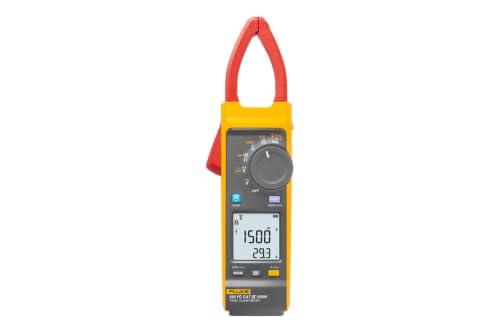
Solar Testing Tools for O&M Technicians: 4 Picks for Field Work
Four solar O&M tools compared by what they measure, what they connect to, and where each one runs out of range.
Read More→PV Testing Kits for System Commissioning: 5 Picks
A comparison of five PV testing kits for commissioning, from a full IEC 62446-1 test set down to a single MC4 adapter lead.
Read More→