Best PV Commissioning Testers: All-In-One Tools for Professional Solar Installers
Commissioning is the day an installer proves the array is safe and performs, and the proof is a report: continuity, polarity, Voc, Isc, insulation resistance and, if required, the I-V curve. The instrument decides how many of those tests come from one box and how the results reach the report. These picks were compared on the coverage and documentation each listing states.
Independent Research
Verified Specifications
Honest Recommendations
Continuity, Polarity
Voc, Isc, Insulation
Then the Report
As an Amazon Associate, Akermin earns from qualifying purchases. Product links on this page are affiliate links.
Our Top Picks
A commissioning tester is judged by how many of the IEC 62446-1 checks it performs and how the results get into the report. Picks are based on manufacturer listings and recurring owner feedback; we did not run laboratory tests.
Best Overall
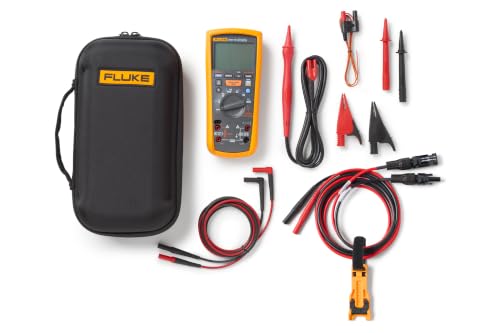
Fluke SMFT-1000 Solar Tools Pro Kit with TruTest Software
Category 1 and Category 2 tests, MC4 clamp leads and asset-management software in one kit.
All-in-one PV system tester meeting IEC 62446-1 for Category 1 and Category 2 tests
Pro kit includes TruTest Advanced software for solar asset management and an MC4 Solar Clamp test lead set
Compares on-location I-V curve results with manufacturer curve data
Irradiance meter connection for real-time irradiance and temperature; IRR2-BT and i100 100 A clamp included
Coverage is taken from what each listing states, mapped to the IEC 62446-1 test categories. Not stated means the listing is silent, not that the instrument lacks the function.
How to Choose a PV Commissioning Tester
Four questions decide between one box and a kit of two:
Which Category?
Category 1 is continuity, polarity, Voc, Isc and insulation. Category 2 adds the I-V curve. Only the SMFT-1000 lists both; the others cover part of Category 1.
String Voltage
The SMFT-1000 lists Voc to 1000 V. Above that, a 1500 V-rated multimeter and clamp handle the voltage and current checks and the I-V curve needs the HT tracer.
Live or De-energized Insulation
The UT503PV lists a live-string insulation method. The 1587 FC does not, so the string is isolated first. On a large roof that changes the length of the day.
Where the Results Go
Desktop software organizes hundreds of strings; an app is fine for a house; on-board memory with USB works for either but needs a transfer step.
IEC 62446-1 Category 1 covers continuity of protective and bonding conductors, polarity of every string, open-circuit voltage, short-circuit or operating current, and insulation resistance of the DC circuits. Category 2 adds the I-V curve for performance verification. Local codes and the client contract decide whether Category 2 is required.
Can one instrument do the whole commissioning?
The Fluke SMFT-1000 lists IEC 62446-1 Category 1 and Category 2 in one tester, so yes for strings up to 1000 V. Every other pick here covers part of the set and is paired with a multimeter or clamp for the rest. Above 1000 V, no single instrument on this page lists the full set.
Does insulation testing require shutting the array down?
Conventionally, yes: the string is isolated, discharged and tested with the panels shorted or covered. The UNI-T UT503PV lists a live-PV method that tests an energized string up to 1000 V without shutdown or shorting; the Fluke 1587 FC listing states no such method, so it is used the conventional way.
Why do polarity checks matter so much on a new array?
A reversed string connected in parallel with correct ones drives current backward through the reversed modules and can destroy bypass diodes or start a fire before the inverter is ever switched on. Every string is polarity-checked before it is landed, which is why audible polarity indication appears on the Fluke 283FC/PV and 393FC listings.
Reviews
Fluke SMFT-1000 Solar Tools Pro Kit with TruTest Software Best Overall
The Pro kit is the SMFT-1000 analyzer with the two things the standard kit leaves out: TruTest Advanced software for solar asset management and an MC4 Solar Clamp test lead set. Fluke states that the tester meets IEC 62446-1 for Category 1 and Category 2, so continuity, polarity, Voc, Isc, insulation resistance and the I-V curve come from one instrument, with the curve compared on screen to the manufacturer data.
The software is the reason to pay for the Pro version. Commissioning produces a result for every string, and a report an inspector will accept has to organize them by site, array and string with irradiance and temperature alongside. TruTest Advanced is Fluke's tool for that, and the MC4 clamp leads mean each string connects the same way every time.
The Pro kit listing does not restate the analyzer ranges; the standard kit listing for the same instrument gives Voc to 1000 V and Isc to 20 A, so 1500 V strings are out of scope. For an installer whose deliverable is the IEC report, it is the most complete kit here.
Strengths
Category 1 and Category 2 from one tester
TruTest Advanced software for organized reports
MC4 clamp lead set included
Irradiance meter and 100 A clamp in the kit
Limitations
Voltage and current ranges not restated on the Pro listing
Not for 1500 V strings, based on the standard kit ranges
Most expensive way to get the Category 1 tests alone
Fluke 1587 FC Solar Kit with TLPV1 MC4 Leads Best Insulation Plus Multimeter
Most of the Category 1 checks are multimeter work: polarity, Voc, and continuity of the protective conductor. Insulation resistance is the one that needs a dedicated test voltage. The 1587 FC puts both in one meter, and Fluke's solar kit adds the TLPV1 MC4 leads so the meter connects to string connectors rather than to probe tips.
The listing states insulation testing up to 1000 V, continuity and cable-integrity verification, and Fluke Connect wireless logging, so each result is saved to the phone with a timestamp instead of being written on the back of a drawing. The separate 1587 FC listing adds PI and DAR ratios with TrendIt graphs and temperature compensation through the app, which help when a marginal insulation reading needs to be interpreted rather than just recorded.
It does not trace an I-V curve and the listing does not state Isc measurement or a live-PV insulation method, so the string is tested de-energized in the conventional way. For an installer who needs Category 1 documentation and a daily-use multimeter, one instrument does both jobs.
Strengths
Insulation tester and multimeter in one meter
TLPV1 MC4 leads included
Results logged to the phone through Fluke Connect
PI and DAR available for marginal readings
Limitations
No I-V curve or Category 2 capability
Live-PV insulation method not stated; strings tested de-energized
UNI-T UT503PV Solar PV Insulation Resistance Tester Best Value
The UT503PV covers the one commissioning test that a general meter cannot, and it does it on a live string. UNI-T states insulation resistance measurement on energized PV strings up to 1000 V DC without shutting the array down or shorting the panels, which removes the slowest step of a conventional insulation test on a large roof. The listing names IEC 62446 compliance, four test voltages from 125 V to 1000 V, a range to 4000 MOhm and a stated accuracy of plus or minus (1.5 percent + 5).
The safety features are the ones a tester at this voltage needs: automatic discharge after each test, a high-voltage alarm when the leads are live, and stepped-voltage testing with a comparison function for diagnosing a marginal string. On-board memory holds 1000 result sets and transfers by USB or the Bluetooth app.
It is an insulation tester only, so polarity, Voc and continuity still need a multimeter, and the stated category is CAT II 1000 V / CAT III 600 V. Paired with a rated solar multimeter, it completes the Category 1 set at the lowest cost on the page.
Strengths
Insulation test on a live string without shutdown
Four IEC 62446 test voltages to 1000 V
1000 stored results with USB and Bluetooth transfer
Light and IP54 for rooftop use
Limitations
Insulation only; needs a multimeter for the other checks
CAT II 1000 V / CAT III 600 V rating
Stepped-voltage comparison function not explained in detail
Short answer: the Fluke SMFT-1000 Pro kit is the one-box commissioning tester for strings up to 1000 V, covering the IEC 62446-1 Category 1 and Category 2 tests with TruTest Advanced software and MC4 clamp leads. The Fluke 1587 FC Solar Kit combines insulation testing to 1000 V with a full multimeter and app logging for installers who only need the Category 1 documentation. The UNI-T UT503PV adds insulation testing on a live string with 1000 stored results, and pairs with any rated solar multimeter for the rest.
What commissioning actually has to prove
A PV system is commissioned when the installer can show, with numbers, that it is safe to energize and performs as designed. IEC 62446-1 is the document most contracts and inspectors reference, and it splits the work into two categories. Category 1 is the minimum: continuity of the protective and bonding conductors, polarity of every string, open-circuit voltage, short-circuit or operating current, and insulation resistance of the DC wiring. Category 2 adds the I-V curve, which verifies performance rather than safety. The tester you buy decides how many of those come from one instrument and how the results get into the report. How to choose a solar PV tester covers the categories from the buyer side.
One box or a kit of two
Fluke states that the SMFT-1000 meets IEC 62446-1 for both categories, and the Pro kit adds TruTest Advanced software and the MC4 Solar Clamp lead set, so it is a complete commissioning kit for strings within its limits. The standard kit listing gives Voc to 1000 V and Isc to 20 A for the same analyzer. The alternative is two instruments: a multimeter for polarity, Voc and continuity, and an insulation tester for the DC wiring. The Fluke 1587 FC Solar Kit merges those two into one meter with TLPV1 MC4 leads and Fluke Connect logging. The UNI-T UT503PV is the insulation tester alone, and it is paired with a solar multimeter from our 1500 V DC multimeter guide, which is also where 1500 V strings, out of range for the SMFT-1000, are handled.
Insulation resistance: live or de-energized
Insulation resistance is the check that finds a pinched cable, a wet connector or a module with a cracked backsheet before it becomes a ground fault. The conventional method isolates the string, discharges it and tests with the panels shorted or covered, which on a large roof is the slowest part of the day. The UT503PV listing states a live-PV method that measures insulation on an energized string up to 1000 V DC with no shutdown and no shorting, and lists IEC 62446 compliance with test voltages of 125, 250, 500 and 1000 V and a range to 4000 MOhm. The 1587 FC Solar Kit states insulation testing to 1000 V and no live method, so it is used the conventional way. Either way, test the DC wiring at the voltage the standard and the module manufacturer specify, and let the tester discharge the circuit before touching the leads. The solar insulation resistance tester guide compares these and the Hioki alternative in more depth.
Polarity, Voc and current
Polarity is the check that prevents the worst commissioning accident: a reversed string landed in parallel with correct ones. The Fluke 283FC/PV and 393FC listings both state audible polarity indication, which is faster and safer than reading a minus sign on a screen in bright sun. Voc is measured on every string and compared to the design value corrected for temperature, since Voc rises in cold; how to measure solar panel open-circuit voltage covers the sequence. Current is measured with a DC clamp rather than in series, because Isc scales with irradiance and a full-sun string can exceed a multimeter fuse, and because opening a live DC circuit draws an arc. The SMFT-1000 kits include the i100 clamp to 100 A; the 283FC/PV kit lists a 60 A wireless clamp. Our solar clamp meter guide covers the standalone options.
Getting the results into a report
A commissioning test that is not recorded did not happen, as far as the client and the inspector are concerned. TruTest Advanced, in the SMFT-1000 Pro kit, is Fluke’s asset-management software for organizing results by site, array and string with irradiance and temperature attached; that structure is what turns a hundred string measurements into a document. Fluke Connect, used by the 1587 FC Solar Kit, saves each reading to the phone with a timestamp and works well for a residential job. The UT503PV stores 1000 result sets on board and transfers them by USB or its Bluetooth app. Whichever route you use, record the irradiance and module temperature with every performance measurement, or the numbers cannot be compared to the datasheet later.
Safety on commissioning day
The array is generating from the moment the modules see light, whether or not the inverter is connected, so every DC circuit is live during commissioning. Use MC4-terminated leads rated for the string voltage rather than probes on connector pins, confirm the tester voltage limit against the highest Voc on the site, and never use any meter above its category or voltage rating. Discharge after every insulation test and treat a high-voltage alarm on the tester as an instruction, not a warning. For the rest of the bag, from irradiance meter to torque wrench, see how to build a basic solar testing toolkit; for the performance side of the job, the I-V curve tracer guide covers Category 2 in detail.
How We Research
Products were compared on manufacturer listings: IEC 62446-1 test coverage, insulation test voltages and method, I-V capability, included MC4 leads and clamps, safety category and how results are stored and reported. Owner feedback was reviewed for recurring complaints about lead durability, app pairing and report export. We did not run laboratory tests and publish no measurements of our own. Amazon data supplies images, availability and links only.
A solar insulation resistance tester that works on energised PV strings up to DC 1000 V, with test voltages of 125, 250, 500 and 1000 V, a range to 4000 megohms, automatic discharge, 1000 stored result sets and USB or Bluetooth transfer.
A 12 volt battery, cranking and charging system tester covering 100 to 2000 CCA that reports state of health, state of charge, voltage, current and CCA, drawing its own power from the battery under test.
A handheld solar irradiance meter reading 0 to 1999 watts per square metre or 0 to 634 BTU per square foot per hour, with a selectable 199.9 or 1999 scale, maximum and minimum tracking, data hold and manual zeroing.