As an Amazon Associate, Akermin earns from qualifying purchases. Product links on this page are affiliate links.
Professional and consumer sensors often share the same sensing principle and sometimes the same component, but the professional instrument wraps it in things the consumer one omits: a documented, traceable calibration; active compensation for temperature, humidity and pressure; a sampling system that conditions the air before measurement; a housing designed for representative readings; and a stated measurement uncertainty. Each of those closes a gap between the raw sensor and the truth. The consumer device leaves the gaps open, which is fine for trends and rough levels and inadequate for compliance.
The differences, one by one
| Aspect | Consumer monitor | Professional instrument |
|---|---|---|
| Calibration | Factory batch calibration; automatic baseline correction | Individual calibration against traceable references, with certificate and interval |
| Compensation | Basic or none | Temperature, humidity, pressure corrections applied per reading |
| Sampling | Passive diffusion, or a small fan | Controlled flow, inlet design, sometimes a dryer or heated inlet for particles |
| Housing | Compact, near heat-producing electronics | Sensor isolated from self-heating; radiation shields for outdoor use |
| Averaging and response | Fast display updates, short averages | Defined averaging periods matched to standards |
| Uncertainty | Accuracy tolerance at best; often unstated | Stated expanded uncertainty |
| Price | Tens to a few hundred | Hundreds to tens of thousands |
Where the disagreements come from
- Particles. Professional monitors dry the sample or correct for humidity; consumer laser sensors count water-swollen particles as mass. The gap widens in humid air and smoke. See why particle sensors disagree.
- Humidity and temperature. Self-heating inside a consumer device shifts temperature up and RH down by a few points. Professional probes hold the sensor away from the electronics.
- CO₂. Both use NDIR. The professional unit is pressure-compensated and individually calibrated; the consumer unit relies on baseline correction that may have drifted. See why automatic CO₂ calibration can be wrong.
- VOC. Consumer metal-oxide sensors report a relative index; professional PID instruments report a calibrated concentration. The numbers are not comparable at all.
- Sound and light. Consumer meters may lack the frequency weighting, integration and calibration a Class 2 or Class 1 instrument has, so the same room reads differently.
When a consumer sensor is enough
- Deciding when to ventilate, run a purifier or use a dehumidifier.
- Finding sources: which activity raises which reading.
- Comparing rooms with the same device.
- Screening before calling in a professional survey.
When it is not
- Demonstrating compliance with a workplace, tenancy or regulatory limit.
- Safety decisions (gas, CO) where a certified alarm or calibrated detector is required.
- Disputes where the number will be challenged.
- Any measurement where the difference between 55 and 60 percent, or 950 and 1,050 ppm, changes the outcome.
A consumer monitor and a professional instrument used together are complementary: the professional unit anchors the absolute value at one moment; the consumer unit shows what happens in between. See what measurement uncertainty is and accuracy vs precision.
Recommended Tools
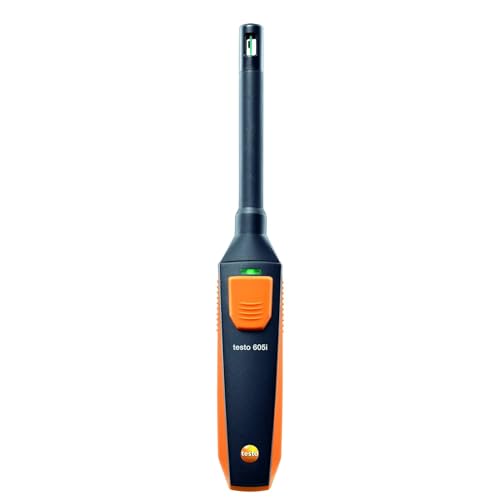

Products shown because their documented specifications fit this guide. Price and availability are on Amazon and can change.
Frequently Asked Questions
Are consumer air quality monitors accurate?
For trends and for distinguishing good from poor air, generally yes. For absolute values against a regulatory limit, no; their uncertainty is larger and usually unstated.
Do professional and consumer devices use different sensors?
Often the same or similar sensing elements. The difference is in calibration, compensation, sampling (fans, inlets, dryers), housing and documentation.
Should I trust the professional reading when they disagree?
Usually, provided it has a current calibration and was used correctly. A professional instrument with an expired calibration or placed badly can be worse than a well-placed consumer monitor.
Affiliate disclosure: Akermin earns a commission from qualifying Amazon purchases made through links on this page. Our editorial picks are based on documented specifications and owner feedback, not commissions.