As an Amazon Associate, Akermin earns from qualifying purchases. Product links on this page are affiliate links.
A sensor reports the conditions in the few centimeters of air around it, and rooms are not uniform. Air near a window is colder and more humid; air near a person is CO₂-rich and warm; air near a radiator is hot and dry; air near a door carries whatever is in the hallway. Move the sensor and the reading changes, not because the sensor is wrong but because it is sampling a different place. Representative measurements come from placing the sensor where the air is well mixed and away from every local source and sink.
How much rooms vary
| Location in a heated room | Typical deviation from room center |
|---|---|
| Floor level | 2 to 4 °C cooler; higher RH; more dust |
| Ceiling level | 2 to 3 °C warmer; lower RH |
| Beside a single-glazed window | 3 to 6 °C cooler; 10 to 20 points higher RH |
| Above a radiator | 5 to 15 °C warmer; much lower RH |
| Within 1 m of a seated person | CO₂ 200 to 800 ppm higher; slightly warmer and more humid |
| Beside an open door | Follows the adjoining room |
| In direct sunlight | Several degrees warmer; some sensors read wildly |
The mechanisms
- Stratification. Warm air rises. Rooms with radiators or convectors have a temperature gradient of a few degrees from floor to ceiling.
- Cold surfaces. Air in contact with glass or an uninsulated wall cools, and its relative humidity climbs. See what relative humidity is.
- Local sources. A person is a source of CO₂, heat and moisture; a kettle is a source of steam; a candle is a source of particles. A sensor inside the plume reads the plume. See why a CO₂ monitor spikes when people enter.
- Drafts and vents. Supply air is fresher and often cooler; a sensor in the stream reads better than the room.
- Radiant heating. Sunlight or a heater warms the sensor body directly, and the electronics report a temperature the air does not have.
- Enclosures. A sensor in a box, drawer or tight corner sees stagnant air that lags the room.
Placement rules
- Interior wall or open shelf, 1 to 1.5 m above the floor.
- At least 1 m from people, heaters, vents, windows and doors.
- Out of direct sun and away from lamps and electronics that give off heat.
- Not inside furniture or against a wall in a corner.
- Same position every time if comparing over days or between rooms.
When you want the local reading
Sometimes the point is the micro-climate: the humidity beside the cold wall where mold is growing, the temperature inside the fridge, the CO₂ at the pillow. Place the sensor exactly there and label the record accordingly. The mistake is placing it there and calling it the room average. For surveys, two sensors, one central and one at the suspect spot, tell the whole story. Loggers that make such surveys easy are covered in what an environmental data logger is, and the stabilization delay after moving a sensor in why temperature sensors need time to stabilize.
Recommended Tools

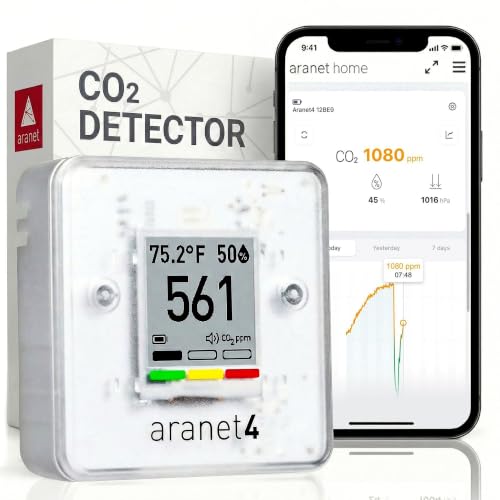
Products shown because their documented specifications fit this guide. Price and availability are on Amazon and can change.
Frequently Asked Questions
Where is the best place for a room sensor?
On an interior wall or open shelf, roughly 1 to 1.5 m high, away from windows, heaters, vents, direct sun and at least a meter from people.
Why does my hygrometer read higher near the window?
The air next to cold glass is cooler, and cooler air has higher relative humidity for the same moisture. The sensor is reporting its local micro-climate correctly.
Should sensors be at head height or on the floor?
Head or breathing height for anything about people. Floor level is colder and holds more dust; ceiling level is warmer. The difference between floor and ceiling can be 3 to 5 °C in a heated room.
Affiliate disclosure: Akermin earns a commission from qualifying Amazon purchases made through links on this page. Our editorial picks are based on documented specifications and owner feedback, not commissions.