As an Amazon Associate, Akermin earns from qualifying purchases. Product links on this page are affiliate links.
Solar output follows the sun. At low sun angles light passes through more atmosphere and strikes the panels obliquely, so both the irradiance and the fraction the panels capture are small. As the sun climbs toward solar noon, both improve and output peaks. It then falls symmetrically, minus a few percent in the afternoon because the panels are hotter. Clouds put dips in the curve, shading puts notches, and an undersized inverter flattens the top. The chart of a day’s production is a record of all of these.
Geometry: elevation and incidence
Two angles govern the curve. Sun elevation sets the air mass: at 30° above the horizon sunlight crosses twice the atmosphere it does at the zenith, and scattering and absorption reduce irradiance accordingly. The angle of incidence is the angle between the sun’s rays and the panel’s perpendicular; the irradiance a flat surface captures falls with the cosine of that angle, so a panel facing 60° away from the sun receives half the direct beam. Fixed panels face one direction; the sun sweeps past them, and the product of the two angles traces the bell.
Orientation and tilt
- South-facing (northern hemisphere) at a tilt near the latitude: symmetrical curve peaking at solar noon; highest annual energy.
- East-facing: peak in mid-morning, weak afternoon.
- West-facing: weak morning, peak mid-afternoon; often preferred where evening electricity is worth more.
- Flat: broad, lower peak; poor in winter at high latitudes.
- Trackers: a flat-topped curve close to full output from mid-morning to mid-afternoon.
What bends the curve
| Feature on the chart | Cause |
|---|---|
| Afternoon lower than morning at the same sun angle | Panel temperature; see irradiance vs output |
| Sharp dips of a few minutes | Passing cloud |
| Brief spikes above the clear-sky line | Cloud edge effect: reflection from bright cloud adds to direct sun |
| Flat top at a fixed power | Inverter clipping at its AC limit |
| Notch at the same time each day | Shading from a chimney, tree or neighboring building |
| Whole curve lower than expected | Soiling, haze, or a fault; compare with irradiance |
| Late start or early stop | Horizon obstruction or inverter start-up threshold |
| Steps down in the string | Bypass diodes activating on partial shade |
Season
The same geometry runs on a yearly cycle. In summer the sun is high and up for long hours: tall, wide curves. In winter it is low and brief: short, narrow curves, with a much larger penalty for flat or shaded panels. The ratio of a good summer day to a good winter day can be three or four to one at mid-latitudes.
Reading your own chart
- Compare against a clear-day curve from the same month to spot losses.
- Look for repeating notches; they are shading, and the time tells you the direction.
- Check the top for clipping; if the inverter is the limit, that is design, not fault.
- Compare mornings and afternoons; a gap larger than a few percent suggests east-west shading or a hot roof.
- If the whole curve is low, measure irradiance and panel output directly; see how to measure solar panel output.
Instruments for that check are in best solar panel testers. For the expected daily energy, use the solar output estimator.
Recommended Tools

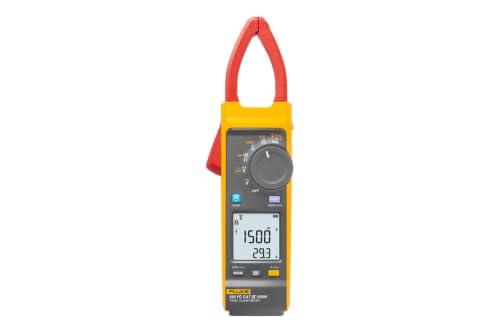
Products shown because their documented specifications fit this guide. Price and availability are on Amazon and can change.
Frequently Asked Questions
When is solar panel output highest?
Around solar noon, when the sun is highest and most nearly perpendicular to a south-facing (northern hemisphere) array. For east or west-facing arrays the peak shifts to morning or afternoon.
Why is the afternoon peak lower than the morning on a symmetrical day?
Panel temperature. By afternoon the panels have been in the sun for hours and run hotter, losing a few percent of output even at identical irradiance.
Why does my output flat-top at midday?
Inverter clipping. The array's DC output exceeds the inverter's AC rating and the excess is thrown away. It is normal on systems designed with a high DC-to-AC ratio.
Affiliate disclosure: Akermin earns a commission from qualifying Amazon purchases made through links on this page. Our editorial picks are based on documented specifications and owner feedback, not commissions.
Related Guides

UNI-T UT503PV Review: A DC 1000 V Headline on a CAT III 600 V Body
A solar insulation resistance tester that works on energised PV strings up to DC 1000 V, with test voltages of 125, 250, 500 and 1000 V, a range to 4000 megohms, automatic discharge, 1000 stored result sets and USB or Bluetooth transfer.
Read More→
ANCEL BA101 Review: The Exclusion List Is the Most Useful Bullet
A 12 volt battery, cranking and charging system tester covering 100 to 2000 CCA that reports state of health, state of charge, voltage, current and CCA, drawing its own power from the battery under test.
Read More→
Tenmars Solar Power Meter Review: One Accuracy Figure, Two Very Different Jobs
A handheld solar irradiance meter reading 0 to 1999 watts per square metre or 0 to 634 BTU per square foot per hour, with a selectable 199.9 or 1999 scale, maximum and minimum tracking, data hold and manual zeroing.
Read More→