As an Amazon Associate, Akermin earns from qualifying purchases. Product links on this page are affiliate links.
A wood moisture meter measures the electrical properties of a timber sample and converts them to a moisture content percentage, typically on a dry-weight basis. A building survey meter does the same job in a less direct way: it searches for moisture in porous building materials such as plaster, brick, concrete or drywall, often without pins, and reports a relative or comparative reading rather than a true percentage. If your question is how wet is this piece of wood, you need a wood moisture meter, and the General Tools MMP100 compact pin meter is a straightforward example. If your question is is this wall wet, and where is the wet patch, you need a survey meter, and the Protimeter SurveyMaster dual-function meter covers both pin and non-invasive modes. The Protimeter Aquant is the non-invasive specialist for surfaces you cannot mark. The Triplett MS475 adds humidity, dew point and infrared surface temperature, which helps diagnose why a surface is wet rather than just whether it is.
The physical difference: resistance, capacitance, and what the number means
Almost every handheld moisture meter relies on one of two electrical principles. Pin meters drive a small current between two electrodes pushed into the material and measure resistance. Water conducts; dry wood and dry plaster do not. The meter converts resistance to a moisture content reading. Pinless meters, also called non-invasive or capacitance meters, send an electric field into the material and measure how that field is affected by the presence of water. They do not puncture the surface.
The crucial difference is what the number represents. A pin meter on wood can be calibrated to report moisture content as a percentage of the wood’s dry weight, because wood is a reasonably consistent material and the relationship between resistance and moisture content has been mapped for many species. A survey meter working on plaster, brick or concrete cannot report a true moisture percentage, because those materials vary enormously in density, salt content and composition. Instead it reports a relative reading, often on a scale of 0 to 100 or 0 to 1000, that tells you whether one spot is wetter than another or wetter than a dry reference point. The listing for the Protimeter SurveyMaster describes dual-function measurement across wood, drywall, concrete and fiberglass, but it does not publish a moisture content accuracy figure for each material. That is normal: survey meters are comparative instruments.
This is why you cannot take a reading from a survey meter on plasterboard and compare it directly to a wood moisture content percentage. They are different scales measuring different things. The common mistake is to treat a survey meter’s relative reading as a percentage and conclude that a wall is 18 percent wet. It is not. It is 18 on an arbitrary comparative scale, and the only useful comparison is against another reading from the same instrument on the same material.
What a wood moisture meter tells you that a survey meter cannot
Wood is hygroscopic: it takes up and releases moisture from the air, and its dimensions change as it does. A wood moisture meter exists because the moisture content of timber determines how it behaves. A floorboard at 18 percent moisture content will shrink as it dries, opening gaps. A piece of trim installed at 20 percent will pull away from the wall. A joist at 25 percent is at risk of fungal decay. These are absolute thresholds, and you need an absolute measurement to compare against them.
Pin meters are the reference method for wood because the pins penetrate below the surface, which is essential: the surface of a board dries faster than its core, so a surface reading can be misleading. The General Tools MMP100 is a compact pin-style meter that the listing states measures moisture content in wood, drywall and other building materials, with a tri-colour display to indicate low, medium and high ranges. It does not publish a moisture content range or an accuracy figure in the listing bullets, so you should not assume it meets a particular standard for critical work. For most site carpentry and firewood checking, that is acceptable. For kiln operators or flooring installers working to a contractual moisture specification, you would want a meter with a published accuracy and a species correction table, and the listing does not state either.
Pinless meters can also read wood moisture content, and the Protimeter SurveyMaster offers both modes. The advantage of pinless on wood is speed and no holes. The disadvantage is that the field penetrates a fixed depth, often around 20 to 25 mm, so it averages a layer rather than reading at a point. On thin veneers or near edges, the reading can be influenced by what is behind the board. Pin meters remain the more direct measurement.
What a building survey meter is for, and why non-invasive matters
A building survey meter is an inspection tool. Its job is to find moisture, trace its extent and monitor drying, not to certify a moisture content. The non-invasive mode is central to that job because it lets you scan a large area quickly without leaving pin holes in decorated surfaces. The Protimeter Aquant is a dedicated non-invasive meter that the listing states detects moisture up to 20 mm below the surface. That depth matters: it reaches below tile adhesive, plaster skim and paint layers that might be dry while the substrate behind is wet.
Non-invasive meters are also sensitive to the material they are pressed against. The reading on plasterboard will differ from the reading on solid plaster, even at the same moisture level, because the density and dielectric properties differ. This is why survey meters are used in comparative mode: you take a reading in a known dry area, then compare readings across the suspect area. The absolute number is less important than the pattern. A sudden step change in reading as you move across a wall often marks the edge of a damp patch or a hidden pipe leak.
The Protimeter SurveyMaster adds pin mode to the same instrument, which lets you switch to direct contact readings when you need to probe deeper or confirm a non-invasive finding. The listing also states Bluetooth connectivity with time and date stamped readings through the Protimeter Connect app, which is useful for documenting an inspection. Neither Protimeter listing publishes a moisture content accuracy figure for building materials, and that is consistent with their role as survey instruments rather than laboratory meters.
Where the two instruments overlap, and where they do not
Both types of meter can be used on drywall, and both can indicate whether a patch is wet. The difference is in the precision and the meaning of the number. A pin meter pushed into drywall gives a resistance reading that the meter converts to a relative scale, because gypsum is not wood and the calibration is approximate. A non-invasive survey meter gives a comparative reading over a larger area. Neither gives a true moisture content percentage for drywall, and no handheld meter does, because the dry-weight basis is not well defined for a composite board.
Where the wood meter stops being the right answer is on masonry, concrete and tile. Pushing pins into concrete is difficult, and the reading is affected by salts and reinforcement. A survey meter in non-invasive mode is the correct tool for those surfaces. Where the survey meter stops being the right answer is on a stack of timber you are about to machine: you need a moisture content percentage, and you need it below the surface. A pin meter is the right tool, and a survey meter in pin mode can do it if it has a wood calibration, but a dedicated wood meter is simpler and often more accurate for that single task.
| Instrument | Typical principle | What the number means | Best for | Cannot do |
|---|---|---|---|---|
| Wood moisture meter (pin) | Electrical resistance between pins | Moisture content percentage, dry-weight basis, for a stated species group | Timber, flooring, joinery, firewood | Read masonry or concrete reliably; scan large areas without holes |
| Building survey meter (non-invasive) | Capacitance or impedance field | Relative reading on an arbitrary scale, comparative between spots | Walls, floors, ceilings, tile, finding the extent of damp | Report a true moisture content percentage; read deep without a pin mode |
| Dual-function survey meter | Both pin and non-invasive | Relative in non-invasive mode; resistance-based in pin mode | Inspection, confirmation, documentation | Certify moisture content without a material-specific calibration |
The Triplett MS475 sits slightly apart: it offers pin and pinless moisture measurement plus a humidity and temperature probe that reports relative humidity, air temperature, mixing ratio, vapour pressure and dew point, and an infrared thermometer with a laser pointer and 8:1 distance to target ratio. That combination is useful for diagnosing condensation and surface temperature, but the listing does not publish moisture accuracy figures, so treat the moisture readings as indicative and the humidity and temperature readings as the more directly specified functions.
The maintenance nobody mentions, and the limits of both instruments
Pin meters need their pins checked. Bent or corroded pins change the contact resistance and therefore the reading. The pins on the General Tools MMP100 are not described as replaceable in the listing bullets, so if they wear you may need a new meter. Non-invasive meters need their surface pad kept clean and flat; a worn pad or a trapped piece of grit changes the field and biases the reading. The Protimeter Aquant listing states automatic calibration checks and user field calibration, which addresses the drift issue that affects capacitance meters over time. Neither listing states a calibration interval, so follow the manufacturer’s instructions.
Both instruments are affected by what is behind the surface. A non-invasive meter pressed against a thin plasterboard wall may read the brick behind it. A pin meter driven into a thin board may contact the substrate. Neither instrument measures moisture at depth in a thick wall without a probe. Neither instrument detects mould directly: mould can grow at moisture levels that a meter reads as moderate, and a meter cannot see spores. If you suspect mould, the meter can tell you whether the material is wet enough to support growth, but it cannot confirm mould presence. For that, you need a moisture map and a visual inspection, and the article on whether a moisture meter can detect mould explains the limits.
Finally, neither instrument is a building survey. A meter tells you where moisture is; it does not tell you why. The source might be a leaking pipe, failed damp course, blocked gutter, condensation or rising damp. The meter narrows the search. It does not replace a competent inspection.
Choosing between them
If you work mainly with timber and need a moisture content percentage, buy a wood moisture meter and learn its species corrections. If you inspect buildings and need to find and map moisture without damaging surfaces, buy a survey meter, ideally a dual-function model so you can confirm non-invasive findings with pins. If you do both, a dual-function survey meter such as the Protimeter SurveyMaster covers the widest range of tasks, but it will not replace a dedicated wood meter for precise timber work. If you only need to check firewood and a few floorboards, a compact pin meter such as the General Tools MMP100 is sufficient, provided you accept that the listing does not publish an accuracy figure. Whichever you choose, read how to use a moisture meter on wood and why readings vary by material before you trust a number.
Frequently Asked Questions
Can a building survey meter tell me the moisture content of wood?
Not directly. A non-invasive survey meter gives a relative reading that changes with density and material. Some dual-function meters, including the Protimeter SurveyMaster, offer a pin mode with a wood setting, but the listing does not publish a moisture content accuracy figure. For a true percentage, use a dedicated wood moisture meter with a published calibration.
Can a wood moisture meter be used on plaster and concrete?
It can give a reading, but the number is not a moisture content percentage. Plaster and concrete do not have a consistent dry-weight relationship with resistance, and soluble salts affect the reading. A pin meter is the wrong tool for surveying masonry. Use a non-invasive survey meter in comparative mode instead.
Why do two meters give different readings on the same wall?
Because they measure different things. A pin meter reads resistance at the pin tips; a non-invasive meter reads an average over a field that may extend 20 mm or more into the material. Different depths, different volumes and different calibration curves produce different numbers. The article on why readings vary by material explains this in detail.
Is a pinless meter accurate enough for wood flooring?
It depends on the specification you are working to. Pinless meters are fast and leave no holes, but they average a layer and can be affected by the substrate. For contractual flooring work, a pin meter with a published accuracy and a species correction table is the safer choice. The listing for the General Tools MMP100 does not publish an accuracy figure, so it is not the meter to rely on for a contractual moisture specification.
Do I need Bluetooth on a moisture meter?
Only if you need to document readings. Bluetooth lets a meter send time and date stamped readings to an app, which is useful for insurance work, damp reports and handover records. The Protimeter Aquant and Protimeter SurveyMaster both offer app connectivity. For a quick check of firewood or a single floorboard, Bluetooth adds cost without adding information.
Can either meter tell me if I have a leak?
No. A meter tells you where moisture is present. It does not identify the source. A leak, condensation, rising damp and a failed damp course can all produce wet patches. The meter narrows the search; a competent inspection identifies the cause. Use the meter to map the extent, then investigate the building fabric.
Related Guides
Handheld Meter vs Fixed Installed Monitor: Which Do You Actually Need?
This page explains the engineering difference between spot measurement and continuous monitoring, and how that difference decides which instrument fits the job.
Read More→Single point reading against a logged average: which number should you trust?
This page explains when a single point reading is the honest answer, when an average is, and how to tell which your instrument is actually giving you.
Read More→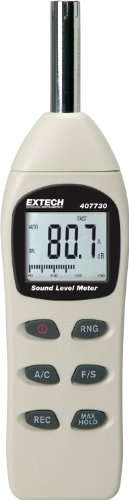
Extech 407730-NIST Sound Level Meter Review: Who It Is For, and Who Should Walk Away
This review explains what the Extech 407730-NIST measures, what its specifications mean in practice, and which buyers should choose a different instrument.
Read More→