As an Amazon Associate, Akermin earns from qualifying purchases. Product links on this page are affiliate links.
For most DC motor checks the pick is P1, the Fluke 376 FC. It is the only listing here that combines DC current measurement with wireless logging to a phone, which is what turns a single reading into a trend you can look at after the motor has cycled. If you need to work on a live solar array or a high-voltage DC bus at the same time, P2 covers the higher voltage category and adds DC power measurement. If the budget is tighter and you mostly need inrush and VFD modes, P5 is the cheapest listing that states a DC current range, and P3 and P4 sit between them on features. None of these instruments is an alarm, and none of them will tell you a motor is about to fail unless you compare readings over time.
Why DC current is the specification that decides this list
A clamp meter works by measuring the magnetic field the current produces around a conductor. Alternating current reverses direction many times a second, so the field it makes is always changing, and a simple coil or Hall sensor can pick that change up easily. Direct current does not reverse. The field it makes is steady, and a meter has to measure the strength of that steady field rather than its rate of change. That is a different sensing job, and it is why a clamp meter can be rated for 1000 A AC and still have no DC current range at all.
Every listing on this page publishes a DC current range, which is the first filter. P1, P3 and P4 state 1000 A AC/DC. P5 states 600 A AC/DC. P2 is a solar clamp meter and its listing leads with DC power measurement rather than a headline current figure, so treat its current range as something to confirm against the manual before you buy.
The second consequence of DC measurement is zeroing. The jaw is made of a ferromagnetic material, and any magnetisation left in it from a previous measurement adds an offset to the next reading. On AC this averages out; on DC it does not. P4 is the only listing that names this problem, calling its Zero (REL) function essential for clearing magnetic hysteresis before taking accurate DC current measurements. On any of these meters, the habit is the same: close the jaw with no conductor inside, press the zero or relative button, then clamp the conductor. If you skip that step, a 2 A reading on a small motor might really be 0.5 A plus an offset.
Inrush, VFD and LoZ: the three modes that matter on a motor circuit
Inrush is the surge of current a motor draws for a fraction of a second when it starts. A meter that samples slowly will miss it entirely and show you a reading that looks normal while the breaker keeps tripping. P3, P4 and P5 all publish an inrush mode. P5 is unusually honest about the limit: its listing states the inrush measurement time is about 100 ms and that it is only applicable to AC. That is a real constraint. If you are chasing a DC motor start-up problem, an AC-only inrush function will not capture the event, and the listing is telling you so.
VFD mode is different again. A variable frequency drive does not output a clean sine wave; it switches the output on and off at high frequency to synthesise one. A True-RMS meter reading that waveform can be confused by the switching noise. VFD mode filters the high-frequency component so the fundamental reading is closer to what the motor actually sees. P3, P4 and P5 all state a VFD function. P1 and P2 do not name one in their listing bullets, which does not mean they cannot be used on drive outputs, only that the listings do not publish that mode.
LoZ, or low impedance mode, puts a small load across the test leads so that induced or capacitive voltages, sometimes called ghost voltages, collapse instead of being displayed as if they were real. P3, P4 and P5 state it. It matters when you are working in a cabinet with long parallel runs, where an unconnected conductor can read a phantom voltage that sends you looking for a fault that is not there.
The five meters, and what each one is actually for
Fluke 376 FC
The only pick that pairs DC current measurement with wireless logging, so intermittent motor faults can be captured over time rather than caught by luck.
Fluke 393 FC Solar Clamp Meter
A CAT III 1500 V rated instrument with a thin jaw for crowded enclosures, DC power measurement and an audio polarity indicator.
Neoteck 9999 Counts 1000A AC/DC Clamp Multimeter
A 9999-count colour display with an analog bar, 40 mm jaw, and inrush plus VFD modes for motor-driven loads.
ZIBOO 393 True RMS Clamp Meter
A 6000-count meter with a stated zero (REL) function that the listing calls essential for clearing magnetic hysteresis before DC current readings.
POROMETISTO CM06 Inrush Clamp Meter
The entry-level option that still states a 600 A AC/DC current range and an inrush mode, with a clear note that its inrush timing applies to AC only.
The stated specifications side by side
| Pick | DC current range | Counts | Safety category stated | Inrush mode | VFD mode | Wireless logging |
|---|---|---|---|---|---|---|
| P1 Fluke 376 FC | 1000 A AC/DC | Not stated | Not stated in the listing bullets | Not stated in the listing bullets | Not stated in the listing bullets | Yes, Bluetooth to Apple or Android |
| P2 Fluke 393 FC | Not stated in the listing bullets | Not stated | CAT III 1500 V | Not stated in the listing bullets | Not stated in the listing bullets | Fluke Connect software enabled |
| P3 Neoteck | 1000 A AC/DC | 9999 | CAT III 1000 V / CAT IV 600 V | Yes | Yes | Not stated in the listing bullets |
| P4 ZIBOO 393 | 1000 A AC/DC | 6000 | Not stated in the listing bullets | Yes | Yes | Not stated in the listing bullets |
| P5 POROMETISTO CM06 | 600 A AC/DC | 6000 | Not stated in the listing bullets | Yes, AC only, about 100 ms | Yes | Not stated in the listing bullets |
The table is deliberately sparse. Several listings simply do not publish a safety category, a count figure or a mode, and where that is the case the cell says so rather than carrying a guess. The two Fluke listings are the shortest on published detail and the longest on stated capability in the areas they do name: P1 on wireless logging, P2 on the CAT III 1500 V rating and the thin jaw.
If you want to see how these compare with meters chosen for a different job, the general clamp meter roundup covers the wider field, and the inrush clamp meter page goes deeper on start-up current capture.
Jaw size, access and the readings you cannot take
A clamp meter can only measure a conductor that fits inside its jaw. P3 publishes a 40 mm jaw, which the listing says handles thick cables. P2 publishes a thin jaw specifically for access to cables in crowded combiner boxes. Neither P1, P4 nor P5 states a jaw dimension in the bullets supplied, so if you are working in a tight motor terminal box, that is a question to settle before ordering rather than after.
There is a second access issue that no jaw size solves. A clamp meter measures one conductor at a time. If you clamp a cable that carries both the supply and the return, the two magnetic fields cancel and the meter reads close to zero. On a DC motor fed by a pair of heavy leads, you have to separate them. In practice that means the meter is often used on a single leg, or on a shunt or busbar where the geometry allows it. Plan the access before you plan the measurement.
P2’s audio polarity indicator is a small but genuine convenience for DC work. When you are connecting a DC motor or an array, getting the polarity backwards can damage equipment, and an audible indication that you have the leads the right way round is faster than reading a minus sign on a display in poor light.
Where a clamp meter stops being the right answer
A clamp meter measures current. It does not measure insulation resistance, it does not measure winding resistance to the milliohm, and it does not tell you whether a motor’s bearings are failing. If your DC motor check is really a hunt for a shorted turn or a degraded winding, a milliohm meter is the instrument that answers that question, because it can resolve the small resistance differences a clamp meter cannot see.
It is also not an alarm. None of these meters will warn you when a motor starts drawing too much current; they will only show you the number while you are standing there. P1’s wireless logging is the closest any of them comes to continuous oversight, because it lets you record a run and look at the trace afterwards. That is still a manual process, and it is still not a protective device.
Finally, safety category matters more than any feature when you are working near a live DC bus. P2 publishes CAT III 1500 V, which is the rating that suits solar and high-voltage DC work. P3 publishes CAT III 1000 V and CAT IV 600 V. The others do not state a category in the bullets supplied. If your motor is fed from a high-voltage DC source, an unstated category is not a category you can rely on.
Recommended Tools

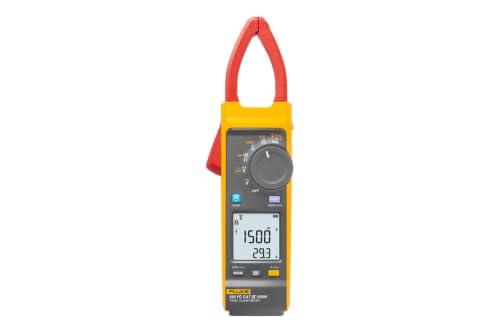


Products shown because their documented specifications fit this guide. Price and availability are on Amazon and can change.
Frequently Asked Questions
Can I use an AC-only clamp meter to check a DC motor?
No. An AC-only clamp meter senses the changing magnetic field that alternating current produces. A DC motor's supply current is steady, so an AC-only meter will read close to zero or give a meaningless number. You need a meter with a published DC current range, which all five picks on this page have.
Why do I have to zero the meter before measuring DC current?
The jaw is ferromagnetic and can hold a small amount of residual magnetism from earlier measurements. On AC that offset averages out; on DC it adds directly to your reading. P4's listing calls its Zero (REL) function essential for clearing magnetic hysteresis before taking accurate DC current measurements. On any of these meters, close the jaw with nothing inside, press zero, then clamp the conductor.
Will inrush mode work on a DC motor?
Check the listing carefully. P5 states plainly that its inrush measurement time is about 100 ms and that it is only applicable to AC. P3 and P4 state an inrush function without qualifying it as AC-only, but neither listing explicitly confirms DC inrush capture. If capturing DC start-up current is the whole point of your check, confirm it against the manual before buying.
Do I need a 1000 A meter for a DC motor?
Only if the motor actually draws that much. A clamp meter's accuracy is usually specified as a percentage of reading plus a number of counts, and the counts portion matters more at low currents. A 1000 A meter reading a 5 A motor current is working near the bottom of its range. If your motors are small, a lower-range meter may give you a better reading, but none of these listings publishes a separate low-current accuracy figure, so that is a manual question.
What does the CAT rating actually protect me from?
The category describes the transient energy the meter can survive if something goes wrong on the circuit you are testing. CAT III 1500 V, which P2 publishes, is aimed at distribution-level and high-voltage DC work such as solar arrays. CAT III 1000 V and CAT IV 600 V, which P3 publishes, cover a wide range of industrial and service work. Where a listing does not publish a category, treat the rating as unknown for your application.
Can these meters log data while I am not watching?
Only P1 states wireless logging, via Bluetooth to an Apple or Android device using the Fluke Connect Measurements app, and its listing describes logging and trending to pinpoint intermittent faults. P2 is described as Fluke Connect software enabled. The other three listings do not publish a logging function. None of them is a substitute for a permanent monitor or a protective relay.
Affiliate disclosure: Akermin earns a commission from qualifying Amazon purchases made through links on this page. Our editorial picks are based on documented specifications and owner feedback, not commissions.
Related Guides

Fluke 1AC II VoltAlert Review: Two Detection Thresholds in One Listing
A pocket sized non contact voltage tester whose tip glows red and beeper sounds when voltage is detected, with a continuous self test and a choice of audible or silent operation.
Read More→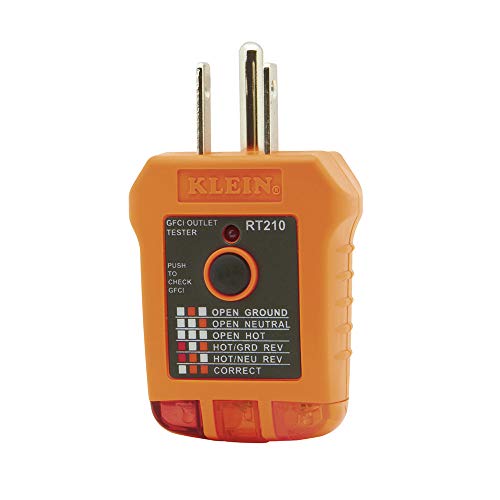
Klein Tools RT210 Review: A Fault Finder That Does Not List Its Faults
A three wire receptacle tester for standard and GFCI North American outlets, specified for 110 to 125 volts AC at 50 or 60 Hz, a 6.6 foot drop and an operating range of 32 to 140 degrees Fahrenheit.
Read More→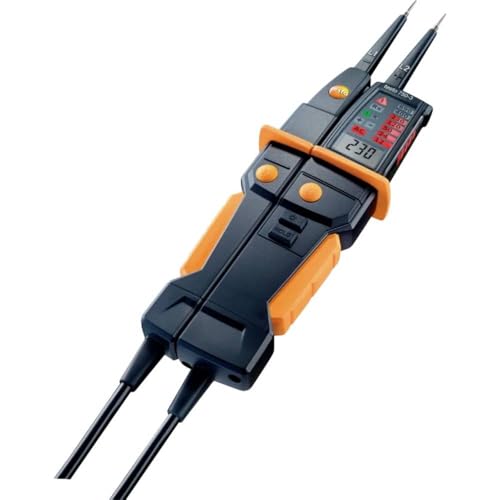
Testo 750-3 Review: Four Bullets, and No Published Category Rating
A two pole voltage tester with a three digit LCD showing measured voltage, a patented LED voltage bar viewable from any angle, polarity detection on DC and a GFCI test function for AC outlets.
Read More→