Best UV Meters: 6 Picks for Sunlight, Reptile Lamps and UVC Verification
Ultraviolet measurement is three separate problems wearing one label. A meter built for sunlight will not tell you whether a UVC lamp is still emitting, and a card that identifies a UVC bulb tells you nothing about your exposure on a beach.
As an Amazon Associate, Akermin earns from qualifying purchases. Product links on this page are affiliate links.
Our Top Picks
Instruments were separated by the wavelength band and the application each listing states, then compared on the units reported, whether a dose or cumulative function is offered, recording capability and whether the device is reusable. We did not run laboratory tests and publish no measurements of our own.
Best Overall
AquaHorti Sunlight UV Index Meter
A UV index meter that tracks accumulated dose and beeps when your chosen limit is reached.
Measures sunlight UV index across the standard bands from 1 to 11 plus
Beep alert when a selected UV dose limit is reached
Three selectable reminder levels: low, medium and high
A meter built for sunlight cannot measure an artificial lamp, and a UVC function cannot be used on sunlight because the atmosphere absorbs solar UVC. Match the instrument to the source.
How to Choose a UV Meter
Decide which of three unrelated jobs you are doing before comparing any specifications.
Three Jobs, Three Instruments
Sunlight exposure, reptile lamp output and UVC lamp verification are separate measurements in separate wavelength bands. One device rarely does all three well.
Dose Matters More Than Intensity
Skin risk depends on intensity multiplied by time. An index reading tells you how fast the clock is running; a dose function tells you how far it has run.
Distance Changes Everything With Lamps
UVB falls off sharply with distance and is blocked by glass and reduced by mesh. Measure at the animal, not at the lamp.
UVC Is Invisible
A purple glow proves nothing. Many devices sold as UVC sterilisers emit visible violet light instead. A card or meter that identifies the band is the only way to check.
Cards Screen, Meters Measure
A colour changing card answers whether a lamp works. It cannot tell you the intensity at a basking spot or whether output has halved since last year.
Lamps Fade Before They Fail
Reptile UVB tubes and germicidal lamps lose output long before they stop lighting. Replacement on a schedule is guesswork without a meter.
Rarely well. Solar UV is dominated by UVA and UVB, while germicidal lamps produce UVC, which the atmosphere absorbs almost entirely so it never appears in sunlight. Sensors are built for particular bands, and two listings here state explicitly where their instrument does not apply.
What is the UV index?
A scale describing the intensity of sunburn-causing ultraviolet, commonly grouped as 1 to 2 low, 3 to 5 moderate, 6 to 7 high, 8 to 10 very high and 11 plus extreme. It describes intensity at that moment and says nothing about how long you have been exposed.
Why does dose matter more than index?
Because skin damage accumulates with both intensity and time. An hour at a moderate index can deliver more exposure than fifteen minutes at a high one. A meter that tracks accumulated dose and alerts at a limit reflects how the risk actually works.
How do I check a reptile UVB lamp properly?
Measure at the basking spot where the animal sits, not next to the lamp, because output falls off sharply with distance and is blocked by glass and reduced by mesh. Record several points across the enclosure and repeat periodically, because output declines long before the lamp stops lighting.
How do I know if a UVC steriliser is genuine?
You cannot tell by looking, because UVC is invisible and many devices emit visible violet light that resembles it. A test card that identifies the band, or a meter with a UVC function, is the only practical check. Never look directly at a UVC source or expose skin to it.
Are the test cards accurate?
They are indicative rather than accurate, and the EIDEAL listing says so directly by describing its intensity scale as approximate. They answer whether a lamp is working. They do not tell you the intensity at a particular point or how much output has been lost.
Reviews
AquaHorti Sunlight UV Index Meter Best Overall
Almost every UV product measures intensity and stops there, which misses how ultraviolet exposure actually works. The listing here is unusually clear about the point: a high instantaneous index does not harm skin immediately, because risk depends on intensity multiplied by time. Tracking accumulated dose and alerting when a chosen limit is reached is therefore a far more useful behaviour than displaying a number that nobody acts on.
Three selectable caution levels is the sensible implementation, because tolerance varies enormously between people and the same afternoon that is fine for one person is not for another. As a device to take to a beach, a boat or a long day working outside, it answers the question people actually have, which is not how strong the sun is but how long they have been in it.
EvoDevice Reptile UVB Meter Best for Reptile Lamps
The 33 point record function is what turns this from a meter into a survey tool, and mapping is exactly what a reptile enclosure needs. UVB output falls off sharply with distance and is blocked entirely by glass and heavily by mesh, so the number that matters is not what the lamp emits but what reaches the animal at the basking spot, at the cool end and at every height it can climb to.
Recording each of those as a numbered point and reviewing them later produces a picture of the whole enclosure rather than a single reading taken wherever the meter happened to be pointed. It also makes lamp replacement decisions evidence based: UVB output declines long before a lamp stops producing visible light, and comparing this month's map with one taken when the lamp was new is the only way to see that.
Covering three separate bands with stated wavelength ranges makes this the most technically specified instrument here, and the UVC capability is the reason to choose it. Germicidal lamps degrade with hours of use and with switching cycles, and a lamp that still glows visibly may be producing far less UVC than it did when new. Since UVC is invisible, there is no way to know without measuring.
The listing also does something important by stating that the UVC function is not for sunlight. That is correct and worth understanding: the atmosphere absorbs solar UVC almost entirely, so a reading of UVC outdoors would be meaningless. A manufacturer that explains where its instrument does not apply is more trustworthy than one that implies universal capability. Naming specific LED wavelengths, 255 nm for UVC and 365 to 380 nm for UVA, also lets you check the meter matches your lamp.
Strengths
Covers UVA, UVB and UVC with named wavelengths
Irradiance in watts per square metre, not just an index
States clearly where the UVC function does not apply
Works for both lamps and sunlight in the appropriate bands
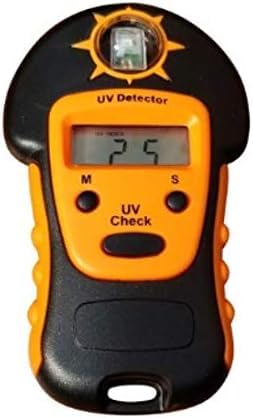
One button, one purpose. For a family that wants to know whether today is a hat and sunscreen day, that is arguably the correct product, because a device with modes and units gets left in a drawer while a single button gets pressed.
What earns this a place rather than a dismissal is the honesty in the listing: it states plainly that it is not designed to measure UVA and UVB from artificial fluorescent bulbs. That is the single most common misuse of cheap UV meters, people buying one to check a reptile lamp or a nail lamp and getting a meaningless number. A manufacturer stating the limitation up front is doing the buyer a service that most in this category do not.
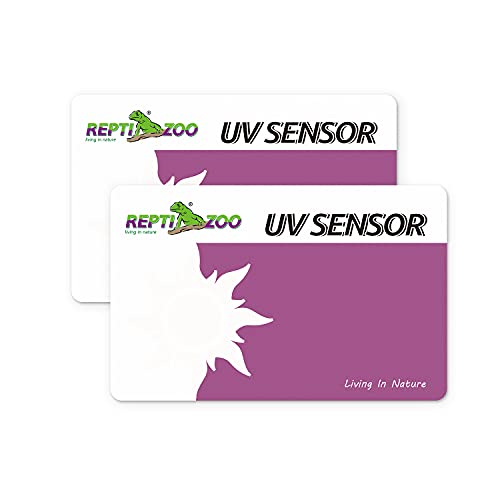
A colour changing card is not a measurement and does not pretend to be. What it gives you is a yes or no answer to the question that matters most: is this lamp still producing UVB at all? Reptile UVB tubes decline steadily and stop producing useful output long before they stop lighting up, and a keeper with no instrument has no way of knowing.
For somebody with one enclosure and one lamp on a replacement schedule, two cards at a very low price is a proportionate purchase. It confirms a new lamp is working, confirms an old one has faded, and costs almost nothing. If you keep several species with different requirements, or need to know the actual intensity at the basking spot, the recording meter above is the right tool instead.
Strengths
Extremely cheap confirmation that a lamp works
No batteries or electronics to fail
Two cards supplied
Credit card size, easy to store in an enclosure kit
The identification function addresses a genuine and slightly alarming problem. Devices sold as UVC sterilisers are widely available, and a proportion of them emit visible blue or violet light rather than germicidal UVC. Because UVC is invisible, a purple glow is not evidence of anything. A card that distinguishes between the two tells you whether the device does what it claims.
The second side gives an approximate remaining intensity, and the listing is careful to say approximate, which is the right description. Treat this as a screening tool: it will tell you a lamp is emitting nothing, or clearly emitting UVC, or that the output looks weak. For a number you can act on, the AH-UVCBA meter is the instrument. For checking whether a cheap steriliser is genuine, this costs a fraction as much.
Short answer: for personal sun exposure the AquaHorti Sunuvi is the best buy because it tracks accumulated dose rather than only intensity; for reptile keeping the EvoDevice meter maps an enclosure with 33 stored points; and for checking a germicidal lamp the AH-UVCBA is the instrument, with the EIDEAL card as a very cheap screening alternative.
Three unrelated jobs sharing one word
Ultraviolet covers a wide span of wavelengths, and the instruments built for different parts of it are not interchangeable. Solar UV reaching the ground is essentially UVA and UVB; UVC from the sun is absorbed by the atmosphere before it arrives. Reptile lamps are specified on UVB output at a distance. Germicidal lamps work in UVC, which is invisible and is exactly the band that never occurs naturally at ground level. A meter designed for one of these will produce a number when pointed at another, and that number will mean nothing.
Intensity tells you the rate, dose tells you the total
The UV index is a rate. It describes how quickly exposure is accumulating at this moment, which is genuinely useful and also incomplete, because skin damage depends on how long you stay in it. Ninety minutes at a moderate index can deliver more exposure than twenty minutes at a high one, and an index display gives no indication of that. The AquaHorti listing makes this point directly and builds the product around it: the meter tracks accumulated dose and beeps when a chosen limit is reached, with three caution levels because tolerance differs between people. That is a more honest model of the risk than a number on a screen.
With lamps, measure where the animal is
UVB output from a reptile lamp falls off sharply with distance, is blocked almost entirely by ordinary glass, and is reduced substantially by mesh. The figure printed on a lamp box describes output at a stated distance under stated conditions, and the figure that matters is what reaches the basking spot through whatever is in the way. That is why a recording meter is worth more than a single reading: map the basking point, the cool end and any height the animal can reach, and you have the enclosure rather than one number.
Repeating that map matters too. UVB tubes lose output progressively while continuing to produce perfectly normal visible light, so a lamp can look identical and deliver a fraction of what it did when new. Replacement schedules are guesswork without measurement.
UVC is invisible, and that is the problem
Devices sold as UVC sterilisers are widely available and vary enormously. Some produce genuine germicidal UVC. Others emit visible violet or blue light, which looks convincingly like something is happening and does nothing germicidal at all. Because true UVC cannot be seen, there is no way to tell them apart by eye. A test card that identifies the band, or a meter with a UVC function, is the only practical check. Treat any UVC source with respect: it damages eyes and skin, it should never be looked at directly, and it should not operate where people or animals are present.
Cards screen, meters measure
The two cards here cost very little and answer a binary question: is this lamp emitting or not. That is worth having, particularly as a check on a new lamp or a suspicion about an old one. What they cannot do is tell you the intensity at a specific point, compare two lamps quantitatively, or show that output has halved since last year. If your decisions need a number, buy the meter. If they need a yes or no, the card is proportionate. For visible light rather than ultraviolet, see the light meter roundup.
How We Research
Instruments were separated by the wavelength band and application each listing states, then compared on the units reported, whether a cumulative dose or recording function is provided, the number of stored points, reusability and any stated limitations on use. Where a listing states where its instrument does not apply, that statement is reported. We did not run laboratory tests and publish no measurements of our own.
A thermocouple is a temperature sensor made from two dissimilar metals that generates a small voltage proportional to the temperature difference between its measuring junction and a reference junction.
Thermocouples win on range, speed and ruggedness, and lose on absolute accuracy and cold-junction compensation; this explains the mechanism behind each.
A guide to reading a decibel meter's accuracy claims, choosing weighting and response settings, and knowing when a handheld meter is the wrong instrument.