As an Amazon Associate, Akermin earns from qualifying purchases. Product links on this page are affiliate links.

BW Technologies · BW Technologies/Honeywell Analytics BWC2-H BW Clip Single-Gas Detector, Hydrogen Sulfide (H2S), Yellow
View on AmazonPrice and availability are shown on Amazon and can change at any time.
A single gas hydrogen sulfide detector with one button operation, high and low alarm set points configured before the device is activated, automatic logging of the 35 most recent gas events and bump test results, a hibernation mode conditional on a case accessory or an IntelliDoX dock, and compatibility with IntelliDoX, MicroDock II and Fleet Manager II software. Two of those lines decide the purchase. The set points are a decision taken once, and a 35 entry event log is a service record rather than an exposure history.
Thirty five events is a service record, not an exposure log
The logging bullet is the most informative line in the listing, and most buyers will read it as a datalogging feature. It is not one.
An event log records that something crossed a threshold. A datalog records concentration against time, sampled at a fixed interval, so that a shift can be reconstructed afterwards. The first answers the question did this detector alarm. The second answers the question what was this person breathing, and at what level, for how long.
Thirty five entries tells you which of those two this is. That is a deliberately small number, sized to answer a supervisor at the end of a week rather than to feed an occupational hygiene report. Exposure limits for hydrogen sulfide are written as an average across a working shift and as a short term limit across a much shorter window, and neither can be calculated from a list of threshold crossings.
What deserves credit is that bump test results sit in the same log as the gas events. Knowing that a detector alarmed is close to worthless unless you can also show it was verified recently, and keeping both records in one place is the right design decision. Our page on bump tests and calibration covers why that verification is not optional.
Alarm points are configured before the clock starts
The third bullet reads: configuration of high and low alarm set points before the device is activated.
Almost every other detector in this category lets you adjust thresholds in service. Here the configuration step is tied to activation, and the wording does not offer a way back. That has a practical consequence. The thresholds have to match the work before the unit is started, and a detector activated for one site arrives on the next one carrying the settings someone chose for the last.
The listing does not publish the values it ships with, nor the span over which they can be set. On a hydrogen sulfide detector those two numbers carry real weight. A low alarm is a warning that the atmosphere is changing. A high alarm means leave now. Getting them wrong is not a configuration mistake, it is a safety one.
There is a plausible mitigation in the compatibility list, since a dock that can bump fifty units is clearly also a configuration tool. But the bullets stop short of saying so, and a buyer who needs per site thresholds should get that confirmed in writing rather than inferred.
Hibernation is conditional on hardware the bullets name
Hibernation is the most valuable feature here for anyone who does not wear a detector daily, and it is also the one with a condition attached.
A sealed single gas detector counts down from the moment it is switched on, whether it spends the day in a confined space or in the back of a van. Hibernation pauses that countdown. For a contractor who works two weeks in three, that is the difference between getting the full service life and getting two thirds of it.
The bullet states hibernation mode with case accessory or IntelliDoX. So the feature exists, it requires one of two named items, and nothing in the listing says whether either arrives with the detector. Anyone buying a single unit should assume the accessory is part of the cost of getting the feature, and ask before ordering.
Bumping fifty detectors describes the dock, not the detector
Tucked into the logging bullet is a claim that fifty detectors can be bumped in less than three minutes. It is worth separating what that figure is about.
It describes a docking system running many units at once. It is not a property of the instrument you are buying, and on its own the detector has whatever bump procedure its manual specifies. For a site manager with a rack of these on the wall it is the entire argument for the product family. For one person buying one detector it is noise.
That split runs through the whole listing. Three of the five bullets are about fleet management: the dock, the second dock, the fleet software, the pre activation configuration. This is an instrument designed to be owned in quantity and administered centrally, and the bullets are honest about that even if they never say it directly. Our comparison of single gas against multi gas detectors covers where a dedicated unit still wins.
The three figures an H2S buyer needs and cannot find here
| Specification | Published in the listing |
|---|---|
| Gas detected | Hydrogen sulfide, single gas |
| Controls | One button operation |
| Event log | 35 most recent gas events and bump test results |
| Alarm set points | High and low, configured before activation |
| Hibernation | Available with case accessory or IntelliDoX |
| Docking and fleet software | IntelliDoX, MicroDock II, Fleet Manager II |
| Bump throughput | 50 detectors in under three minutes, via docking |
| Form factor | Compact, lightweight |
| Measurement range in parts per million | Not stated in the listing bullets |
| Default alarm set points | Not stated in the listing bullets |
| Service life from activation | Not stated in the listing bullets |
| Sensor type | Not stated in the listing bullets |
| Alarm loudness | Not stated in the listing bullets |
| Ingress protection rating | Not stated in the listing bullets |
| Shift average or short term limit calculation | Not stated in the listing bullets |
The missing range is the one that bothers us most. Hydrogen sulfide has an unpleasant property that makes instrumentation essential rather than reassuring: at low concentrations it has a strong and recognisable smell, and at higher concentrations it deadens the sense of smell, so the warning disappears exactly when the hazard becomes serious. The whole argument for wearing a detector rests on that. Publishing what the instrument can see across that span is not a detail.
The absent service life matters for a different reason. A sealed detector with a hibernation feature is, by design, an instrument with an end date, and hibernation only makes sense as a feature if there is a countdown worth pausing. The listing implies the model without ever stating the number.
The crews this fits, and the one it will not serve
This is built for an organisation rather than a person. If you run a dock, keep a bump schedule and need twenty identical units that any worker can clip on without training, the one button operation, the pre set thresholds and the shared event log are all pointing the same way, and the fleet software is the reason to choose this family over a general purpose instrument. Our hydrogen sulfide detector comparison places it against the alternatives.
It will not serve three buyers. Anyone who needs individual exposure records, because a 35 entry event log cannot produce them. Anyone who moves between sites with genuinely different alarm requirements, until the question of post activation configuration is answered. And anyone buying a single detector who also wants hibernation, who is really buying two items rather than one.
For everyone, the range, the service life and the default set points should be in hand before the order goes in. A detector whose span you cannot quote is a detector whose warnings you cannot interpret.
Recommended Tools
BW Technologies/Honeywell Analytics BWC2-H BW Clip Single-Gas Detector, Hydrogen Sulfide
View on Amazon

Products shown because their documented specifications fit this guide. Price and availability are on Amazon and can change.
Frequently Asked Questions
What does the 35 event log actually contain?
Gas events and bump test results, according to the bullet. An event is a threshold crossing recorded with the fact that it happened, which is a different thing from a concentration history sampled every few seconds. Thirty five entries is enough to answer whether a detector has alarmed and whether it has been verified recently. It is not enough to reconstruct what someone was exposed to across a shift, and the bullets do not claim it is.
Can the alarm set points be changed after the detector is activated?
The listing does not say. What it says is that configuration of the high and low set points happens before the device is activated, which is unusual enough to be worth reading twice. The compatibility list includes IntelliDoX and MicroDock II, so a docking system is clearly part of the intended management of these units, but nothing in the five bullets confirms that thresholds can be revised once a unit is live. Establish that before ordering if your sites need different settings.
Does hibernation mode come with the detector?
Not according to the bullets, which state hibernation mode with case accessory or IntelliDoX. The feature is conditional on named hardware and the listing does not say whether either item is in the box. For anyone whose detector sits unused between jobs this matters, because hibernation is what stops a sealed detector spending its life in a van. Treat the accessory as part of the purchase rather than an upgrade.
What does bumping 50 detectors in three minutes mean in practice?
It describes a docking system processing many units in parallel, not something this detector does on its own. If you are responsible for a rack of them the figure is the point of the whole product family. If you own one it is irrelevant. A bump test applies a known concentration of the target gas and confirms the sensor responds and the alarm sounds, and it is the only routine check that separates a working detector from a quiet object on a belt.
What should you establish before ordering one?
Three figures that the bullets never publish. The measurement range in parts per million, because a detector is only useful across the concentrations you expect. The service life, because this class of instrument runs from activation and then ends. And the default alarm set points, because they arrive already decided. A sensor type and an ingress protection rating would also be reasonable to ask for, since neither appears anywhere in the listing.
Affiliate disclosure: Akermin earns a commission from qualifying Amazon purchases made through links on this page. Our editorial picks are based on documented specifications and owner feedback, not commissions.
Related Guides

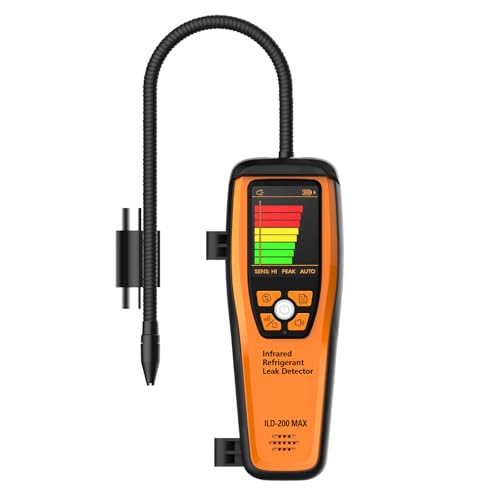
CPS LS790B Leak-Seeker Review: Non Combustible Is the Deciding Word
An ion pump refrigerant leak detector individually calibrated to find a leak rate better than a quarter of an ounce per year, with ten selectable sensitivity ranges, a water vapour filter and a bar graph plus tone display.
Read More→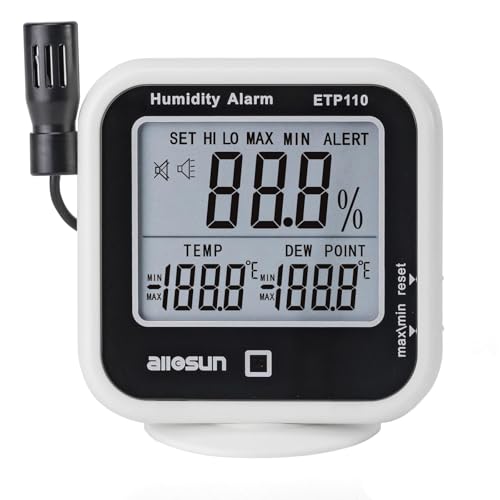
ALLOSUN Thermometer Hygrometer Review: Half a Metre of Lead and No Tolerance
A battery powered thermometer and hygrometer showing temperature, relative humidity and dew point, with a settable humidity alarm, a sensor on a lead of about 50 cm, maximum and minimum memory and a large LCD.
Read More→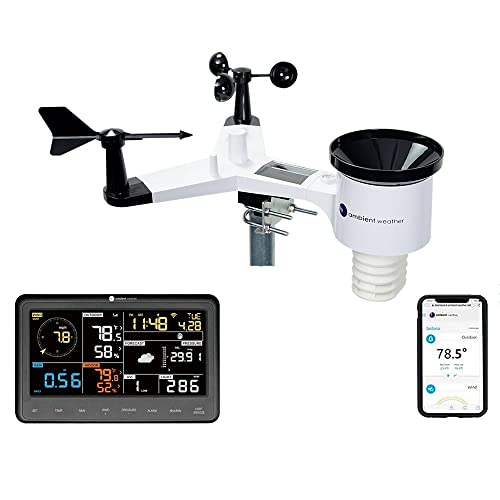
Ambient Weather WS-2902 Review: Six Quantities and a Feature Marked Coming Soon
A Wi-Fi connected home weather station made up of an Osprey sensor array with a rain cup and a colour LCD console, measuring wind speed and direction, temperature, humidity, rainfall, UV intensity and solar radiation.
Read More→