As an Amazon Associate, Akermin earns from qualifying purchases. Product links on this page are affiliate links.
For a flexible current probe that is included and named in the listing, P1 is the pick because its title states it ships with an iFlex probe and the bullets describe logging and wireless transmission of measurements. P2 is the alternative where the job is solar or high-voltage DC and the listing states CAT III 1500 V plus an iFlex probe in the title. P3 and P4 are in the batch but their listings describe rigid-jaw meters with no flexible probe stated, so they are useful as contrast rather than as flexible-probe tools. P5 is a leakage current clamp with a fixed jaw and no flexible probe stated.
What a flexible current probe actually does, and what it does not
A flexible current probe is a coil that wraps around a conductor. The meter measures the voltage the coil produces as the magnetic field around the conductor changes, and converts that into a current reading. Because the coil is thin and bendable, it can be threaded through a bundle of cables, around a busbar, or into a space where a rigid jaw will not open. That is the entire mechanical argument for the accessory, and it is the reason the topic exists separately from ordinary clamp meters.
The trade is accuracy and stability. A flexible coil is generally less accurate than a good iron-core jaw at low currents, and its reading can shift if the conductor is not centred in the loop or if nearby conductors contribute their own field. The listing for P1 states the meter logs and trends measurements and transmits them by Bluetooth, but it does not publish a probe accuracy figure. None of the other listings publish a flexible probe accuracy figure either. If a supplier does not state it, treat the probe as a convenience for reaching awkward conductors, not as a precision instrument.
Two of the listings in this batch are relevant to flexible probes: P1 and P2 both name iFlex in the title. P3, P4 and P5 do not mention a flexible probe at all. That distinction, not brand or feature count, is what decides whether a meter belongs on this page.
The comparison table: what the listings publish and what they do not
The table below uses only figures and features that appear in the supplied listing text. Where a listing is silent, the cell says so rather than guessing.
| Pick | Flexible probe | Jaw or probe size | Current range stated | Safety rating stated | Wireless or logging |
|---|---|---|---|---|---|
| P1 Fluke 376 FC | iFlex named in title | Not stated in the listing bullets | 1000 A AC/DC in title | Not stated in the listing bullets | Bluetooth and Fluke Connect stated |
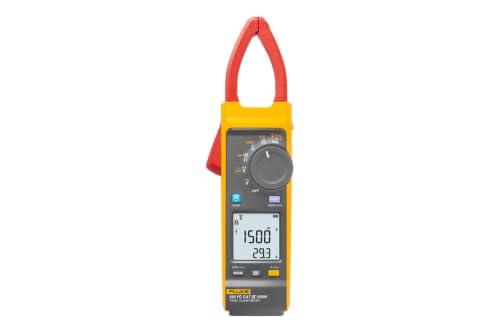
| P2 Fluke 393 FC | iFlex named in title | Thin jaw stated, no figure | Not stated in the listing bullets | CAT III 1500 V stated | Fluke Connect software enabled stated |
| P3 AstroAI CM2K0R | Not stated in the listing bullets | Not stated in the listing bullets | AC current only, range not stated | Not stated in the listing bullets | Not stated in the listing bullets |
| P4 Fluke 302+ | Not stated in the listing bullets | 30 mm jaw stated | 400 A AC stated | CAT IV 300 V / CAT III 600 V stated | Not stated in the listing bullets |
| P5 EITAI6540 | Not stated in the listing bullets | 40 mm stated | 0.00 mA to 300 A stated | Not stated in the listing bullets | Data storage of 99 groups stated |
The pattern is clear. Only P1 and P2 name a flexible probe. P4 publishes the most complete set of ordinary clamp figures, including a 30 mm jaw and a 1.8 percent accuracy claim, but no flexible probe. P5 publishes the finest resolution, 10 microamps, but again no flexible probe. If your job needs the probe, the shortlist is two meters, not five.
The flexible-probe picks and the near misses
Fluke 376 FC
The title states it includes an iFlex flexible current probe, and the bullets describe logging, trending, and Bluetooth transmission to a phone. That combination is the reason it sits at the top: the probe reaches conductors a rigid jaw cannot, and the wireless link keeps the user away from the arc flash zone while reading the result.
Fluke 393 FC Solar Clamp Meter
The title states it includes iFlex and the bullets describe a CAT III 1500 V rating, a thin jaw for crowded combiner boxes, and DC power measurement. For solar work the flexible probe matters because combiner box wiring is dense, and the high voltage rating is the safety number that governs whether the meter belongs on that circuit at all.
EITAI6540 Leakage Current Clamp Meter
This is a leakage current clamp with a stated 10 microamp resolution and a 0.00 mA to 300 A range. It is not a flexible-probe meter, but it belongs in the comparison because leakage work is one of the jobs where a flexible probe is sometimes assumed to help, and the listing shows a fixed 40 mm jaw instead.
AstroAI CM2K0R Digital Clamp Meter
A budget auto-ranging clamp meter with non-contact voltage detection and a stated limitation that it cannot measure DC current. No flexible probe is mentioned anywhere in the listing, so it is included to show what the low end of the category actually provides.
Where the flexible probe changes the job, and where it does not
The probe earns its place in three situations. First, dense wiring: a combiner box, a panel with short bending radii, or a bundle where a jaw cannot close. P2’s listing names this directly, describing a thin jaw for access to cables in crowded combiner boxes, and the iFlex probe extends that reach further. Second, high current in a large conductor: a flexible coil can be looped around a busbar that no handheld jaw will span. Third, separation from the live part: P1’s listing states the meter transmits results wirelessly so the user can capture measurements outside the arc flash zone. A flexible probe plus a wireless link means the person reading the number can stand further back.
Where it does not help is low-current work. Leakage current in the milliamp range needs a sensitive, stable sensor, and P5’s listing states 10 microamp resolution from a fixed 40 mm jaw. That is the tool for that job. A flexible coil is not the right sensor for resolving small leakage differences, and no listing here claims otherwise.
It also does not help with DC on every meter. P3’s listing states plainly that the meter cannot test DC current. A flexible probe does not add a function the meter does not have. If DC current is the measurement, the meter itself must support it, as P1’s title states with 1000 A AC/DC.
The specification the listings leave out, and why you should ask for it
Not one of these listings publishes the accuracy of the flexible probe itself. P4 publishes a 1.8 percent accuracy figure for its rigid jaw, and P5 publishes a resolution, but the iFlex probes on P1 and P2 have no stated accuracy in the supplied text. That is normal for a short retail listing, and it is the first thing to confirm with the supplier before relying on a flexible probe for a recorded measurement.
Three other gaps matter. Position sensitivity: how much the reading changes when the conductor is not centred in the loop. Temperature coefficient: how much the reading drifts as the probe warms or cools. And the minimum current the coil can resolve, which is usually far above what a fixed jaw can do. None of these appear in the listings. The honest position is that the probe is a reach accessory, and any precision claim should come from the manufacturer’s full specification sheet, not from a bullet list.
There is also a safety point that no listing states in full. A CAT rating applies to the complete measurement circuit, including the probe. P2’s listing states CAT III 1500 V for the meter. That rating is only meaningful if the flexible probe supplied with it carries the same rating. Ask before using it on a live high-voltage circuit.
How to choose between the two flexible-probe meters
P1 and P2 are both Fluke meters with iFlex, and the difference is the job, not the brand. P1’s listing frames it around logging, trending, and intermittent faults, with Bluetooth transmission to a phone. That suits a technician who needs a record over time and wants the reading away from the live part. P2’s listing frames it around solar: CAT III 1500 V, a thin jaw, IP54, DC power measurement, audio polarity, and visual continuity. That suits a solar installer working on strings and combiner boxes where the voltage rating is the first question.
If neither job matches, a flexible probe may not be the right purchase at all. P4’s listing gives a compact 30 mm jaw, 400 A AC, 1.8 percent accuracy, and a CAT IV 300 V / CAT III 600 V rating, with no probe. For ordinary panel and feeder work that is a simpler tool. P5 covers leakage current with a resolution no flexible coil here claims. The category is narrow on purpose: buy the probe when you cannot reach the conductor, not because it sounds more capable.
For background on how clamp measurement works in general, see how to measure current with a clamp meter. If the job is leakage rather than load current, the leakage current clamp meter comparison is the better starting point. And where the conductor is simply hard to reach, clamp meters covers the rigid-jaw alternatives.
Recommended Tools



Products shown because their documented specifications fit this guide. Price and availability are on Amazon and can change.
Frequently Asked Questions
Do I need a flexible current probe for ordinary panel work?
Usually not. A rigid jaw reaches most panel conductors, and the listings for P4 and P5 show fixed jaws with published accuracy and resolution figures. The flexible probe is for conductors a jaw cannot close around, or where you want to stand further from the live part. If the conductor fits in a 30 mm jaw, a rigid meter is simpler and its accuracy is stated.
Which of these listings actually includes a flexible probe?
P1 and P2 both name iFlex in the product title. P3, P4 and P5 do not mention a flexible probe anywhere in the supplied listing text. That is the whole answer from the data available; anything else would be an assumption.
Is a flexible probe as accurate as a rigid jaw?
The listings do not publish a probe accuracy figure for P1 or P2, so no comparison can be made from this data. P4 publishes 1.8 percent accuracy for its rigid jaw. In general a flexible coil is more position-sensitive and less precise at low currents than a good iron jaw, but treat that as domain background, not as a figure from these listings.
Can I use a flexible probe to measure DC current?
Only if the meter supports DC current. P1's title states 1000 A AC/DC, so DC is covered there. P3's listing states the meter cannot test DC current, and no flexible probe is listed for it. The probe does not add a function the meter lacks.
What safety rating should the flexible probe carry?
It should match the meter's rating for the circuit you are working on. P2's listing states CAT III 1500 V for the meter. None of the listings state a separate rating for the probe. Confirm with the supplier that the probe shares the meter's category and voltage rating before using it on a live circuit.
Are these meters suitable for confined space gas work or similar safety tasks?
No. These are electrical measurement tools. A clamp meter is not a gas detector and not an alarm. If the task requires gas detection or confined space entry monitoring, a clamp meter of any kind does not satisfy it.
Affiliate disclosure: Akermin earns a commission from qualifying Amazon purchases made through links on this page. Our editorial picks are based on documented specifications and owner feedback, not commissions.