Best Leakage Current Clamp Meters: Sensitive Picks for Finding Tiny Current Losses
A standard clamp meter starts at tenths of an amp; the currents that trip a GFCI or reveal failing insulation are thousandths of that. A leakage clamp resolves microamps and measures the net current of line and neutral together. These picks were compared on resolution, range, jaw size, filtering and connectivity from manufacturer listings.
As an Amazon Associate, Akermin earns from qualifying purchases. Product links on this page are affiliate links.
Our Top Picks
Leakage clamps were compared on stated resolution and range, jaw opening, true-RMS, filtering, AC or AC/DC capability, recording and app connectivity, and category rating, using manufacturer listings and owner feedback. We did not run laboratory tests and publish no measurements of our own.
Best Overall
Fluke 368 FC Wireless Leakage Current Clamp Meter
True-RMS leakage clamp with a 40 mm jaw and Fluke Connect.
True-RMS measurement for complex, non-sinusoidal leakage waveforms
40 mm large jaw design for bundled line-and-neutral conductors
Max, min and average readings plus hold
Wireless Fluke Connect model for trending on a phone or tablet
Figures are from each manufacturer's Amazon listing at the time of research. "Not stated" means the listing gives no value; the Fluke 368 FC listing in particular is brief, and its resolution and range should be confirmed on the datasheet. Only the KPS PF10 states a category rating on its listing.
How to Choose a Leakage Clamp Meter
Leakage clamps are chosen on four points that ordinary clamps ignore:
Resolution
GFCI devices trip at a few milliamps. A clamp that resolves 1 microamp shows the trend below that threshold; a standard clamp shows zero.
Filtering
Drives and switching supplies push high-frequency current into ground. A low-pass filter separates the fundamental leakage from the carrier noise.
Jaw and Conductors
Leakage is measured by clamping line and neutral together. The jaw must close around both, or around the whole cable: 40 mm for branch circuits, 61 mm for feeders.
AC, DC and Rating
AC-only clamps cover GFCI and insulation work. Irrigation and control loops need DC milliamps. Check the category rating before use on distribution equipment.
Clamp the line and neutral conductors together, not one at a time. The two currents cancel, and whatever remains is the net current that is returning by some other path, through insulation, a ground wire or a person. A standard clamp cannot resolve that residual; a leakage clamp reads it in milliamps or microamps.
Why does a GFCI trip with nothing plugged in?
Cumulative leakage from the wiring and connected equipment can approach the trip threshold, and a small additional fault, moisture in a box, or high-frequency current from a drive or LED driver pushes it over. A leakage clamp on the circuit shows how close to the threshold it already sits, which is the starting point for finding the source.
Do I need a low-pass filter on a leakage clamp?
If the circuit feeds drives, switching power supplies or LED drivers, yes. Those devices push high-frequency current to ground that inflates an unfiltered reading. The UNI-T UT251C+ and TEMPO CMA-360B state selectable filters; the Fluke 369 FC states a selectable filter function.
Can a leakage clamp measure DC leakage?
Most cannot; they are AC instruments. The TEMPO CMA-360B is the AC/DC clamp in this guide, which is why it suits two-wire irrigation decoders, landscape lighting and control loops. For AC-only work the UNI-T and Fluke models are the better-specified choices.
Is a leakage clamp a replacement for an insulation tester?
No. An insulation resistance tester applies a test voltage to a de-energized circuit and measures resistance directly. A leakage clamp measures the current actually flowing on a live circuit under normal voltage. They answer different questions, and a maintenance program uses both.
Reviews
Fluke 368 FC Wireless Leakage Current Clamp Meter Best Overall
The 368 FC is the smaller-jaw member of Fluke's leakage clamp pair and enough for most electricians. Fluke states true-RMS measurement, which matters because current through failing insulation and EMI filters is rarely a clean sine wave, and a 40 mm jaw that closes around a line-and-neutral pair or a small feeder cable. Max, min and average recording with hold shows whether a leakage value is steady or spiking while you are away.
The FC in the name is Fluke Connect: the meter is the wireless model, and the sibling 369 FC listing describes the app as enabling graphs for trending, which is how an intermittent GFCI trip is finally caught. It comes from the brand most plant electricians already carry.
The Amazon listing for this model is brief and does not state resolution, range or category rating; the 369 FC listing states 1 microamp and 60 A for that model, and we have not assumed the same here. Check the datasheet before buying it for a specification that matters. It is the premium-tier pick for a technician who wants Fluke support and trending.
The UT251C+ states the numbers the Fluke listing leaves out and adds analysis the Fluke does not claim. UNI-T specifies AC leakage from 1 microamp to 60 A on a 3000-count display, the working range for tracing a ground fault or checking insulation on a motor lead without disconnecting anything.
The filter sets it apart in this group. A steep low-pass filter measures the fundamental current under 60 Hz in noisy, high-frequency conditions, the environment of a panel fed by drives and switching supplies, where unfiltered readings are inflated by carrier frequencies. Frequency to 0.01 Hz resolution and harmonic measurement give a power-quality view of what is leaking. Min and max recording, a 40 mm jaw, a white backlit display and a flashlight round it out, and Bluetooth sends data to the Uni-Trend app for logging, graphs and reports.
It measures AC only, so DC control and irrigation circuits need the TEMPO below, and the listing does not state a category rating, so check it before use on distribution equipment. For most leakage work it is the best-specified meter here.
TEMPO CMA-360B True RMS Pro Milliamp Clamp Meter Best AC/DC mA
The CMA-360B is the AC/DC instrument in the group, and TEMPO aims it at electricians, irrigation technicians, controls engineers and HVAC technicians. That breadth comes from two things the AC clamps lack: DC milliamp measurement, which two-wire irrigation decoders, landscape lighting and 4 to 20 mA control loops need, and a stated 0.001 mA resolution across ranges from 6.000 mA to 60.00 A.
TEMPO states wideband response to 100 kHz with a selectable low-pass filter, so it can read the high-frequency leakage that trips a GFCI on a drive-fed load or filter it out. The listing names checking nuisance GFCI and RCD tripping and monitoring feedback signals in industrial control. Peak hold can be left on the circuit until a trip occurs, a simple event catcher. It also measures AC and DC voltage from 600.0 mV to 600.0 V, resistance to 600 kilohm and continuity below 45 ohm.
Jaw size, display count and category rating are not stated, and 60 A is a low maximum for a general clamp. For anyone who needs DC milliamps as well as AC leakage, it is the only pick that does both.
Short answer: the Fluke 368 FC is the pick for plant and commercial electricians who want a true-RMS leakage clamp with a 40 mm jaw, min/max/average recording and Fluke Connect trending from the brand they already carry. The UNI-T UT251C+ is the best-specified meter on the page for AC leakage: 1 microamp resolution, a steep low-pass filter, harmonics and Bluetooth logging at a mid-range tier. Irrigation technicians and anyone who needs DC milliamps should choose the TEMPO CMA-360B, the only AC/DC clamp here.
What a leakage clamp measures
Every circuit leaks a little. Insulation is not perfect, cable capacitance passes a small current to ground, and modern equipment with EMI filters and switching supplies pushes more. A ground-fault device trips when the difference between the current going out on line and coming back on neutral exceeds a few milliamps. A leakage clamp measures that difference directly: close the jaw around line and neutral together, the two currents cancel, and the residual is what is escaping. A general-purpose clamp, which starts at tenths of an amp, shows zero on that measurement. The basic technique for any clamp is in how to measure current with a clamp meter; the leakage version adds only the rule that both conductors go through the jaw.
Resolution and range
The number that defines this category is resolution. The UNI-T UT251C+ states 1 microamp on a 3000-count display, the TEMPO CMA-360B states 0.001 mA across ranges from 6.000 mA to 60.00 A, the KPS PF10 states 0.001 mA on 2 mA and 20 mA manual ranges, and the EITAI 6300 states 1 microamp from 0.001 mA to 60 A. The Fluke 369 FC states a 1 microamp minimum and a 60 A maximum. The Fluke 368 FC listing does not give a figure, and we have not borrowed the 369’s; check the datasheet. A 60 A top range is typical, because the same clamp is expected to read a normal load current after it has found the leak.
Filtering in a world of drives
Variable frequency drives, LED drivers and switch-mode supplies return high-frequency current to ground through their filters and through cable capacitance. That current is real, and it does trip ground-fault devices, but it also inflates a wideband leakage reading so the fundamental leakage from failing insulation is hidden. A low-pass filter separates the two. UNI-T states a steep filter that measures fundamental current under 60 Hz in noisy conditions; TEMPO states wideband response to 100 kHz with a selectable filter, so you can read the noise or exclude it; Fluke states a selectable filter on the 369 FC. Reading a circuit both ways tells you whether a nuisance trip is an insulation problem or a high-frequency one, and the answer decides whether you replace a motor lead or a GFCI type. Technicians who also need a filtered meter for the motor side of a drive should read the VFD multimeter guide.
Jaw size and where you clamp
Because line and neutral go through together, the jaw has to close around two conductors or the whole cable. Fluke offers a 40 mm jaw on the 368 FC and a 61 mm jaw on the 369 FC, and describes the larger one as for large cables; UNI-T states 40 mm on the UT251C+; EITAI states 30 mm on the 6300. TEMPO and KPS do not state a jaw opening. For branch circuits and appliance cords, 30 to 40 mm is enough; for feeders and multi-conductor cable in a distribution board, the 61 mm jaw is the reason the 369 FC exists. Jaw alignment matters more at microamp levels than at amps, and owners of every brand note that a clean, fully closed jaw is the first check when a reading drifts.
AC only, or AC and DC
Five of the six clamps here are AC instruments, which covers GFCI troubleshooting, insulation leakage on AC motors and cables, and the ground-current surveys that maintenance programs run. The TEMPO CMA-360B adds DC milliamps, and TEMPO names the applications: two-wire irrigation decoders, landscape lighting wiring and feedback signals in industrial control. It also measures AC and DC voltage from 600.0 mV to 600.0 V, resistance to 600 kilohm and continuity below 45 ohm, so an irrigation technician can carry one instrument. Its peak hold can be left monitoring until a trip occurs, which is a simple way to catch an intermittent fault without an app.
Recording, apps and the category rating
Intermittent leakage is the normal case, so recording matters. The Fluke pair state max, min and average with hold, and the FC models send readings to Fluke Connect for graphs and trending. The UT251C+ states min and max plus Bluetooth to the Uni-Trend app for logging, graphs and reports. The EITAI 6300 states peak capture, data hold and storage. On safety, only the KPS PF10 states a category rating on its listing, CAT III 600 V to EN 61010. The others do not state one, which does not mean they lack it, but it does mean the rating must be confirmed from the manual before the clamp goes on a feeder in a distribution board. Never use a meter above its CAT or voltage rating; what a CAT rating means explains the categories. For choosing a general-purpose clamp to sit alongside the leakage clamp, see how to choose a clamp meter and the Fluke 325 review; for logging supply-side problems over days rather than minutes, the power quality logger guide covers the next instrument up.
How We Research
Clamps were compared on manufacturer listings: stated resolution and range, jaw opening, true-RMS, AC or AC/DC capability, filtering, recording and hold functions, app connectivity and category rating. Owner feedback was reviewed for stability at microamp levels and jaw alignment sensitivity. We did not run laboratory tests and publish no measurements of our own. Amazon data supplies images, availability and links only.
A pocket sized non contact voltage tester whose tip glows red and beeper sounds when voltage is detected, with a continuous self test and a choice of audible or silent operation.
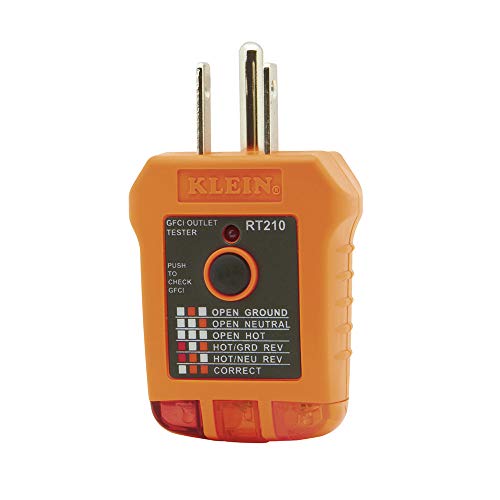
A three wire receptacle tester for standard and GFCI North American outlets, specified for 110 to 125 volts AC at 50 or 60 Hz, a 6.6 foot drop and an operating range of 32 to 140 degrees Fahrenheit.
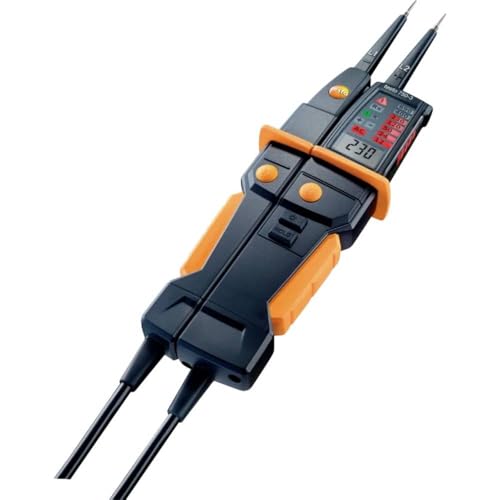
A two pole voltage tester with a three digit LCD showing measured voltage, a patented LED voltage bar viewable from any angle, polarity detection on DC and a GFCI test function for AC outlets.