Best Power Quality Loggers: Advanced Picks for Finding Intermittent Electrical Problems
A breaker that trips once a week, a drive that faults at 3 in the morning or a bill that does not match the load are problems a handheld meter cannot see, because nobody is there when they happen. A power quality logger sits on the panel and records. These picks were compared on what each listing states about channels, logged parameters, event capture and run time.
As an Amazon Associate, Akermin earns from qualifying purchases. Product links on this page are affiliate links.
Our Top Picks
Loggers differ mainly in what they record: basic voltage, current and power trends, or full power quality with harmonics, flicker and transient waveforms. Picks are based on manufacturer listings and recurring owner feedback; we did not run laboratory tests.
Best Overall
Fluke 1732/B Three-Phase Power and Energy Logger
Set it on the panel, power it from the circuit, read the data on your phone.
Automatically captures and logs voltage, current, power, power factor, energy and associated values
Fluke Connect compatible: view data on the instrument, the mobile app, desktop software or facility Wi-Fi
Powers directly from the measured circuit
600 V CAT IV / 1000 V CAT III safety rating for the service entrance and downstream
Figures are the manufacturers' listed specifications at the time of research. The Fluke 1738 listing states only that it is a three-phase 1 kV power logger; every other cell is left as Not stated rather than filled from other sources.
How to Choose a Power Quality Logger
Four questions separate a recorder from an analyzer:
Trend or Event?
Overload and energy questions need trends of V, I and power. A drive fault or flicker complaint needs waveform capture of sags, swells and transients.
Harmonics and Neutral
Non-linear loads heat neutrals and transformers. A fourth current channel and harmonics to the 50th order show it; a three-channel recorder cannot.
Power and Memory
A week-long study needs either circuit powering or a battery plus memory that covers the interval you choose.
Category Rating
A logger lives inside a panel. CAT IV 600 V or CAT III 1000 V is expected; a listing with no rating is a question for the seller before purchase.
What is the difference between a power logger and a power quality analyzer?
A logger records trends: voltage, current, power, power factor and energy at an interval you set. An analyzer adds harmonics, flicker and waveform capture of individual events such as sags and transients. The Fluke 1732/B and ETCR 8430 are loggers by that definition; the EITAI 5000-300F is an analyzer that also logs.
How long should a power quality study run?
Long enough to include the fault. A weekly nuisance trip needs at least seven days; a load study for a panel upgrade usually covers a full business cycle. Check that memory at your chosen interval and the power source both last that long; circuit-powered instruments avoid the battery limit.
Why does a logger need a fourth current channel?
The fourth channel clamps the neutral. On a three-phase system feeding computers, LED lighting and drives, third-harmonic currents add in the neutral instead of cancelling, and an overheated neutral is invisible unless it is measured directly.
Can I leave a logger inside a live panel?
That is how they are used, which is why the CAT rating matters more than on a handheld meter. Use an instrument rated for the location, route the leads so the cover can be closed, and follow the manufacturer instructions for fusing and connection. If the listing states no category rating, get confirmation before installing it.
Do I need software to read the results?
For anything beyond a glance at the screen, yes. The Fluke 1732/B uses Fluke Connect on a phone or desktop; the EITAI and ETCR units download over USB to their PC software. Reports against IEEE or IEC limits are a software function, not something the instrument prints on its own.
Reviews
Fluke 1732/B Three-Phase Power and Energy Logger Best Overall
The 1732/B is the logger for the most common job: leave it on a three-phase panel for a week and come back with a clean record of voltage, current, power, power factor and energy. Fluke states that it captures and logs these values automatically, which matters when the person setting it up is an electrician, not an engineer with an afternoon to configure triggers.
Two listed details decide a lot of purchases. The instrument can be powered directly from the circuit it is measuring, so there is no adapter to find and no battery to run down mid-study. And it is Fluke Connect compatible, so the data can be viewed on the instrument, in the mobile app, on desktop software or over the facility Wi-Fi without opening the panel again.
The listing does not state harmonic order, transient capture or memory depth, so buyers who need flicker and 50th-order harmonics should look at the EITAI below. For load studies, energy audits and intermittent overload complaints, this is the one most contractors will end up with.
Strengths
Logs V, I, power, PF and energy without manual setup
Powers from the measured circuit
Fluke Connect app, desktop and Wi-Fi access
CAT IV 600 V / CAT III 1000 V rating
Limitations
Harmonic order and transient capture not stated on the listing
Memory depth and logging interval not stated
Clamp set and jaw size not described in the listing
EITAI 5000-300F Power Quality Analyzer with 4 Flexible Clamps Best Analyzer Features
Where the Fluke logs trends, the EITAI 5000-300F is built to explain them. The listing specifies four voltage and four current channels, so the neutral is recorded too, plus harmonics to the 50th order, peak factors and short-term flicker. It captures surges, sags and interruptions as events and stores up to 150 waveforms, which is what shows a drive vendor what the supply did at the moment of the fault.
The manufacturer states 300 days of trend recording at 1-minute intervals on 20 parameters, 12,800 alarm entries for overvoltage, imbalance and harmonic overload, and a 100-second capture for motor starting current. Data goes out by USB to PC software for IEEE and IEC reports, and an SD card holds screenshots and waveforms. The four 300 mm flexible clamps cover 10 A to 6000 A AC, and the lithium battery is rated for 8 hours with charging while running.
Expect a menu-driven instrument with a learning curve, and a brand without the calibration and service network of Fluke. For a plant electrician chasing harmonic heating or a nuisance-trip on a big motor, the features are hard to match.
Strengths
Neutral current and voltage recorded on the fourth channel
Harmonics, flicker and transient waveform capture
Large 5.6-inch color display and 300-day trend memory
Flexible clamps reach large busbars
Limitations
Less established service and calibration support than Fluke
Menu depth takes time to learn
Accuracy stated as a single 1 percent figure without conditions
The ETCR 8430 is a recorder rather than an analyzer, and that is the right tool for a lot of intermittent problems. If the question is whether a circuit is overloaded at some point in the day, or whether the voltage drops when a compressor starts, a trend of voltage, current, frequency, power and power factor at a chosen interval answers it without waveform capture.
The listing specifies 0.01 V to 600 V and 1 mA to 400 A, active and apparent power to 240 kW, power factor from -1.000 to 1.000 and frequency from 45 to 65 Hz. Memory holds up to 200,000 groups of readings with the interval adjustable from 1 second to 99 minutes, and the built-in battery is rated for up to 48 hours, so a two-day study runs unattended. Results download over USB to the PC software.
It does not list harmonics, flicker, transients or a fourth channel, and the 600 V ceiling rules out the 1 kV work the Fluke 1738 is built for. The listing also states no safety category, which buyers should ask the seller to confirm before clipping it to a panel.
Short answer: the Fluke 1732/B is the logger most contractors should buy: it records voltage, current, power, power factor and energy on its own, powers itself from the circuit and hands the data to the Fluke Connect app. Choose the EITAI 5000-300F when the problem needs harmonics, flicker or a waveform of the exact moment a drive faulted, and the ETCR 8430 when a two-day trend of the basic values is enough.
Why a meter cannot find an intermittent problem
A clamp meter tells you what a circuit is doing right now. An intermittent fault, by definition, is not happening right now. The breaker that trips on Tuesday nights, the drive that faults when the chiller starts, the lighting that flickers when the elevator runs: each of these leaves no trace by the time someone with a meter arrives. A power quality logger is a meter that stays. It clamps onto the phases, connects to the voltages, and records at an interval you choose for as long as its memory and power source allow. When the fault happens, the record shows what the supply did in the seconds around it. If you have not used a clamp before, how to measure current with a clamp meter covers the basics that a logger builds on.
Logger or analyzer: two different instruments
The word logger covers two levels of instrument. A power logger records trends: RMS voltage and current, active and apparent power, power factor, frequency and accumulated energy. That is enough for load studies, panel-capacity questions and most overload complaints, and it is what the Fluke 1732/B and the ETCR 8430 do. A power quality analyzer adds the things that explain odd behavior: harmonic content by order, short-term flicker, voltage imbalance and, most importantly, waveform capture of individual events. The EITAI 5000-300F listing specifies harmonics to the 50th order, flicker, and storage for 150 captured waveforms of surges, sags and interruptions. If the complaint is that equipment misbehaves rather than that a circuit is overloaded, the analyzer is the right level.
Channels, neutrals and harmonics
Modern loads are mostly non-linear: drives, LED drivers, switch-mode power supplies. They draw current in pulses, and the third-harmonic component of those pulses adds in the neutral of a three-phase system instead of cancelling. A three-channel recorder cannot see it. A fourth current channel on the neutral, as the EITAI lists, shows a neutral running hotter than any phase, which is a common cause of unexplained transformer heating and tripped neutrals. Harmonic measurement by order tells you which loads are responsible, since drives and rectifiers produce a recognizable pattern. For the same reason, the low-pass filter discussed in our VFD troubleshooting multimeter guide exists: harmonic-rich waveforms confuse instruments that expect a clean sine wave.
Power source and memory decide the study length
A logger that runs out of battery on day three of a seven-day study has told you nothing. Fluke states that the 1732/B can be powered directly from the circuit it measures, which removes the problem entirely. The EITAI lists an 8-hour lithium battery with charging while running, so it needs an adapter for anything longer than a shift. The ETCR 8430 lists 48 hours on its built-in battery, which covers a weekend. Memory is the other half: the ETCR stores 200,000 groups of readings at intervals from 1 second to 99 minutes, and the EITAI records 20 parameters at 1-minute intervals for 300 days. Set the interval to match the fault. A once-a-week trip needs a fine interval and a long run; a load study can use 15-minute averages.
Safety inside the panel
A logger spends its life connected inside a live panel with the cover closed, often at the service entrance. That is a CAT IV environment, and the transient withstand of the instrument and its leads is the difference between a blown fuse and a flash. Fluke states 600 V CAT IV / 1000 V CAT III for the 1732/B; EITAI states the same categories under IEC 61010. The ETCR 8430 listing gives no category rating at all, which is not proof it lacks one, but it is a question to settle with the seller before use. Never connect any instrument above its rated voltage or category, use the fused leads supplied, and route leads so the panel cover closes without pinching them. CAT II, CAT III and CAT IV meter ratings explained covers what the categories mean in practice.
Getting the data out
The instrument screen is for confirming the setup. The analysis happens in software. Fluke Connect lets the 1732/B be read on a phone, on desktop software or over the facility Wi-Fi, which means the panel does not need to be opened again to check progress. The EITAI and ETCR units transfer by USB to their own PC applications; the EITAI also uses an SD card for screenshots and waveforms and states report generation against IEEE and IEC power quality standards. If the study is for a utility complaint or a warranty claim on a drive, that standards report is the document the other party will ask for. For the clamp meters that complement a logger on day-to-day work, see the leakage current clamp meter guide and how to choose a clamp meter.
How We Research
Products were compared on manufacturer listings: channel count, logged parameters, event and harmonic capability, memory and run time, safety category and software. Owner feedback was reviewed for recurring complaints about setup difficulty, clamp accuracy at low current and software stability. We did not run laboratory tests and publish no measurements of our own. Amazon data supplies images, availability and links only.
A pocket sized non contact voltage tester whose tip glows red and beeper sounds when voltage is detected, with a continuous self test and a choice of audible or silent operation.
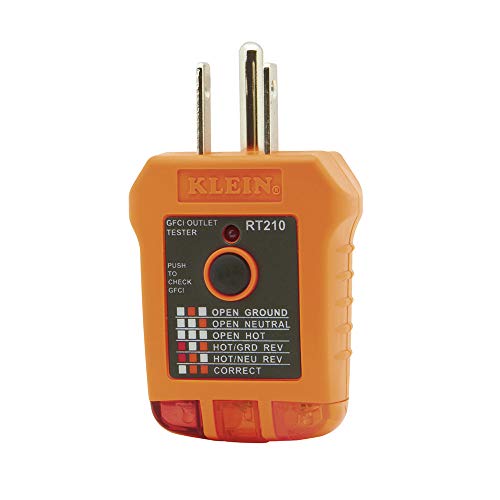
A three wire receptacle tester for standard and GFCI North American outlets, specified for 110 to 125 volts AC at 50 or 60 Hz, a 6.6 foot drop and an operating range of 32 to 140 degrees Fahrenheit.
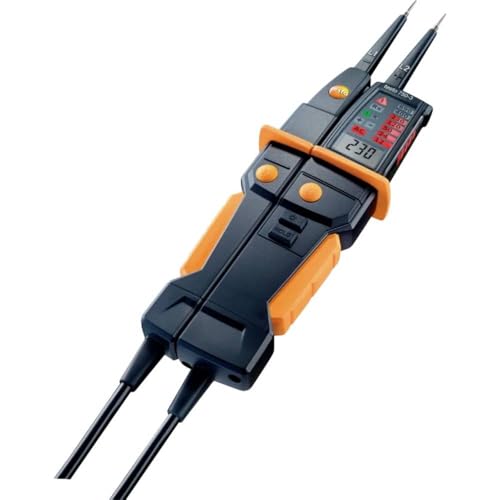
A two pole voltage tester with a three digit LCD showing measured voltage, a patented LED voltage bar viewable from any angle, polarity detection on DC and a GFCI test function for AC outlets.