Best Multimeters for VFD Troubleshooting: Reliable Picks for Variable-Speed Drives
The output of a variable frequency drive is not a sine wave; it is a train of high-frequency pulses, and an ordinary meter on the motor terminals reads garbage. A low-pass filter strips the carrier so the meter sees the fundamental. These picks all state that filter, and were compared on it plus capture speed, counts, category rating and ruggedness.
As an Amazon Associate, Akermin earns from qualifying purchases. Product links on this page are affiliate links.
Our Top Picks
Every pick states a low-pass filter for drive or VFD measurement on its listing. Meters were compared on that filter, peak capture, display counts, category rating, ingress and drop protection, and the extra functions a drive technician uses, from manufacturer listings and owner feedback. We did not run laboratory tests.
Best Overall
Fluke 87V Industrial Digital Multimeter
The drive technician's reference meter, with a Fluke-designed low-pass filter.
Fluke-designed low-pass filter for accurate frequency measurements on adjustable speed drives
Peak capture records intermittents as fast as 250 microseconds
Switchable high resolution from 6000 to 20,000 counts
CAT III 1000 V, CAT IV 600 V; measures to 1000 V AC and DC; includes TL75 leads, AC175 alligator clips and 80BK temperature probe
Filter and rating figures are from each manufacturer's Amazon listing at the time of research. The Fluke 177 is listed because it is often bought for plant work; its listing does not state a low-pass filter. The UT251C+ is a leakage clamp with a filter, included for technicians who also chase ground faults.
How to Choose a Multimeter for VFD Work
Four specifications separate a drive meter from a general one:
Low-Pass Filter
The output of a drive is PWM. Without a filter the meter reads the carrier, not the fundamental. Look for the words low-pass filter, VFD or adjustable speed drive.
Peak Capture and Counts
Intermittent trips are caught by fast peak capture; small drifts are seen with a high-count display. The 87V states 250 microseconds and 20,000 counts.
CAT III 1000 V
Motor control centers and drive cabinets are CAT III environments at up to 600 or 1000 V. Never use a meter above its CAT or voltage rating.
Clamp or Leads
A filtered clamp reads motor current and inrush without breaking the circuit. A handheld with leads gives voltage, resistance and capture. Many technicians carry both.
Why does my multimeter give a strange reading on the output of a VFD?
The drive output is a pulse-width-modulated waveform: a train of high-frequency pulses whose average follows a sine wave. A meter without a filter responds to the pulses and their edges, so voltage reads high and unstable and frequency reads the carrier or nothing useful. A low-pass filter removes the carrier so the meter sees the fundamental the motor responds to.
Is TRMS enough for VFD measurements?
No. True-RMS handles distorted waveforms at line frequency, such as those from dimmers and switching supplies, but it still integrates the PWM carrier on a drive output. You need a low-pass filter as well; the Fluke 87V, 87V MAX, Fieldpiece SC480 and UNI-T UT196 all state one.
Should I measure on the input or output side of the drive?
Both, for different reasons. The input side is ordinary line power and any TRMS meter reads it. The output side needs the filter. Comparing motor-side voltage and frequency with the drive display, and checking the three phases for balance, is the core of drive troubleshooting.
What does peak capture do for drive work?
It records the highest or lowest instantaneous value the meter sees, even if it lasts only microseconds. The Fluke 87V states 250 microsecond capture. That is how you find a transient on the DC bus or a supply dip that trips the drive intermittently and never shows on a normal reading.
Reviews
Fluke 87V Industrial Digital Multimeter Best Overall
The 87V is the meter this category is built around. Fluke states a low-pass filter designed for accurate frequency measurement on adjustable speed drives, which is Fluke's own term for the VFD output problem: strip the PWM carrier, read the fundamental the motor sees. With the filter on, voltage and frequency at the motor terminals become numbers you can compare with the drive's display.
Two further specifications make it a troubleshooting tool rather than a filtered voltmeter. Peak capture records intermittent events as short as 250 microseconds, which is how you catch a transient that trips a drive once an hour. The display switches from 6000 to 20,000 counts so small changes become visible. Fluke states CAT III 1000 V and CAT IV 600 V and a 1000 V AC and DC range; the kit includes TL75 leads, AC175 alligator clips and an 80BK temperature probe.
The listing does not state an ingress or drop rating; those are the reasons the 87V MAX exists. For a plant electrician who lives in motor control centers it is the one that earns its place.
Strengths
Filter designed for adjustable speed drives
250 microsecond peak capture for intermittents
20,000-count high-resolution mode
Temperature probe and alligator clips in the box
Limitations
Ingress and drop ratings not stated on the listing
Fluke 87V MAX True-RMS Digital Multimeter Best Rugged
The 87V MAX is the answer to the one thing the 87V listing does not state: what happens when it gets wet or dropped. Fluke rates it IP67, fully waterproof and dustproof, and states a 4 m drop, which the product title rounds to 13 feet. For a technician who services drives on rooftops or outdoor equipment, that is the difference between a meter and a warranty claim.
On function, Fluke states that it has all the functions of the 87V, so the adjustable-speed-drive filter, peak capture and high-resolution counts carry over, and the leads are upgraded to TL175. The category rating is the same CAT III 1000 V, CAT IV 600 V. The title adds an 800-hour battery capacity and a built-in thermometer.
The listing is short and does not repeat the 87V's individual figures, so we rely on Fluke's statement that all 87V functions are included. The sealed body is the only reason to pay the difference over the 87V. If the meter never leaves a dry plant floor, the standard 87V is the better value.
Strengths
IP67 sealing and a stated 4 m drop
Same CAT III 1000 V, CAT IV 600 V rating
Long stated battery capacity
Upgraded TL175 leads
Limitations
Listing does not restate individual 87V specifications
Fieldpiece SC480 Wireless Power Clamp Meter Best Value
The SC480 is a clamp meter rather than a handheld with leads, and for HVAC technicians working on variable-speed compressors and ECM blowers that is often the better shape. Fieldpiece states TRMS with low pass filter technology for precise readings on variable frequency drives and non-linear loads, which is the job the Fluke filter does, applied to a clamp.
The function list is broad for the tier: power in watts, voltage, current, capacitance, frequency and phase rotation, inrush current for motor starts, and three-phase testing using two leads. Readings stream to the Job Link app for documenting a startup. Fieldpiece includes a magnetic hanger, molex tips and a thermocouple input, and states a CAT III 1000 V, CAT IV 600 V rating.
The listing does not state jaw size, current range or display counts, and there is no peak capture, so it will not catch the transients the 87V records. For a technician who needs filtered readings on drive-fed equipment in clamp form, it is the value choice; the HVAC clamp meter guide compares it with unfiltered clamps.
Short answer: buy the Fluke 87V if you troubleshoot drives for a living: its low-pass filter is designed for adjustable speed drives, it captures 250 microsecond transients, and it switches to 20,000 counts to show small drifts. Buy the Fluke 87V MAX if the same meter has to survive rain, dust and a 4 m drop; Fluke states all 87V functions inside an IP67 body. Choose the Fieldpiece SC480 if you are an HVAC technician who wants a filtered clamp with inrush, power and phase rotation for less than either Fluke.
Why a drive output defeats an ordinary meter
A variable frequency drive rectifies the incoming line to a DC bus, then switches that bus on and off thousands of times a second to build a pulse train whose average follows a sine wave at the commanded frequency. The motor, being inductive, responds to the average. A multimeter does not. Its input sees the full-height pulses and their fast edges, so voltage reads high and wanders, and the frequency function locks onto the switching carrier or gives up. Even a true-RMS meter integrates the pulses honestly and gives a number that has nothing to do with what the motor is doing. The only fix in a handheld is a low-pass filter that removes the carrier and passes the fundamental, and that is the specification this page is built on. The basics of the instrument are in how to choose a digital multimeter.
The Fluke 87V and why it is the reference
Fluke describes the 87V’s filter as designed for accurate frequency measurements on adjustable speed drives, which is the company’s own name for the problem. With the filter engaged, motor-terminal voltage and frequency become comparable with the drive’s own display, and phase-to-phase readings can be checked for balance. The meter then adds two things a filtered voltmeter alone lacks: peak capture at 250 microseconds, which records the transient that trips a drive once a shift and never appears on a normal reading, and a switchable 20,000-count display that makes a slow drift visible. It is rated CAT III 1000 V and CAT IV 600 V and measures to 1000 V AC and DC. The kit includes the 80BK temperature probe and AC175 alligator clips, so a motor-winding temperature or a hands-free bus measurement needs nothing extra. Readers weighing it against the general-purpose 170 series will find the Fluke 179 review useful; the 179’s listing does not state a drive filter.
Sealed and drop-rated: the 87V MAX
The standard 87V listing does not state an ingress or drop rating. The 87V MAX exists to state them: IP67, which Fluke describes as fully waterproof and dustproof, and a proven 4 m drop. Fluke says it carries all the functions of the 87V, with upgraded TL175 leads, the same CAT III 1000 V and CAT IV 600 V rating, a built-in thermometer and up to 800 hours of battery capacity. Because the listing does not restate the individual 87V figures, we have not repeated them in its row beyond that statement. The choice between the two is about environment: on a dry plant floor the 87V is the better value; on a rooftop, in a pump house or on a service truck the MAX pays for itself the first time it is dropped.
A filtered clamp for HVAC: the Fieldpiece SC480
Variable-speed equipment is now standard in HVAC, from inverter compressors to ECM blowers and drive-fed pumps, and the technician often wants a clamp rather than leads. The SC480 states TRMS with low pass filter technology for readings on variable frequency drives and non-linear loads, and adds the functions an HVACR startup needs: inrush current, power in watts, phase rotation, capacitance, frequency and three-phase testing with two leads, with readings streamed to the Job Link app. It is rated CAT III 1000 V and CAT IV 600 V and ships with a magnetic hanger, molex tips and a thermocouple input. What it does not state is jaw size, maximum current or display counts, and it has no peak capture. Measuring technique for clamps is covered in how to measure current with a clamp meter.
The other meters in the table
The UNI-T UT196 states a low-pass filter and low impedance mode alongside a 1700 V DC range, CAT III 1000 V, CAT IV 600 V, IP65 and a 2 m drop; it is built for solar strings but the filter makes it usable on drives, and it appears in the 1500 V DC multimeter guide. The UNI-T UT251C+ is a leakage clamp with a steep low-pass filter for fundamental current under 60 Hz, 1 microamp resolution and harmonic analysis; it is not a voltage meter for the motor side, but a technician chasing ground faults on drive-fed motors will want it, and it is compared in the leakage clamp meter guide. The Fluke 177 is a fine 6000-count TRMS meter with an analog bar graph and auto hold, and its listing does not state a filter, so it is here as a caution rather than a recommendation.
Safety in the drive cabinet
A drive cabinet is a CAT III environment: distribution-level transients on feeders at 480 V, and a DC bus that sits well above line voltage and stays charged after power is removed. Every pick states CAT III 1000 V and CAT IV 600 V. Never use a meter above its CAT or voltage rating, use the fused current inputs only for what they are rated, and wait for the drive’s bus discharge time before touching terminals. CAT II, III and IV ratings explained covers what the categories mean. For finding overheated drive components and motor connections, a thermal imager complements the meter; see thermal cameras for electrical maintenance. For intermittent supply problems that a handheld cannot log over days, the power quality logger guide is the next step.
How We Research
Meters were compared on manufacturer listings: whether a low-pass filter for drive measurement is stated, peak capture, display counts, category rating, maximum voltage, ingress and drop ratings, additional functions and included accessories. Owner feedback was reviewed for filter usefulness on drive outputs and long-term reliability. We did not run laboratory tests and publish no measurements of our own. Amazon data supplies images, availability and links only.
A pocket sized non contact voltage tester whose tip glows red and beeper sounds when voltage is detected, with a continuous self test and a choice of audible or silent operation.
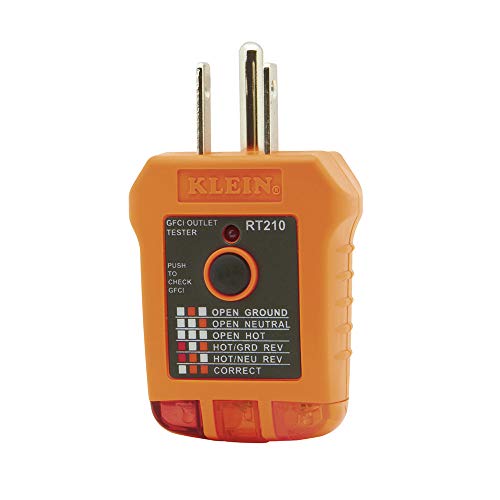
A three wire receptacle tester for standard and GFCI North American outlets, specified for 110 to 125 volts AC at 50 or 60 Hz, a 6.6 foot drop and an operating range of 32 to 140 degrees Fahrenheit.
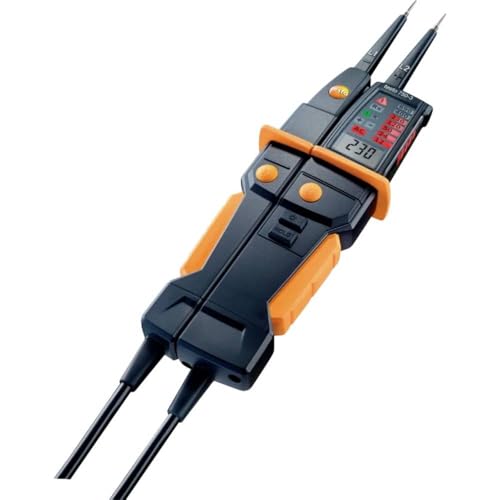
A two pole voltage tester with a three digit LCD showing measured voltage, a patented LED voltage bar viewable from any angle, polarity detection on DC and a GFCI test function for AC outlets.