As an Amazon Associate, Akermin earns from qualifying purchases. Product links on this page are affiliate links.
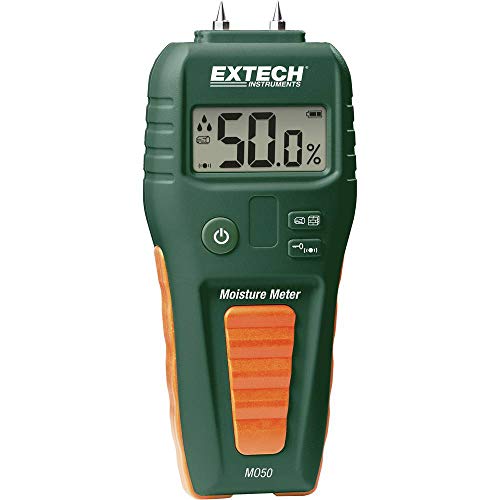
Extech · Extech MO50 Compact Pin Moisture Meter – Measures Moisture in Wood & Building Materials
View on AmazonPrice and availability are shown on Amazon and can change at any time.
Verdict
The Extech MO50A is the kind of meter that lives in a jacket pocket. It has two pins, a digital display with moisture droplet icons, a beeper that speeds up as moisture rises, and a cap with a self-test contact. The current Amazon listing is the MO50, the previous version of the same meter; the MO50A is the manufacturer’s updated designation and the documented ranges match. It is a good first moisture meter for a homeowner checking a leak, a landlord inspecting after a tenant reports damp, or a woodworker checking whether boards are dry enough to use. It is not the tool for finished surfaces where pin holes are unacceptable, and it does not scan; it reads one point at a time.
Who It Is For
- Homeowners and landlords who want a straightforward reading after a leak or a damp complaint.
- Woodworkers and firewood users who need moisture content in lumber.
- Inspectors who want a small pin meter to confirm what a pinless scan suggested.
Documented Specifications
| Item | Documentation |
|---|---|
| Measurement type | Pin (resistance) with replaceable stainless steel pins |
| Wood range | 5 to 50 percent moisture content |
| Building materials range | 1.5 to 33 percent (drywall, plaster, concrete) |
| Indicators | Digital display with droplet icons for low, medium and high; audible beeper |
| Self-test | Contact point built into the protective cap |
| Size and weight | 6.7 x 2.6 x 1.2 inches, 4.2 ounces (listing) |
| Power | 9V battery, included |
What the Pins Measure
A pin meter passes a small current between two pins and measures electrical resistance. Dry wood is a poor conductor; wet wood conducts well. The meter converts resistance into a moisture percentage using a curve for a typical softwood, and a second scale for building materials. Two things follow. First, the reading is only for the material between and just below the pin tips, so a surface-dry board with a wet core reads dry until the pins go deeper. Second, readings on materials other than wood are relative indications, which is why the building materials scale is often called a reference scale. Salts, dissolved from plaster or concrete, raise conductivity and can exaggerate the reading. For the practical implications see using a moisture meter on wood and using a moisture meter on drywall.
Indicators, Beeper and Self-Test
The droplet icons and the beeper are the features owners mention most. Sweeping along a skirting board while listening to the beep rate is a fast way to find where a leak has spread, and the icons give an immediate sense of severity without interpreting the number. The self-test cap deserves a mention because meters of this size rarely have one. Touching the pins to the contact should give the reference value in the manual; if it does not, the battery or the pins need attention before you trust a reading on someone’s ceiling.
Using It Well
- Push the pins fully in and hold them still; a wobbling contact reads low.
- On wood, read along the grain and take several readings across the piece.
- Compare a suspect area with a known dry area of the same material; the difference is more meaningful than the absolute number on drywall or plaster.
- Replace bent pins; the meter ships with spares.
Wood readings also depend on temperature: cold timber reads lower than warm timber at the same moisture content, so readings taken in an unheated garage in winter should be treated as slightly conservative. The manufacturer’s manual gives the reference conditions for the wood scale.
Strengths
- Small, light and simple, with no settings to get wrong.
- Documented ranges for wood and for building materials.
- Self-test contact on the cap.
- Replaceable pins and a standard 9V battery.
Limitations
- Leaves pin holes; unsuitable for finished floors and decorative surfaces.
- Single-point readings; no scanning.
- No species correction for wood, so hardwood readings are approximate.
How It Compares
The Extech MO55A adds a pinless sensor to a similar pin meter, which makes it a better single purchase for inspecting finished rooms. The MO265 is the more capable combination meter with a remote probe. The MO257 is pinless only. If your work is mostly lumber, the MO50A does the job at the lowest cost; if it is mostly walls and floors, look at a pinless or combination model.
How We Research
This review is based on the manufacturer’s published specifications, the Amazon product listing for the MO50 and owner reports. We did not run laboratory tests.
Recommended Tools


Products shown because their documented specifications fit this guide. Price and availability are on Amazon and can change.
Frequently Asked Questions
Is the MO50A the same as the MO50 on Amazon?
The current Amazon listing is the MO50. The MO50A is the manufacturer's updated version of the same compact pin meter; the measurement ranges and the self-test cap are shared. Check the model number on the listing you buy.
What ranges does it read?
The listing states 5 to 50 percent moisture in wood and 1.5 to 33 percent in building materials such as drywall, plaster and concrete.
Does it leave holes?
Yes. Pin meters push two stainless steel pins into the material. The holes are small but visible on finished surfaces, which is why pinless meters exist.
How do I know it is reading correctly?
The protective cap has a built-in self-test contact. Touching the pins to it should produce the reference reading described in the manual, which also confirms the battery is healthy.
Affiliate disclosure: Akermin earns a commission from qualifying Amazon purchases made through links on this page. Our editorial picks are based on documented specifications and owner feedback, not commissions.