As an Amazon Associate, Akermin earns from qualifying purchases. Product links on this page are affiliate links.
Choose a temperature and humidity logger by matching six specifications to the job: accuracy (±0.5 °C and ±3 percent RH for general use, tighter for regulated storage), interval and memory (enough for the study length at the interval the quantity needs), battery life (longer than the deployment), connectivity (USB for periodic download, Bluetooth or Wi-Fi for live alerts), export (PDF for records, CSV for analysis) and alarms. Add an external probe for fridges and cavities, an IP rating for outdoors, and a calibration certificate for compliance.
Specification by use
| Use | Accuracy | Interval | Connectivity | Extras |
|---|---|---|---|---|
| Fridge, freezer, vaccine storage | ±0.5 °C or better; certificate | 1 to 5 min | USB with PDF, or Wi-Fi with alerts | External probe in a glycol bottle; alarm |
| Shipment (cold chain) | ±0.5 °C | 5 to 10 min | Single-use or reusable USB | PDF report on arrival |
| Damp and condensation survey | ±0.3 °C, ±2% RH; dew point | 5 to 10 min | USB or Bluetooth | Two units: room and cold surface |
| Storage room, archive, museum | ±0.3 °C, ±2% RH | 15 min | Wi-Fi with dashboard | Long memory; alarms |
| Greenhouse, animal housing | ±0.5 °C, ±3% RH | 5 to 15 min | Wireless | IP65; wide range |
| Server room | ±0.5 °C | 1 to 5 min | Wi-Fi or Ethernet | Alerts; multiple sensors |
| Home comfort and sleep | ±0.5 °C, ±3% RH | 10 min | Bluetooth | Display; dew point |
Accuracy and range
Check the accuracy at the temperatures you will log; many loggers are ±0.5 °C at room temperature and ±1 °C or worse below 0 °C. Humidity accuracy is usually stated for 20 to 80 percent RH and loosens outside it. For compliance, a traceable calibration certificate with the specific unit’s serial number; see how to read a calibration certificate.
Interval and memory
Memory in readings divided by readings per day gives days of recording. A 32,000-reading logger at 10-minute intervals lasts 222 days per channel. Some loggers stop when full; others overwrite the oldest; know which. See how often sensors should record data.
Connectivity
- USB: plug in to download; often auto-generates a PDF. Cheapest, most reliable, no live view.
- Bluetooth: download from a phone in range; live readings when nearby.
- Wi-Fi / cloud: continuous upload, dashboards, email and app alerts; needs power or frequent charging.
- LoRa / cellular: remote and outdoor sites.
Probes and housings
External probes place the sensor where the logger cannot go: inside a fridge with the logger outside, in a wall cavity, in a soil bed. A glycol-bottle probe damps short door-opening spikes for fridge monitoring. IP65 or better for outdoors and washdown; check the operating range of the logger body, which is often narrower than the probe’s.
Alarms and records
High and low thresholds with an LED, a buzzer or a notification; a log of excursions with time and duration. For regulated storage, tamper-evident records and audit trails are required by some standards.
Recommended starting points
- USB single-use and reusable loggers (Elitech RC-51H, Frigga M2H) for shipments and fridges.
- HOBO MX series for building surveys and research.
- Bluetooth display units (Govee, SwitchBot) for home rooms.
The general principles are in what an environmental data logger is; for the humidity side, see how to choose a humidity meter. Loggers are in the environmental monitoring category.
Recommended Tools


Products shown because their documented specifications fit this guide. Price and availability are on Amazon and can change.
Frequently Asked Questions
What accuracy do I need in a temperature and humidity logger?
±0.5 °C and ±3 percent RH for general building and storage use; ±0.3 °C and ±2 percent RH for pharmaceuticals, museums and instruments; a calibration certificate where compliance is involved.
How long can a USB temperature logger run?
Commonly one to three years on a coin or AA cell at 10 to 15 minute intervals, storing 16,000 to 100,000 readings. Wireless loggers run months.
USB or wireless?
USB loggers are cheap, reliable and generate a PDF on plug-in; ideal for shipments and periodic checks. Wireless loggers give live readings and alerts; needed when a problem must be caught as it happens.
Affiliate disclosure: Akermin earns a commission from qualifying Amazon purchases made through links on this page. Our editorial picks are based on documented specifications and owner feedback, not commissions.
Related Guides

CPS LS790B Leak-Seeker Review: Non Combustible Is the Deciding Word
An ion pump refrigerant leak detector individually calibrated to find a leak rate better than a quarter of an ounce per year, with ten selectable sensitivity ranges, a water vapour filter and a bar graph plus tone display.
Read More→
BW Clip BWC2-H Review: Alarm Points Set Before the Clock Starts
A single gas hydrogen sulfide detector with one button operation, hibernation mode, automatic logging of the 35 most recent gas events and bump test results, and compatibility with IntelliDoX and MicroDock II docking.
Read More→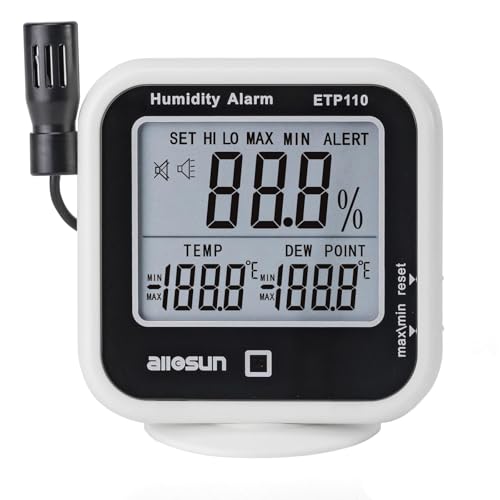
ALLOSUN Thermometer Hygrometer Review: Half a Metre of Lead and No Tolerance
A battery powered thermometer and hygrometer showing temperature, relative humidity and dew point, with a settable humidity alarm, a sensor on a lead of about 50 cm, maximum and minimum memory and a large LCD.
Read More→