As an Amazon Associate, Akermin earns from qualifying purchases. Product links on this page are affiliate links.
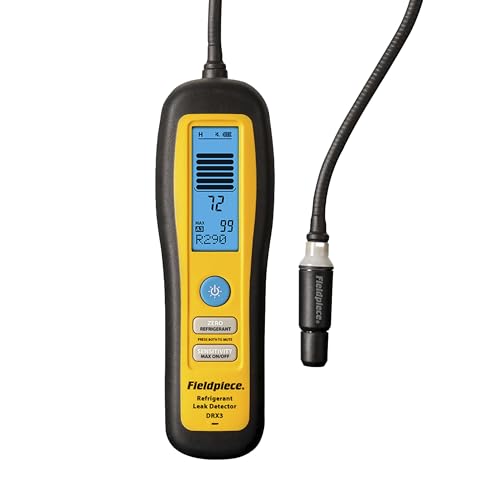
For most HVAC and refrigeration technicians chasing a leak with a hydrogen and nitrogen tracer charge, the Fieldpiece DRX3 Refrigerant and Combustible Gas is the pick because its listing names H2/N2 (Tracer Gas) explicitly and pairs that with a heated diode sensor, adjustable sensitivity, and a field-replaceable sensor. The ATO Portable Hydrogen (H2) Gas Detector is the alternative when you want a dedicated hydrogen instrument with a pumped sample path and a numeric ppm display, but note that its listing does not mention nitrogen or tracer gas at all, so it is a hydrogen detector rather than a packaged tracer gas solution. The Testo Gas Leak and the HAOKESITE 0100ppm do not publish enough about hydrogen detection to be placed in this category, and the EZTOCH Pool Chlorine is a water tester that happens to measure dissolved hydrogen, which is a completely different measurement.
Why a hydrogen tracer charge changes the detector you need
A hydrogen and nitrogen tracer gas leak test works by charging a system with a small percentage of hydrogen carried in nitrogen, then sniffing the outside of the circuit with an instrument that responds to hydrogen. Hydrogen is the lightest gas there is, so it escapes through a leak faster than the refrigerant or the nitrogen around it, and it does not linger. That is the whole point: the tracer reaches the probe quickly and the signal clears quickly, so you can move along a joint and watch the reading rise and fall.
That behaviour sets the instrument requirements. You need a sensor that responds to hydrogen specifically, a sample path that gets the gas to the sensor without a long lag, and a zero or baseline function you can trust between sniffs. A detector built only for halogenated refrigerants will not do this job, because its sensor chemistry is tuned to a different family of molecules. The listing wording matters here: a tool that says it detects H2/N2 tracer gas has been set up for this work, and a tool that only lists refrigerants has not.
If you are new to the technique, the mechanics of tracer gas work are covered in tracer gas leak detection explained, and the broader question of whether a sniffer is worth owning at all is covered in are gas leak detectors worth it.
What the listings publish, and what they leave out
The table below is built only from the supplied listing text. Where a listing is silent, the cell says Not stated rather than guessing.
| Pick | Sensor type | Hydrogen or H2/N2 stated | Range or sensitivity | Sampling | Alarm |
|---|---|---|---|---|---|
| Fieldpiece DRX3 Refrigerant and Combustible Gas | Heated diode, field-replaceable | Yes, H2/N2 tracer gas | High, medium and low sensitivity settings; no numeric range published | Not stated | Visual and audio indicators that change with leak intensity |
| Testo Gas Leak | Not stated | Not stated | Not stated | Not stated | Not stated |
| ATO Portable Hydrogen (H2) Gas Detector | Electrochemical | Hydrogen stated; nitrogen not mentioned | 0 to 500, 0 to 1000 or 0 to 2000 ppm depending on configuration; title also mentions 0 to 40000 ppm | Built-in pump, up to 10 suction levels, up to 750 ml/min | Audible, visual and vibration, two-stage adjustable |
| HAOKESITE 0100ppm | Not stated beyond high-sensitivity sensor | No; detects hydrogen sulfide | 0 to 100 ppm H2S | Not stated | Buzzer and red indicator light |
| EZTOCH Pool Chlorine | Not stated | Dissolved hydrogen in water, not gas | Not stated | Not stated | Not stated |
Two things stand out. First, the Fieldpiece DRX3 Refrigerant and Combustible Gas is the only pick whose listing names the tracer gas mixture. Second, the ATO Portable Hydrogen (H2) Gas Detector publishes a numeric range, which is unusual for a leak sniffer and useful if you want to record a concentration rather than just hear a beep. But the ATO Portable Hydrogen (H2) Gas Detector’s listing never mentions nitrogen or tracer gas, so it is a hydrogen detector, not a packaged H2/N2 tool.
The picks for hydrogen and H2/N2 tracer gas work
Fieldpiece DRX3 Refrigerant and Combustible Gas Leak Detector
The only listing here that names H2/N2 tracer gas by name and backs it with a heated diode sensor, adjustable sensitivity, and a field-replaceable sensor.
ATO Portable Hydrogen (H2) Gas Detector
A dedicated hydrogen instrument with a pumped sample path and a numeric ppm display, useful where you want a concentration reading rather than a sniff-and-hunt tool.
The heated diode and the electrochemical cell are doing different jobs
A heated diode sensor in a tool like the Fieldpiece DRX3 Refrigerant and Combustible Gas works by heating a ceramic element and measuring how the electrical behaviour changes when a gas molecule touches it. It is fast, it recovers quickly, and it is well suited to the hunt-and-move rhythm of tracer gas work. The listing says the sensor is field-replaceable, which matters because these sensors degrade with use and a detector with a sealed sensor becomes a disposable tool.
An electrochemical cell, which is what the ATO Portable Hydrogen (H2) Gas Detector’s listing describes, generates a small current when hydrogen reaches the cell. It is the standard technology for a personal gas detector that gives you a number in ppm. It is slower to respond than a heated diode in a sniffing role, which is why the ATO Portable Hydrogen (H2) Gas Detector’s listing includes a pump: pulling the sample to the cell shortens the delay. If your goal is to walk a pipe rack and find the leak, the heated diode’s speed is an advantage. If your goal is to stand at a flange and read a concentration, the electrochemical cell’s number is the advantage.
The broader sensor comparison for refrigerant work is covered in how do gas leak detectors work.
The picks in detail, and the two that do not belong
The Fieldpiece DRX3 Refrigerant and Combustible Gas, Fieldpiece DRX3. The listing states detection of A3, A2L and A1 refrigerants plus combustible gases, and explicitly includes H2/N2 tracer gas. It publishes high, medium and low sensitivity settings, auto and manual zero modes, and visual and audio feedback that changes with leak intensity. The sensor and the batteries are both field-replaceable. What the listing does not publish is a numeric detection range in ppm or a minimum detectable leak rate, so you cannot compare its sensitivity to a dedicated hydrogen instrument on paper. That is a real gap, but for tracer gas sniffing the practical test is whether the tool finds the leak, and the listing’s sensitivity settings and zero modes are the features that support that.
The ATO Portable Hydrogen (H2) Gas Detector, ATO Portable Hydrogen Detector. This is a pumped electrochemical hydrogen detector with a dot-matrix LCD showing gas type, concentration, unit and local time. The listing offers 0 to 500, 0 to 1000 or 0 to 2000 ppm configurations, and the title also mentions a 0 to 40000 ppm option, which is a very wide spread and worth confirming with the seller before purchase. The pump runs at up to 750 ml/min with ten suction levels. The alarm is audible, visual and vibration with two adjustable stages. It does not publish an accuracy figure, a response time, or any mention of nitrogen, so treat it as a hydrogen detector rather than a tracer gas kit.
Why the Testo Gas Leak, the HAOKESITE 0100ppm and the EZTOCH Pool Chlorine are not picks. the Testo Gas Leak’s listing is a title and nothing else: no sensor type, no gas list, no range. You cannot responsibly compare it. The HAOKESITE 0100ppm detects hydrogen sulfide, which is a different gas with different hazards; it is a confined space and wastewater instrument, not a hydrogen tracer tool. The EZTOCH Pool Chlorine measures dissolved hydrogen in water along with pH, chlorine, ORP and other pool parameters. It is a water tester. None of these three belongs in a hydrogen or H2/N2 leak detection comparison.
Where hydrogen tracer detection stops being the right answer
Hydrogen tracer gas is a leak location method. It tells you where a leak is. It does not tell you whether a space is safe to enter, and it does not replace a fixed or personal gas monitor for hydrogen service. If you are working on a hydrogen system where the hazard is accumulation in a confined space, you need a detector that is on and alarming continuously, not one you switch on to chase a bubble. The listings here do not publish certification for hazardous area use, so none of them should be assumed suitable for a classified location.
It is also worth saying that a tracer gas test is not a pressure test. Finding no signal with a sniffer does not prove the system is leak-free, because the instrument has a detection floor and the tracer has to reach the probe. For a definitive answer on a small system, a standing pressure test or a nitrogen pressure hold remains the reference method. The sniffer is for finding, not for certifying.
If your work is refrigerant rather than hydrogen, the selection logic is different and is covered in how to choose a refrigerant leak detector.
Recommended Tools

Products shown because their documented specifications fit this guide. Price and availability are on Amazon and can change.
Frequently Asked Questions
Can I use a refrigerant leak detector for hydrogen and nitrogen tracer gas?
Only if the listing says so. The Fieldpiece DRX3 Refrigerant and Combustible Gas's listing names H2/N2 tracer gas explicitly alongside its refrigerant capability, so it is set up for both. A detector whose listing only mentions halogenated refrigerants has a sensor tuned to a different chemistry and should not be assumed to respond to hydrogen.
Does the ATO hydrogen detector work as a tracer gas tool?
Its listing says it detects hydrogen, and it has a pump and a ppm display, so it can respond to hydrogen in a sample. But the listing never mentions nitrogen or tracer gas, and it publishes no accuracy or response time. Treat it as a hydrogen detector that may be useful for tracer work rather than a purpose-built tracer gas instrument.
Why is the Testo 0632 0336 not compared here?
Because the supplied listing is a title only. It publishes no sensor type, no gas list, no range and no alarm description, so there is nothing to compare against the other picks. That is a gap in the listing, not a judgement about the instrument.
Is a hydrogen gas detector the same as a combustible gas detector?
Hydrogen is combustible, so a combustible gas detector may respond to it, but the calibration and the alarm thresholds are set for a specific gas or gas group. A detector listed for combustible gases generally and a detector listed for hydrogen specifically are not interchangeable for a documented hydrogen measurement.
What does the pump on the ATO detector actually change?
It pulls the sample to the sensor instead of waiting for the gas to diffuse in. The listing states up to ten suction levels and a flow rate up to 750 ml/min. In practice that shortens the lag between putting the probe at a joint and seeing a reading, which matters in hard-to-reach areas.
Can the pool tester be used to check for a hydrogen leak?
No. The EZTOCH Pool Chlorine measures dissolved hydrogen in water along with pH, chlorine, ORP, EC, TDS and temperature. It is a water quality instrument. It has no gas sampling path and no gas alarm, so it cannot detect a hydrogen leak in a gas system.
Affiliate disclosure: Akermin earns a commission from qualifying Amazon purchases made through links on this page. Our editorial picks are based on documented specifications and owner feedback, not commissions.