If gas is piped into your home and people sleep in it, a gas leak detector is worth having. The argument is not that leaks are common; it is that the one thing you rely on to catch them, the rotten-egg odorant, fails in predictable situations: you are asleep, you are out, your nose is blocked, the leak is in a closed room you seldom enter, or the odorant has faded. A fixed alarm covers exactly those gaps for a modest outlay and a replacement every several years. A handheld sniffer is worth it for anyone who ever connects, moves or services a gas appliance. The rest of this article lays out the honest case, including the downsides, so the decision is yours rather than a slogan’s.
What You Are Actually Buying
It helps to be precise about what each device prevents, because the two are different purchases.
- A fixed alarm buys continuous attention in one room. It sounds when the gas concentration at its sensor crosses the setpoint, typically a fraction of the explosive limit, whether or not anyone is awake or home. It does not find small leaks, does not shut the gas off and does not cover the next room.
- A handheld sniffer buys a way to find leaks, including ones far too small to ever trip an alarm, at the fitting that is responsible. It is switched on for a few minutes and then put away. It protects nobody while it sits in a drawer.
- A combination CO and gas alarm such as the Kidde COPDLG buys both a gas sensor and an electrochemical CO cell in one plug-in unit, covering the two distinct hazards of a gas appliance in one outlet.
The comparison between the first two is developed in handheld versus fixed gas detector; the point here is that “is it worth it” has a different answer for each.
The Case For
Smell is a good leak detector with five known blind spots, and each one is a night or a day when the alarm is the only thing paying attention. Sleep is the big one; odor does not reliably wake people. Absence is the second; a leak that starts while the house is empty has all day to accumulate. Congestion, smoking, age and some medications dull smell without the person noticing. A closed furnace closet or basement can hold gas that never reaches the living areas at a concentration anyone would notice. And propane in particular can lose part of its odorant in certain tanks and when it migrates through soil. None of those is exotic. The full list of who benefits most is in do you need a natural gas detector; the short version is that renters, households with older appliances, people with reduced smell and anyone with a gas appliance in a rarely visited room get the most value.
The Case Against, Taken Seriously
| Objection | How real it is | What reduces it |
|---|---|---|
| Nuisance alarms from cooking, cleaning products, hairspray | Real, especially for semiconductor sensors in kitchens | Correct placement away from the stove and from where aerosols are used |
| The sensor wears out and the unit must be replaced | Real; every gas sensor has a stated life | Write the date on the unit; treat it like a smoke alarm |
| It gives false confidence | Real if people stop reacting to smell because “the alarm would have gone off” | Remember it only sees gas that reaches it; a smell still means leave |
| It does nothing about the leak | True; no consumer alarm shuts off the gas | Not a reason to skip it; the warning is the point |
| One more thing plugged in and chirping | Minor; plug-in units with AA backup avoid most battery chirps | Choose a listed unit with a clear display and mute for ventilation |
The replacement cycle is the objection people underrate. A detector bought and forgotten will one day be an eight-year-old detector with a tired sensor; when to replace a gas detector sets out how to know. Budget for that from the start and the objection disappears.
Worth It, by Situation
- Gas-heated house with a gas range: a fixed alarm in the kitchen and one in the mechanical room, CO alarms per level, one sniffer. Worth it without much debate.
- Apartment with a gas range only: one plug-in combination alarm and, optionally, a pocket sniffer. Renters often benefit most because they did not choose or install the appliance; the specifics are in gas leak detectors for an apartment.
- RV or camper: the low-mounted 12-volt propane alarm is standard equipment for good reason, and a sniffer earns its place at every setup.
- Vacation property or rental that sits empty: a fixed alarm is arguably more valuable here than in a full-time home, because no nose is present at all.
- All-electric home: not worth it indoors. A sniffer for an outdoor grill is the only sensible purchase, and a CO alarm may still be if there is an attached garage.
How the count scales with rooms is worked out in how many gas detectors you need.
If the Answer Is Yes
Look for a fixed alarm with a stated alarm threshold, a UL 1484 listing for the gas sensor and UL 2034 for the CO half if it has one, a backup battery and a display that tells you which hazard it is reporting. For the sniffer, a pocket unit such as the TopTes PT199 handles most household checks, and a model with a percent LEL readout such as the PT210S adds a number you can act on. Current picks are in the natural gas detector roundup and the broader gas leak detector guide.
One thing to be clear about before spending anything: the detector is an addition to the leak procedure, not a substitute for it. A rotten-egg smell or a sounding alarm still means everyone out, hands off every switch on the way, and a call to the gas utility or 911 from outside. If you would not do that, no detector is worth buying; if you would, the detector makes it far more likely you get the chance.
Recommended Tools

Natural-Gas-Detector with Plug-in Design, Gas-Leak-Detector with High Accuracy Sensor, Portable
View on Amazon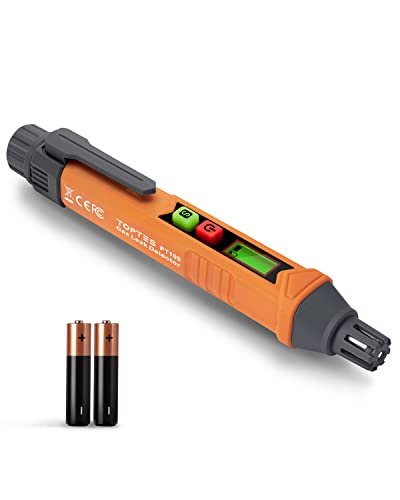

Products shown because their documented specifications fit this guide. Price and availability are on Amazon and can change.
Frequently Asked Questions
Is a handheld sniffer worth it if I already have a fixed alarm?
For most households, yes, if anyone ever connects an appliance, moves a range or dryer, or checks a grill or RV each season. The fixed alarm tells you gas has reached it; the sniffer tells you which fitting is responsible and finds leaks too small to ever trigger the alarm. If nobody in the house does any of those tasks, the alarm alone is defensible.
Are the small plug-in ppm monitors worth it?
They add a live number that a simple alarm lacks, which some people find reassuring and others find distracting. Check that the listing states an alarm threshold and a standard listing such as UL 1484; several give a ppm display and temperature and humidity readouts but no certification claim. Treat them as a monitor, and pair them with a listed alarm if you want one.
My home is all electric but I have a gas grill and a fire pit. Worth it?
A fixed indoor alarm is not, since no gas is piped inside. A pocket sniffer is a reasonable purchase for checking the grill regulator, hose and cylinder valve at the start of each season, and for any propane cylinder stored in a garage.
Will a gas detector reduce my home insurance?
Some insurers offer discounts for protective devices, and a gas or CO alarm may qualify; many do not distinguish it from smoke alarms. Ask your insurer. Do not buy on that basis; the safety case stands without it.
Affiliate disclosure: Akermin earns a commission from qualifying Amazon purchases made through links on this page. Our editorial picks are based on documented specifications and owner feedback, not commissions.
Related Guides

Orabal 4-in-1 Plug-In Gas Detector Review: Live ppm Without a Listing
Plug-in combustible gas monitor with a color screen showing live ppm, temperature and humidity and an alarm of 85 dB or more. No UL listing or threshold stated.
Read More→
Kidde COPDLG Review: Plug-In Explosive Gas and CO Alarm With AA Backup
Plug-in CO and explosive gas alarm with two AA backup cells, a display that shows CO ppm or GAS, low-level CO alerts at 30 to 70 ppm, 85 dB, 7-year warranty.
Read More→
Safe-T-Alert 25-742 Review: Dual Propane and CO Alarm for RVs
Compact flush-mount 12-volt RV alarm for propane and CO, 108 mA draw, mute with rapid recovery, UL 2034 RV and UL 1484 RV. Replaces Atwood 31013 and 31014.
Read More→