As an Amazon Associate, Akermin earns from qualifying purchases. Product links on this page are affiliate links.
Yes, but for a different reason than most buyers expect. The displayed percentage is not precise enough to settle a close call, because a typical consumer sensor is specified to plus or minus 3 percent relative humidity, which at room temperature is a band about 1.4 kelvin wide in dew point. What makes the instrument worth having is the record. Damp, mould and timber movement are driven by conditions that occur while everyone is asleep, and a sensor that logs will tell you that a bedroom sits at 72 percent every night before dawn. That is a fact you can act on. A glance at a dial in the afternoon is not.
What the number is good for and what it is not
Relative humidity is a ratio, not an amount. It expresses how much water vapour the air holds as a fraction of the most it could hold at that temperature, which means the same air gives a different percentage in a warm room and a cold one. Cool a parcel of air without adding or removing moisture and the percentage climbs purely because the denominator shrinks. That is why a reading taken a hand span from a cold outside wall is higher than one taken in the middle of the room, and why comparing two rooms at different temperatures by percentage alone is close to meaningless.
What follows is a short list of jobs the percentage does well: confirming that a room is inside a broad comfort band, flagging a step change after a leak or a new appliance, and comparing the same spot against itself over time. And a list of jobs it does badly: distinguishing 58 from 62, judging condensation risk without a surface temperature, and standing in for a measurement of moisture inside a wall or a joist. For that last one a pin or pinless moisture meter measures the material rather than the air, which is a separate instrument and a separate reading.
Three percent of humidity expressed in degrees of dew point
Tolerances are easier to judge once converted into the quantity you actually care about. Condensation happens when a surface is at or below the dew point of the air touching it, so the useful translation is from percentage into dew point. At 20 degrees Celsius the figures run like this.
| Relative humidity at 20 degrees C | Dew point (degrees C) | Coldest surface that stays dry |
|---|---|---|
| 50 percent | 9.3 | Anything above about 9.3 |
| 55 percent | 10.7 | Anything above about 10.7 |
| 60 percent | 12.0 | Anything above about 12.0 |
| 65 percent | 13.2 | Anything above about 13.2 |
| 70 percent | 14.4 | Anything above about 14.4 |
| 75 percent | 15.4 | Anything above about 15.4 |
| 80 percent | 16.4 | Anything above about 16.4 |
Now apply the tolerance. A sensor reading 65 percent with a plus or minus 3 percent specification is telling you the air is somewhere between 62 and 68, which is a dew point somewhere between roughly 12.5 and 13.9 degrees Celsius. So the honest output of that instrument is not thirteen point two. It is somewhere near thirteen, give or take seven tenths of a degree. If your window reveal sits at 13 degrees on a cold night, the sensor cannot tell you whether it will run with water, and no amount of staring at the display changes that. What it can tell you, unambiguously, is the difference between a room at 50 percent and a room at 75 percent, because that gap is four times the tolerance.
The log is worth more than any single reading
Humidity problems are schedule problems. Showers, cooking, drying washing indoors, sleeping bodies and closed trickle vents all load moisture into a dwelling at particular hours, and the surfaces cool to their minimum temperature in the hours before dawn. The worst moment of the day is therefore the one nobody observes. A sensor that stores its history converts an argument into a chart.
Storage depth is a specification worth reading. The Govee H5074 mini sensor states twenty days of onboard data, a curve graph in the app, export of the last two years to a phone as CSV, accuracy of plus or minus 3 percent RH and plus or minus 0.54 degrees Fahrenheit, a reading every two seconds, and a connecting distance of 262 ft with no obstacles. Note the two different numbers there: twenty days held on the device, two years held once it has been collected. A sensor you never sync holds twenty days and then starts forgetting. There is also a difference between a sensor that waits to be visited and one that pushes an alert, and only the second kind catches a cellar going wrong while you are away.
Where one sensor in one room is not enough
A single reading in the warmest, best ventilated room in the house is the least informative placement available, and it is where most sensors end up. The rooms that matter are the ones nobody heats: the back bedroom, the understairs cupboard, the cellar, the loft, the garage. Those are colder, which raises the percentage for the same absolute moisture, and less ventilated, which raises the absolute moisture too. Both effects stack.
That is the argument for several cheap sensors over one good one. The GoveeLife mini sensor three pack states a gateway that pairs up to ten sensors over 2.4 GHz WiFi, a stated two year battery life, accuracy of plus or minus 3 percent RH, alerts by app and email against preset thresholds, and twenty day trend charts with two year export. Three mediocre sensors in three different rooms answer a damp question that one excellent sensor in the hall cannot. If you want particulate or air quality context alongside temperature and humidity, the Temtop S1plus states PM2.5, air quality index, temperature and humidity on one display with a stated sixty day battery, which is a different trade: more measurements, fewer locations. Its humidity tolerance is Not stated in the listing bullets, so the band that this whole page turns on is unknown for that unit.
A fair answer to the worth it question
Worth it if you have a question about a specific room over time. Not worth it if you want a precise number, because the tolerance of consumer sensing does not support one, and a verified check against a reference is the only way to know where inside its band a given unit sits. There is a method for that in how to calibrate a hygrometer, and the JEDEW hygrometer review works through what a three percent band permits on a real listing. The ALLOSUN thermometer hygrometer review shows the opposite problem, a unit that publishes no tolerance at all. If you are weighing the same question about a different class of instrument, are gas leak detectors worth it runs the argument for a device where the answer turns on consequence rather than precision.
Frequently Asked Questions
What humidity range should a home sit in?
Between about 40 and 60 percent relative humidity at normal room temperature is the usual target. Below 40 the air feels dry and some materials shrink; above 60 dust mites thrive and above roughly 70 at a cold surface mould becomes likely.
How many sensors does a house need?
One per problem, not one per house. A single sensor in a heated living room tells you nothing about an unheated bedroom, a cellar or a loft, and those are the places where humidity problems start.
Does a hygrometer detect mould?
No. It measures water vapour in air. Mould needs a damp surface, which depends on the surface temperature as well as the humidity, so a hygrometer tells you that conditions favour growth rather than that growth is present.
Is a logging sensor better than a dial gauge?
For almost every household question, yes. The information you want is what happened at four in the morning, and a dial can only tell you what is happening while you are looking at it.
Where should the sensor go?
On an inside wall at roughly seating or sleeping height, away from radiators, direct sun, draughts and the kitchen. Air near an outside wall is cooler and reads more humid, which is informative but is not the room figure.
Related Guides

Gain Express USB Temperature Data Logger Review: One Trade-off Decides the Job
A three-channel USB data logger with 16,000-record storage and built-in reporting software, reviewed around the Windows dependency that shapes ownership.
Read More→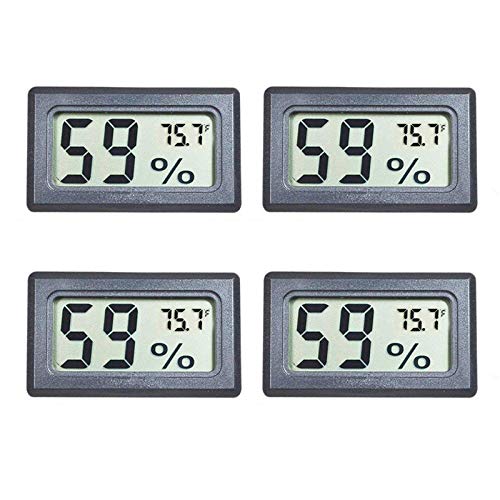
Veanic 4-Pack Mini Indoor Temperature Humidity Meter Review
A close look at the Veanic 4-pack mini humidity and temperature gauge, what its stated accuracy can and cannot support, and where it stops being the right instrument.
Read More→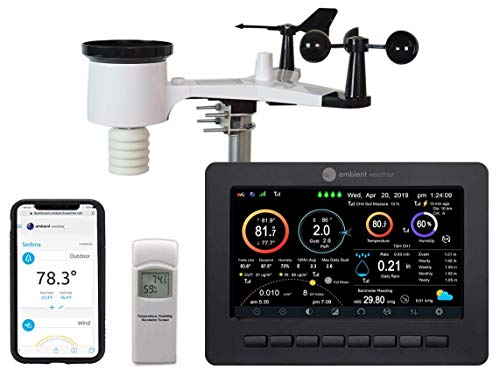
Ambient Weather WS-2000 Review: The First Hour and the First Believable Reading
A first-hour walkthrough of the Ambient Weather WS-2000, covering what the listing states, what it leaves out, and how to reach a first believable reading.
Read More→