As an Amazon Associate, Akermin earns from qualifying purchases. Product links on this page are affiliate links.
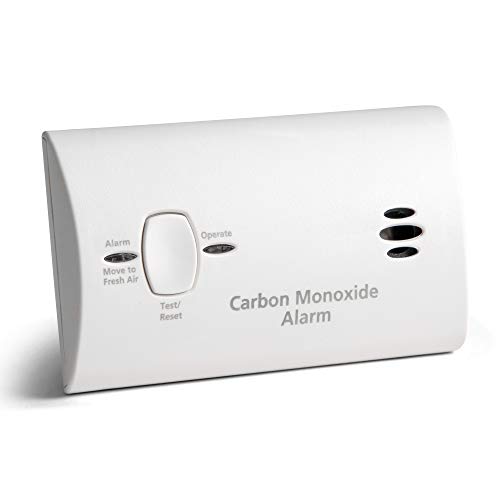
Kidde · Kidde Carbon Monoxide Detector, AA Battery Powered, Portable for Travel or Home, 85 dB Alarm, LED Status Indicators, 3rd Edition
View on AmazonPrice and availability are shown on Amazon and can change at any time.
Verdict
The Kidde portable carbon monoxide detector is a simple, battery powered alarm intended to travel. The listing states electrochemical sensor technology, an 85 decibel alarm with a red LED, a green LED indicating power, operation on two AA cells that are included, no wiring required, and mounting on a wall or standing on a tabletop. It is not a diagnostic instrument and does not pretend to be. It is protection for a room that does not have any.
Documented Specifications
| Item | Manufacturer listing |
|---|---|
| Sensor | Electrochemical |
| Alarm | 85 decibels |
| Indicators | Green LED for power, red LED for carbon monoxide |
| Power | Two AA batteries, included |
| Installation | Wall mount or tabletop, no wiring |
| Use | Portable, for travel or home |
The listing does not publish alarm thresholds, end of life behaviour or a stated service life. Every carbon monoxide alarm has a limited sensor life, typically stated on the unit itself, and should be replaced at the end of it.
The Gap This Fills
Carbon monoxide risk follows combustion, and combustion follows people into places nobody inspects: hotel rooms with a gas water heater in a cupboard, holiday cottages with a wood stove, caravans and motorhomes, cabins with a propane heater, boats, and any home during a power cut when a generator appears. Fixed alarms are required in many homes and are far from universal in accommodation you do not own.
A small alarm running on AA cells that stands on a nightstand covers all of those with no installation and no permission. That is the whole argument, and it is a good one.
Alarm and Meter Are Different Instruments
This is the most common confusion in carbon monoxide detection, and it matters. An alarm is designed around protecting people: it responds to a combination of concentration and exposure time, deliberately ignoring brief low level excursions that are not harmful, and it sounds when the exposure becomes significant. It does not show a number, because a number invites debate at exactly the moment nobody should be debating.
A meter displays parts per million continuously and is a diagnostic tool for technicians investigating a combustion appliance or a flue. If an alarm sounds, the correct response is to get everyone into fresh air and call the emergency number, not to find a meter and take a reading. See CO meter versus CO alarm.
Where to Put It
- At breathing height in the room where people sleep. Carbon monoxide mixes with air rather than rising or sinking strongly.
- Not directly above or beside a fuel burning appliance, where normal brief emissions can cause nuisance alarms.
- Not in a bathroom, and not where humidity or temperature swings wildly.
- In a hotel or rental, on the nightstand is fine. Something is enormously better than nothing.
- Test it on arrival using the test button, which checks the electronics and the sounder.
Sensor Life Is Finite
Electrochemical carbon monoxide sensors age from the moment they are made, regardless of use. Every alarm has an end of life date, usually printed on the back, and an alarm past that date should be replaced rather than trusted. Many units chirp at end of life, and that chirp is often mistaken for a low battery, so check the date rather than only changing cells.
Strengths
- No installation, so it protects rooms nobody else has protected.
- Battery powered, so it works during a power cut.
- Batteries included, so it works on arrival.
- Established sensor technology and a loud alarm.
Limitations
- No thresholds or service life in the listing bullets.
- No display, so it gives no diagnostic information.
- Not a substitute for fixed alarms where regulations require them.
- Finite sensor life; the whole unit is replaced, not the sensor.
How It Compares
The TopTes CT-580 is a meter rather than an alarm, showing 0 to 1000 ppm with calibration options, which suits technicians. For fixed protection in a home, a mains or long life sealed alarm is the right choice. Our ranking is in the carbon monoxide detector roundup.
How We Research
All figures come from the manufacturer listing. We did not run laboratory tests and publish no measurements of our own. If a carbon monoxide alarm sounds, leave the building and call the emergency services.
Recommended Tools


Products shown because their documented specifications fit this guide. Price and availability are on Amazon and can change.
Frequently Asked Questions
What sensor does it use?
The listing states electrochemical sensor technology, which is the established method for carbon monoxide alarms and responds to CO specifically rather than to a broad class of gases.
Does it work during a power cut?
Yes. The listing states no wiring is needed and it operates on two AA batteries, which are included. A power cut is exactly when generators and alternative heating create carbon monoxide risk.
What do the LEDs mean?
The listing states a green LED indicates power and a red LED plus an 85 decibel alarm indicate the presence of carbon monoxide.
Is this the same as a CO meter?
No. An alarm is designed to sound at levels and exposure times that protect people, and it does not display low level concentrations. A meter shows numbers and is a diagnostic tool. The two are not interchangeable.
Affiliate disclosure: Akermin earns a commission from qualifying Amazon purchases made through links on this page. Our editorial picks are based on documented specifications and owner feedback, not commissions.