As an Amazon Associate, Akermin earns from qualifying purchases. Product links on this page are affiliate links.
Standby power is the electricity a device draws when it is switched off or idle but still plugged in. It keeps remote-control receivers listening, clocks running, network links alive, memory powered and power supplies energized. Individually the numbers are small, a fraction of a watt to 20 W, but they run 8,760 hours a year. A typical home idles at 30 to 100 W of standby, which is 260 to 880 kWh per year. Measuring which devices are responsible takes a plug-in meter and an afternoon.
Why off is not off
- Remote control receivers must stay powered to hear the “on” command.
- Clocks and displays on ovens, microwaves and appliances.
- Network connections on smart TVs, speakers, consoles, printers and anything with an app.
- Quick-start modes that keep a device partly booted so it starts in seconds.
- Power supplies that stay energized whenever the plug is in, even with no load.
- Memory and settings retention in older equipment without non-volatile memory.
Typical standby draw
| Device | Typical standby | Per year |
|---|---|---|
| Modern phone charger, no phone | Under 0.1 W | Under 1 kWh |
| LED television, standby | 0.5 to 1 W (more with quick-start or network on) | 4 to 9 kWh |
| Set-top box / cable box | 10 to 20 W | 90 to 175 kWh |
| Games console, instant-on mode | 10 to 15 W; under 1 W in energy-saving mode | 90 to 130 kWh |
| Desktop computer, sleep | 2 to 5 W | 18 to 45 kWh |
| Wi-Fi router and modem (always on by design) | 8 to 15 W | 70 to 130 kWh |
| Microwave with clock | 2 to 4 W | 18 to 35 kWh |
| Audio receiver, standby | 1 to 10 W | 9 to 90 kWh |
| Printer, idle | 2 to 6 W | 18 to 50 kWh |
| Smart speaker | 2 to 3 W | 18 to 26 kWh |
Regulations in many regions now cap standby at 0.5 W for devices without network functions and 2 to 8 W for networked ones, so new equipment is far better than equipment from a decade ago.
Measuring it
- Plug a power meter between the outlet and the device. Read the watts with the device “off”.
- Leave it a day and read accumulated kWh for the real average, since some devices wake periodically.
- Repeat for the suspects: entertainment center, office, kitchen.
- For the whole-house figure, read the whole-home monitor or the meter at night with everything off; the residual is standby plus the fridge.
See plug-in vs whole-home energy monitors.
What actually helps
- Switch consoles and TVs from instant-on to energy-saving modes; this is the biggest single win.
- Put the entertainment center on a switched strip, or a smart strip that cuts peripherals when the TV goes off.
- Replace set-top boxes with streaming devices where possible; the box is often the worst offender.
- Do not bother with modern chargers or LED TVs; the saving is pennies.
- Leave the router alone; the energy is small and the disruption is not.
For the units, see what a kilowatt-hour is; for cost per device, how much electricity a 100-watt device uses.
Recommended Tools

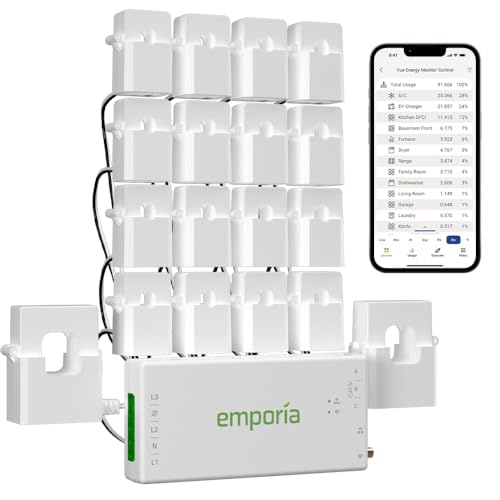
Products shown because their documented specifications fit this guide. Price and availability are on Amazon and can change.
Frequently Asked Questions
How much does standby power cost a household?
Studies typically find 5 to 10 percent of household electricity goes to standby loads, on the order of 300 to 800 kWh a year, or roughly $50 to $250 depending on tariff.
Does unplugging a phone charger save energy?
A modern charger with nothing connected draws well under 0.1 W, about 1 kWh a year. Unplugging it is harmless but saves almost nothing; older chargers and larger power bricks draw more.
Which devices have the highest standby draw?
Set-top boxes and older games consoles in "instant on" modes (10 to 20 W), desktop computers in sleep, audio receivers, printers and some smart appliances with always-on displays.
Affiliate disclosure: Akermin earns a commission from qualifying Amazon purchases made through links on this page. Our editorial picks are based on documented specifications and owner feedback, not commissions.
Related Guides

Fluke 1AC II VoltAlert Review: Two Detection Thresholds in One Listing
A pocket sized non contact voltage tester whose tip glows red and beeper sounds when voltage is detected, with a continuous self test and a choice of audible or silent operation.
Read More→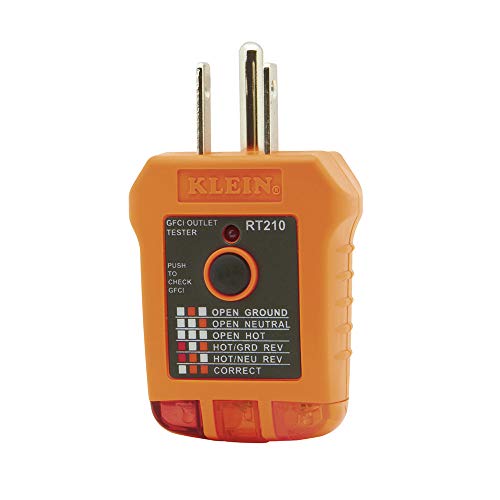
Klein Tools RT210 Review: A Fault Finder That Does Not List Its Faults
A three wire receptacle tester for standard and GFCI North American outlets, specified for 110 to 125 volts AC at 50 or 60 Hz, a 6.6 foot drop and an operating range of 32 to 140 degrees Fahrenheit.
Read More→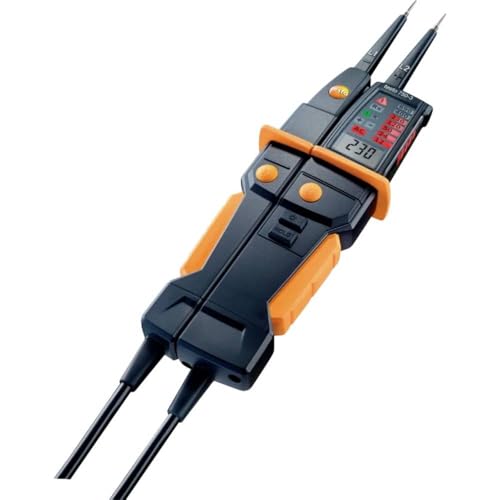
Testo 750-3 Review: Four Bullets, and No Published Category Rating
A two pole voltage tester with a three digit LCD showing measured voltage, a patented LED voltage bar viewable from any angle, polarity detection on DC and a GFCI test function for AC outlets.
Read More→