As an Amazon Associate, Akermin earns from qualifying purchases. Product links on this page are affiliate links.
A device drawing 100 watts uses 0.1 kilowatt-hours per hour. Over a full day of continuous use that is 2.4 kWh; over a month, about 73 kWh; over a year, 876 kWh. At an electricity price of 15 cents per kWh, that is 1.5 cents per hour, 36 cents per day and about $131 per year if it never switches off. At 30 cents per kWh, double those figures. Most 100 W devices run far fewer than 24 hours, so the real cost is usually a fraction of the maximum.
The arithmetic
Energy (kWh) = watts × hours ÷ 1,000. For 100 W: 0.1 kWh per hour. Cost = kWh × price per kWh. See what a kilowatt-hour is.
| Running time | Energy | Cost at $0.15/kWh | Cost at $0.30/kWh | Cost at $0.40/kWh |
|---|---|---|---|---|
| 1 hour | 0.1 kWh | $0.015 | $0.03 | $0.04 |
| 8 hours a day for a month | 24 kWh | $3.60 | $7.20 | $9.60 |
| 24 hours a day for a month | 73 kWh | $10.95 | $21.90 | $29.20 |
| 4 hours a day for a year | 146 kWh | $21.90 | $43.80 | $58.40 |
| 24 hours a day for a year | 876 kWh | $131 | $263 | $350 |
The electricity cost calculator does this for any wattage, hours and rate.
Real 100 W devices
- A 55 to 65 inch television in use: 80 to 120 W.
- A desktop computer browsing and working: 60 to 120 W; gaming much more.
- A ceiling fan on high: 60 to 100 W.
- An older incandescent bulb: exactly 100 W. Its LED replacement: 12 to 15 W.
- A large aquarium heater while heating: 100 to 300 W, cycling.
- A games console in play: 100 to 200 W.
- A dehumidifier on low: 150 to 300 W.
Rated versus actual
The wattage on the label is the maximum the device is designed to draw, or a typical figure at full function. A television at low brightness draws less; a computer idling draws a fraction; anything with a thermostat cycles on and off. Standby draw continues when the device is “off”; see standby power explained. A plug-in power meter accumulates actual kWh over a day or a week and replaces guesswork; see plug-in vs whole-home energy monitors.
Putting it in perspective
A single 100 W device on for four hours a day costs a few dollars a month at most tariffs. The loads that dominate a bill are the kilowatt-scale ones: heating, cooling, water heating, cooking, tumble drying and vehicle charging. Reducing a 100 W television’s use saves less than shortening one shower. Measure before optimizing; the meter reveals which loads matter. See watts vs volts vs amps for the units behind the numbers.
Recommended Tools

Products shown because their documented specifications fit this guide. Price and availability are on Amazon and can change.
Frequently Asked Questions
How much does a 100 W device cost to run for a day?
Running 24 hours it uses 2.4 kWh. At 15 cents per kWh that is 36 cents; at 30 cents, 72 cents; at 40 cents, about 96 cents.
What household devices use about 100 watts?
A large television, a desktop computer at moderate load, a ceiling fan on high, a large aquarium heater, an old incandescent bulb, a games console in use.
Does a 100 W device always draw 100 W?
No. The rating is a maximum or typical figure. Many devices draw less most of the time and cycle; a plug-in power meter shows the real average.
Affiliate disclosure: Akermin earns a commission from qualifying Amazon purchases made through links on this page. Our editorial picks are based on documented specifications and owner feedback, not commissions.
Related Guides

Fluke 1AC II VoltAlert Review: Two Detection Thresholds in One Listing
A pocket sized non contact voltage tester whose tip glows red and beeper sounds when voltage is detected, with a continuous self test and a choice of audible or silent operation.
Read More→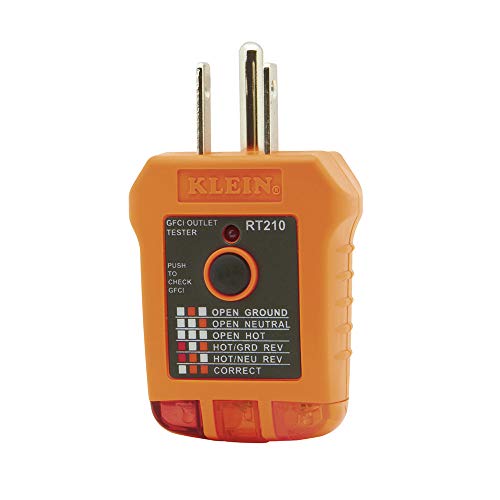
Klein Tools RT210 Review: A Fault Finder That Does Not List Its Faults
A three wire receptacle tester for standard and GFCI North American outlets, specified for 110 to 125 volts AC at 50 or 60 Hz, a 6.6 foot drop and an operating range of 32 to 140 degrees Fahrenheit.
Read More→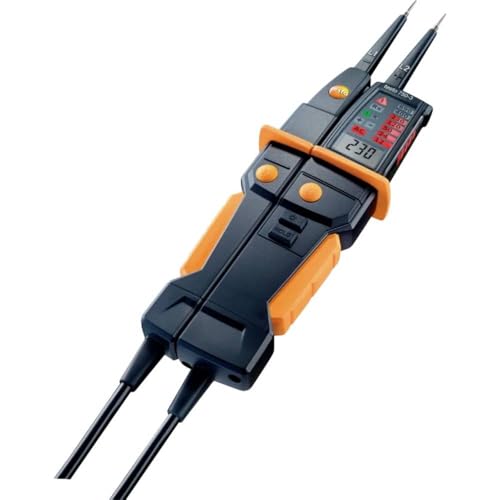
Testo 750-3 Review: Four Bullets, and No Published Category Rating
A two pole voltage tester with a three digit LCD showing measured voltage, a patented LED voltage bar viewable from any angle, polarity detection on DC and a GFCI test function for AC outlets.
Read More→