As an Amazon Associate, Akermin earns from qualifying purchases. Product links on this page are affiliate links.
A kilowatt-hour (kWh) is a unit of energy equal to one kilowatt (1,000 watts) of power used for one hour. It is what the electricity meter counts and what the bill charges for. Energy in kWh equals power in kilowatts multiplied by time in hours: a 100 W bulb for 10 hours is 1 kWh; a 3 kW kettle for 4 minutes is 0.2 kWh; a 1.5 kW heater for 8 hours is 12 kWh. Multiply by the tariff per kWh and you have the cost.
Power and energy
Power (watts, kilowatts) is a rate: how fast energy is flowing right now. Energy (watt-hours, kilowatt-hours) is a quantity accumulated over time. The speedometer versus the odometer. Appliance labels give power; bills give energy; the link between them is how long the appliance runs. See watts vs volts vs amps.
Calculating it
kWh = watts × hours ÷ 1,000
| Appliance | Power | Daily use | Energy per day |
|---|---|---|---|
| LED bulb | 9 W | 5 h | 0.045 kWh |
| Laptop | 45 W | 8 h | 0.36 kWh |
| Refrigerator (cycling) | 150 W when running, about 30% duty | 24 h | About 1.1 kWh |
| Television | 100 W | 4 h | 0.4 kWh |
| Electric kettle | 3,000 W | 10 min total | 0.5 kWh |
| Space heater | 1,500 W | 6 h | 9 kWh |
| Electric vehicle charging | 7,000 W | 4 h | 28 kWh |
The heater and the car dominate; the bulb is noise. The electricity cost calculator turns any wattage and hours into daily, monthly and yearly kWh and cost.
Cycling loads
Appliances with thermostats or compressors do not run continuously. A refrigerator rated 150 W may average 40 to 50 W over a day; a heater with a thermostat might run 50 percent of the time. Nameplate watts times 24 hours overstates these badly. A plug-in energy monitor that accumulates kWh is the only reliable way to know; see plug-in vs whole-home energy monitors.
Reading the meter
Electricity meters display cumulative kWh. The difference between two readings is the energy used in between. Read it at the same time on two days for daily use; smart meters and whole-home monitors do this continuously and show it per hour.
kWh in solar and storage
- A solar system’s output is quoted in kWh per day or per year; a 5 kW array in a sunny location might produce 20 to 25 kWh on a summer day. See solar irradiance vs panel output.
- Battery capacity is quoted in kWh (or amp-hours at a voltage). A 10 kWh home battery stores about a day’s use for a modest home.
- Electric vehicle batteries are 40 to 100 kWh; efficiency is kWh per 100 km.
Cost
Bills list a price per kWh, sometimes with time-of-use variations and a separate standing charge. Multiply the kWh by the rate for the period it was used. For what a specific device costs, see how much electricity a 100-watt device uses.
Recommended Tools

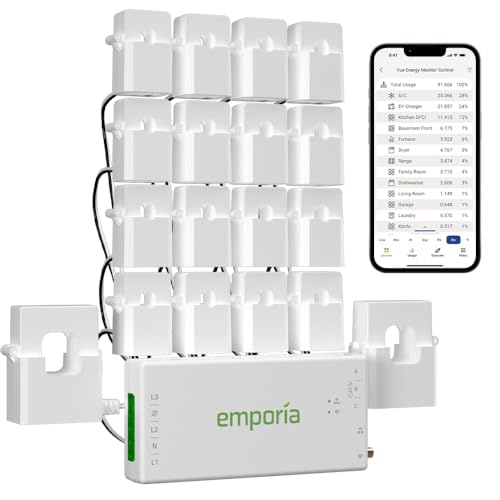
Products shown because their documented specifications fit this guide. Price and availability are on Amazon and can change.
Frequently Asked Questions
Is a kilowatt the same as a kilowatt-hour?
No. A kilowatt is power (a rate). A kilowatt-hour is energy (an amount): one kilowatt sustained for one hour. A 2 kW heater running 30 minutes uses 1 kWh.
How many kWh does a house use per day?
Widely variable. Around 8 to 12 kWh per day is typical for a European home without electric heating; US averages are around 25 to 30 kWh per day; homes with electric heating or air conditioning use far more.
How is kWh related to battery capacity?
Battery capacity in amp-hours times voltage gives watt-hours. A 100 Ah 12 V battery holds 1,200 Wh, or 1.2 kWh, before allowing for depth-of-discharge limits.
Affiliate disclosure: Akermin earns a commission from qualifying Amazon purchases made through links on this page. Our editorial picks are based on documented specifications and owner feedback, not commissions.
Related Guides

Fluke 1AC II VoltAlert Review: Two Detection Thresholds in One Listing
A pocket sized non contact voltage tester whose tip glows red and beeper sounds when voltage is detected, with a continuous self test and a choice of audible or silent operation.
Read More→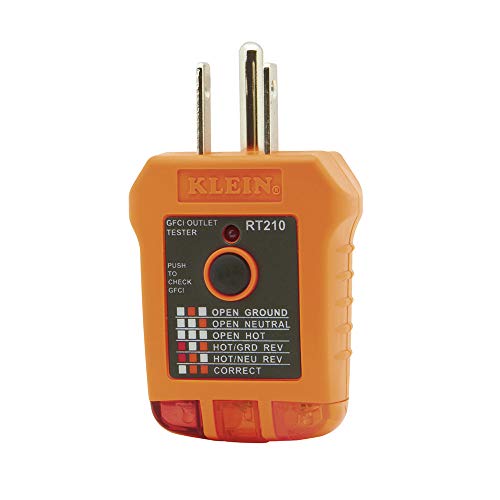
Klein Tools RT210 Review: A Fault Finder That Does Not List Its Faults
A three wire receptacle tester for standard and GFCI North American outlets, specified for 110 to 125 volts AC at 50 or 60 Hz, a 6.6 foot drop and an operating range of 32 to 140 degrees Fahrenheit.
Read More→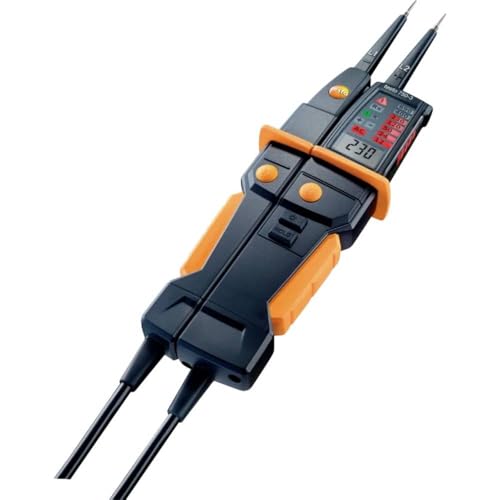
Testo 750-3 Review: Four Bullets, and No Published Category Rating
A two pole voltage tester with a three digit LCD showing measured voltage, a patented LED voltage bar viewable from any angle, polarity detection on DC and a GFCI test function for AC outlets.
Read More→