As an Amazon Associate, Akermin earns from qualifying purchases. Product links on this page are affiliate links.
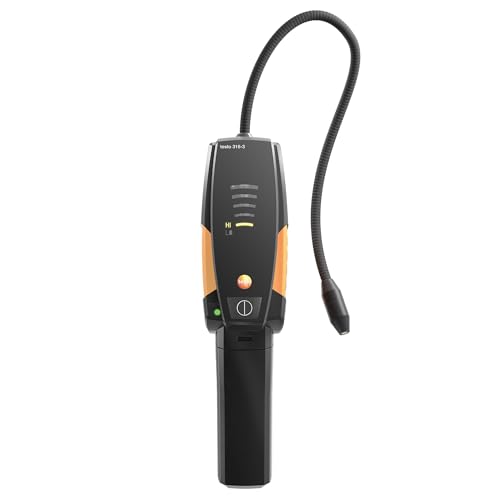
Testo · testo 316-3 Refrigerant Leak Detector – HVAC Leak Detector for Refrigerant Substances - A2L Compliant - HVAC Tool with High Sensitivity 4 g/a (0.15 oz/a) and Automatic Zeroing
View on AmazonPrice and availability are shown on Amazon and can change at any time.
A battery powered refrigerant leak detector built around a patented heated diode sensor, with automatic zeroing so it can be used in already contaminated areas, high and low sensitivity settings reaching 4 g/a or 0.15 oz/a, one button operation, an LED indicator and an audible alarm. The sensor and the zeroing are the strong parts. The decision rests on the words A2L compliant in the title, because the only refrigerant list on the page contains no A2L gas at all.
A2L names a flammability class, not a refrigerant
A2L is a safety classification, not a product. The letter rates toxicity and the number rates flammability, so an A2L refrigerant is one with lower toxicity and lower flammability, flammable enough to need handling rules and slow burning enough to sit in its own class. R32, R454B and R1234yf are the ones arriving in service work in volume.
That matters for a detector in two separate ways, and they are easy to confuse.
- Whether the instrument can find those gases. A question about the sensor and the published compatibility list.
- Whether the instrument is safe to switch on in an atmosphere that may contain them. A question about its electrical construction, since a leak detector is a powered device with a heated element at the tip.
Those are different claims with different evidence behind them, and A2L compliant on its own does not distinguish them. Given that the second question is the one usually asked of tools rather than of sensors, the phrase most plausibly refers to safe operation. The listing does not say so, and a buyer should not have to guess which of the two they are being sold.
The gas list stops short of every A2L in service
Here is the whole of the compatibility claim, from the second bullet: all CFCs, HFCs and HCFCs, plus R22, R134a, R404A, R410A, R507 and R438A.
Read the individual names. R22 is an HCFC. The rest are HFCs and HFC blends. Every one of them is classed A1, which means lower toxicity and no flame propagation. Not one A2L gas appears anywhere in the list, on a page whose title leads with A2L compliance.
The physics gives reason for optimism. A heated diode responds to halogenated compounds, and R32 and R1234yf are fluorinated, so there is no obvious chemical reason the element would be blind to them. But a leak detector is a tool you rely on to say nothing is escaping, and a published compatibility list is the only basis for that reliance. Optimism about chemistry is not the same as a manufacturer stating a gas is covered.
The practical position: this looks like a listing that has been given an A2L headline without the body text being brought up to date. Before buying it for work on newer refrigerants, ask for the covered gas list and for the sense in which the instrument is A2L compliant, both in writing. Our explainer on A2L refrigerant leak detection sets out why those two answers are not interchangeable, and the notes on R32 and R454B leak detection cover what changes on the newer gases.
A heated diode is a named sensor, and that is worth something
Most listings in this category describe their sensor with an adjective. This one names the technology and calls the implementation patented, which is a checkable claim rather than a mood.
A heated diode keeps a ceramic element hot enough to dissociate halogenated molecules drawn across it. The halide ions that result change the current through the element, and the instrument watches that current. Two things follow. It is very sensitive, because the mechanism amplifies a tiny amount of gas into an electrical change. It is also fairly specific, because compounds without halogens do not produce the effect.
The trade off is inherent and the listing does not mention it: the element is a consumable. Hours of operation degrade it, and a heated diode that has been left running for a long time is less sensitive than the figure on the box. That is why sensor service life and sensor replaceability are the first two specifications an experienced buyer looks for on a heated diode instrument, and why their absence here is a real gap rather than a pedantic one. Our heated diode detector comparison covers which manufacturers publish a life figure.
Automatic zeroing earns its place in a contaminated plant room
The first bullet claims the detector delivers rapid measurements and can be used in previously contaminated areas thanks to automatic zeroing. That second half is the sentence that describes a real working problem.
Every sniffer reports relative to a reference it took in what it believed was clean air. Arrive at a system that has been leaking into a closed plant room for days, and the whole room is above the reference. A fixed threshold instrument then alarms continuously from the doorway, and continuous alarm carries no information about position.
Automatic zeroing re references as you move, so the instrument stops reporting the absolute concentration and starts reporting whether the concentration is rising. That turns a useless constant tone into a gradient you can follow to the fitting. It also makes the instrument faster to deploy, because you are not stepping outside to reset between passes.
What the bullets leave unquantified is everything around that behaviour: no warm up figure, no response time, no probe length, no battery type and no runtime. For an instrument whose first claim is speed, a warm up time would have been the obvious number to print. The absence of a sensor life figure matters more, because a consumable element is the one part of this design that quietly stops meeting its own specification.
Four grams a year, and the rows around it
| Specification | Published in the listing |
|---|---|
| Sensor | Patented heated diode |
| Sensitivity | 4 g/a, stated as 0.15 oz/a |
| Sensitivity settings | High and low adjustment |
| Zeroing | Automatic, stated as usable in previously contaminated areas |
| Refrigerants named | CFCs, HFCs, HCFCs, R22, R134a, R404A, R410A, R507, R438A |
| Indication | LED indicator and audible alarm |
| Controls | One button operation |
| Power | Battery powered |
| A2L gases covered by name | Not stated in the listing bullets |
| Sense in which the tool is A2L compliant | Not stated in the listing bullets |
| Sensitivity on the low setting | Not stated in the listing bullets |
| Sensor service life and replacement | Not stated in the listing bullets |
| Warm up and response time | Not stated in the listing bullets |
| Probe length and flexibility | Not stated in the listing bullets |
| Battery type and runtime | Not stated in the listing bullets |
Four grams a year is the headline figure and it deserves a moment. A system charge is measured in hundreds or thousands of grams, so a threshold of four grams a year is a loss you would never notice in performance, pressure or sight glass across a whole season. An instrument that can find it is an instrument that finds leaks while they are still cheap to fix.
The qualification is in the word adjustment. Two settings exist and one number is published, so the figure belongs to the sensitive setting. On the low setting, which is what you use to pinpoint once the area is already contaminated, the threshold is unstated.
Who should put this on the van, and who must ask first
For a technician working on the installed base of A1 refrigerants, this is a straightforward recommendation. A named and patented sensor type, a published sensitivity in both grams and ounces, automatic zeroing described by its actual benefit rather than as a feature word, and a single button to operate it one handed while the other hand holds a torch. That is a short specification with very little marketing in it.
Anyone whose work has moved to R32, R454B or R1234yf should treat the A2L wording in the title as a question rather than an answer, and should get the covered gas list and the compliance statement from the manufacturer before committing. And if your job requires recording a concentration rather than locating a leak, this is the wrong instrument class entirely, because an LED and a buzzer do not produce a number you can write down.
Recommended Tools

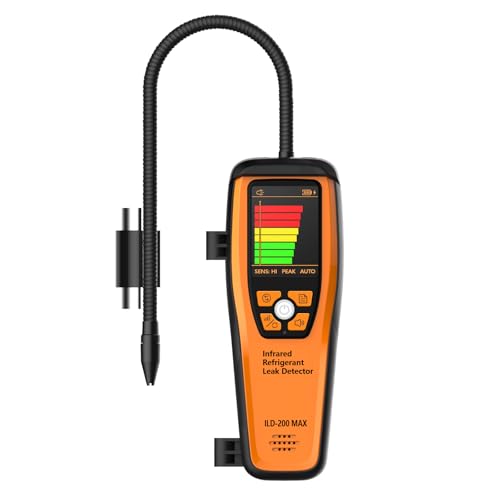

Products shown because their documented specifications fit this guide. Price and availability are on Amazon and can change.
Frequently Asked Questions
What does A2L actually mean?
It is a refrigerant safety classification. The letter describes toxicity, with A meaning lower toxicity, and the number describes flammability, with 2L meaning lower flammability and a limited burning velocity. R32, R454B and R1234yf are the A2L gases a service technician meets most often. Applied to an instrument rather than a gas, the phrase A2L compliant usually means the tool is considered safe to operate in an atmosphere that may contain such a refrigerant, but this listing never says which sense it intends.
Does it detect R32 and R454B?
The listing does not say. The compatibility bullet names CFCs, HFCs and HCFCs as groups and then R22, R134a, R404A, R410A, R507 and R438A individually, all of which are classed A1 and none of which is an A2L gas. R32 and R454B are fluorinated, so a halogen sensitive sensor has physical reason to respond to them, but inference is not a specification. If your work is mini split service on newer gases, get the covered refrigerant list from the manufacturer before buying.
How does a heated diode sensor work?
A ceramic element is held at a temperature high enough to break up halogenated molecules that reach it. The halide ions released change the current flowing across the element, and that change is what the instrument reports. The approach is both sensitive and unusually specific to halogen bearing compounds, which is why it is a common professional choice. Its known trade off is that the sensing element is a consumable, so output declines with hours of use.
Why is automatic zeroing worth paying for?
Because a sniffer reports a change against whatever background it last referenced. Walk a fixed threshold instrument into a plant room where a leak has been escaping for a week and it alarms everywhere, which tells you nothing about where the hole is. Continuous re zeroing means the alarm tracks the gradient rather than the absolute level, so you can still walk uphill to the source. The listing names that exact consequence, which is more useful than naming the feature.
Does it display a concentration?
No. The bullets describe an LED indicator, an audible alarm and one button operation, which is a go and no go instrument rather than a measuring one. That is normal for leak location and it is not a weakness, but it does mean you cannot record a number. If you need a ppm figure for a report, this is the wrong class of tool.
Affiliate disclosure: Akermin earns a commission from qualifying Amazon purchases made through links on this page. Our editorial picks are based on documented specifications and owner feedback, not commissions.