As an Amazon Associate, Akermin earns from qualifying purchases. Product links on this page are affiliate links.
Continuity means there is a complete, low-resistance path for current between two points. A meter’s continuity mode pushes a small test current through the probes and sounds a beeper when the resistance it sees is below a threshold, usually somewhere between 10 and 50 Ω. The tone lets you check fuses, cables, switches, tracks and connections without looking at the display, on a circuit that has been isolated from any power source.
How it works
The meter applies a small voltage (a volt or two) and measures the current that flows; from that it calculates resistance exactly as in ohms mode. In continuity mode it simply compares the result against a threshold and drives the beeper. Response is fast, tens of milliseconds, so a brief contact on a moving probe registers. Some meters latch the tone briefly so intermittent contacts are audible.
What it finds
| Test | Beep means | No beep means |
|---|---|---|
| Fuse (out of circuit) | Good | Blown |
| Cable end to end | Conductor intact | Broken conductor |
| Switch, contacts closed | Switch conducts | Failed contacts |
| Switch, contacts open | Welded or shorted contacts | Correct |
| Live to earth on an isolated appliance | Short to chassis: fault | Correct |
| Heating element | Element intact (if under threshold) | Open element, or resistance above threshold: use ohms |
| Circuit board track | Track intact | Broken track |
| Identifying wire ends in a bundle | Same wire | Different wire |
Rules
- Isolate the circuit. Continuity and ohms modes assume no external voltage. Voltage on the circuit produces nonsense readings and can blow the meter’s input protection.
- Discharge capacitors in electronic equipment before testing.
- Isolate the component. Parallel paths through other components, transformer windings or the rest of the board make a broken part appear good. Lift one leg.
- Check the leads first by touching the probes together; the meter should beep and read near zero. Subtract that lead resistance from low-ohm readings.
- Use ohms for values that matter. The beeper says “below threshold”; it does not say 0.2 Ω versus 15 Ω, and that difference is the difference between a good connection and a failing one.
Continuity versus resistance
Continuity is a yes/no test optimized for speed. Resistance measurement gives the value. A corroded connection may still beep at 8 Ω while dropping enough voltage under load to heat up and fail; the ohms reading exposes it. For motor windings, heating elements and sensors, use ohms and compare against the specification. See why readings jump around for what to do when a resistance reading will not settle.
Diode mode
Many meters combine continuity with diode test on one switch position. Diode mode applies a higher voltage and displays the forward drop (about 0.6 V for a silicon diode); it also beeps on some meters for a short circuit. Do not mistake a diode’s forward reading for continuity.
Meters with fast beepers and latching are noted in best multimeters for home and DIY. For the measurement continuity depends on, see resolution in a digital meter.
Recommended Tools

Fluke 117 Digital Multimeter, Non-Contact AC Voltage Detection, Measures Resistance/Continuity/Frequency/Capacitance/Min
View on Amazon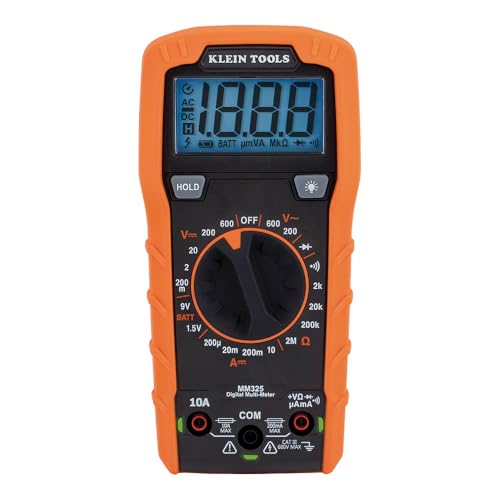
Products shown because their documented specifications fit this guide. Price and availability are on Amazon and can change.
Frequently Asked Questions
At what resistance does a multimeter beep?
Typically below 20 to 50 Ω, depending on the model; some beep below 10 Ω. Check the manual; a heating element of 30 Ω may or may not beep.
Can I test continuity on a live circuit?
No. Continuity uses the meter's own small current and assumes no other voltage is present. Voltage on the circuit gives false results and can damage the meter. Isolate first.
Why does it beep across a component that should be open?
A parallel path: another component, a winding, or the circuit board is providing a route around it. Disconnect one end of the component to test it alone.
Affiliate disclosure: Akermin earns a commission from qualifying Amazon purchases made through links on this page. Our editorial picks are based on documented specifications and owner feedback, not commissions.
Related Guides

Fluke 1AC II VoltAlert Review: Two Detection Thresholds in One Listing
A pocket sized non contact voltage tester whose tip glows red and beeper sounds when voltage is detected, with a continuous self test and a choice of audible or silent operation.
Read More→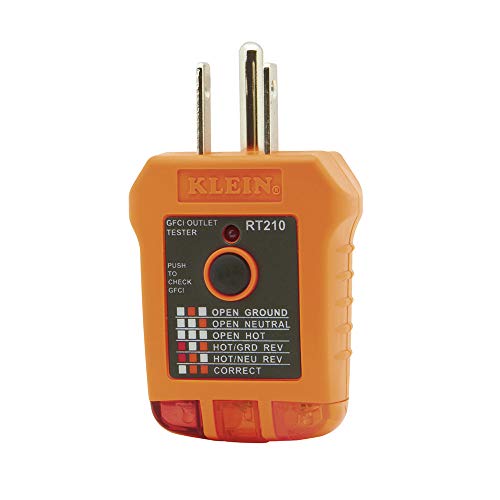
Klein Tools RT210 Review: A Fault Finder That Does Not List Its Faults
A three wire receptacle tester for standard and GFCI North American outlets, specified for 110 to 125 volts AC at 50 or 60 Hz, a 6.6 foot drop and an operating range of 32 to 140 degrees Fahrenheit.
Read More→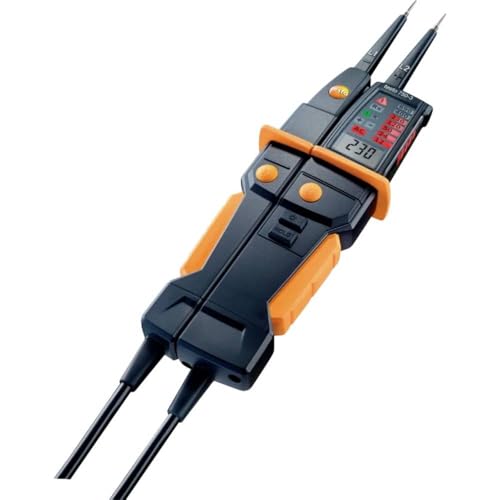
Testo 750-3 Review: Four Bullets, and No Published Category Rating
A two pole voltage tester with a three digit LCD showing measured voltage, a patented LED voltage bar viewable from any angle, polarity detection on DC and a GFCI test function for AC outlets.
Read More→